
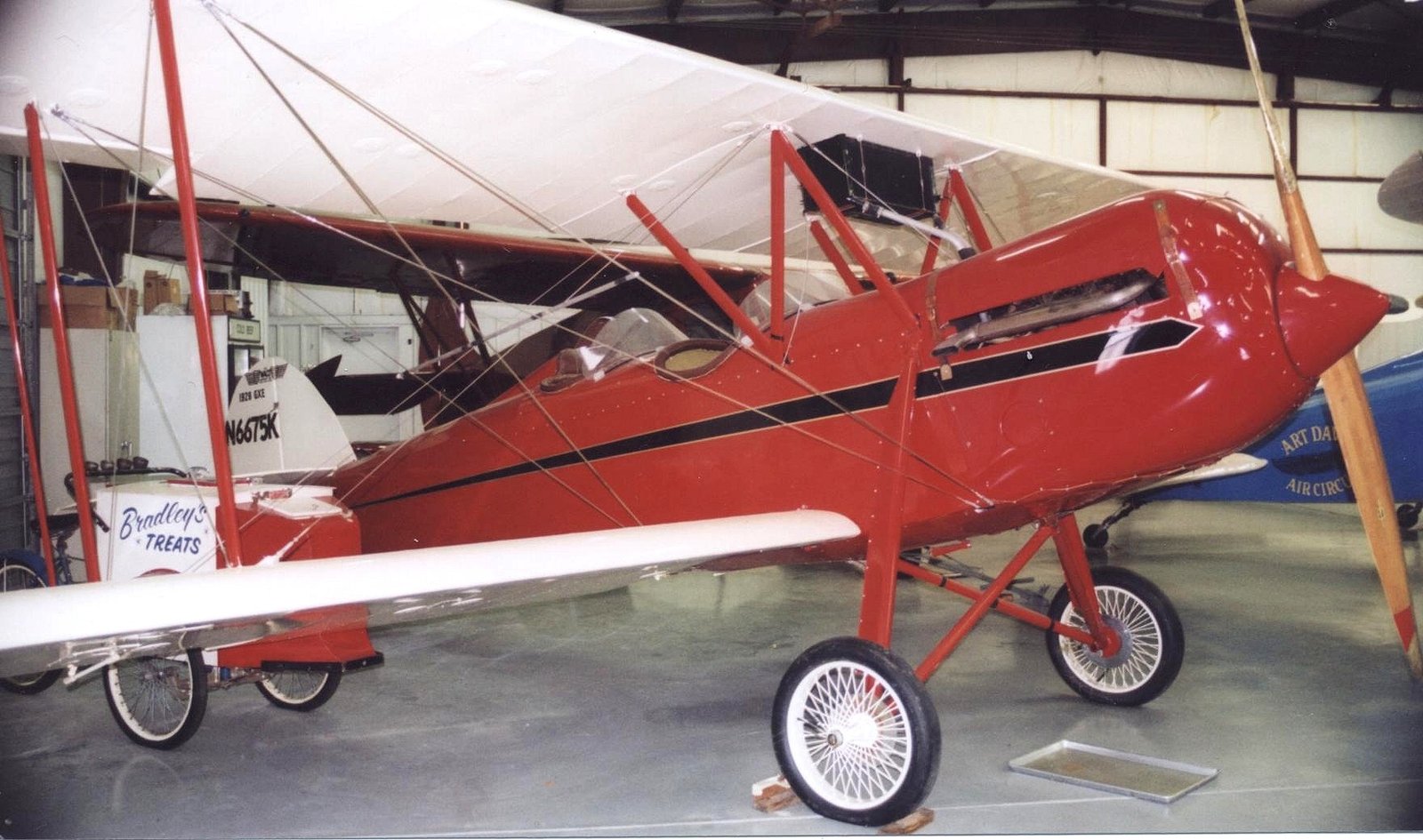
A Singular Experiment
The RPT's development marked WACO's most ambitious attempt to modernize its product line during the transition from civilian to military aviation priorities in 1940. While competitors embraced monoplane configurations, WACO had built its reputation exclusively on open-cockpit biplanes, making the RPT a bold engineering gamble that ultimately failed to secure its intended military contract.
Military Rejection and Private Ownership
After the U.S. Army Air Force declined to award WACO the training contract, the prototype found new life in civilian hands. The private purchaser immediately recognized the aircraft's potential limitations and invested in significant modifications. The original 125-horsepower Warner Scarab engine was replaced with a more powerful 160-horsepower Kinner R-56 powerplant, substantially improving performance and reliability. Additionally, a canopy was installed to provide weather protection, transforming the aircraft from a basic trainer into a more practical general aviation machine.
The WACO Aircraft Company Legacy
Founded in 1920 by George "Buck" Weaver and Elwood "Sam" Junkin in Lorain, Ohio, the WACO Aircraft Company dominated American general aviation during the interwar period. Between 1919 and 1947, the company produced 62 different aircraft models, leading all competitors in total aircraft registrations. The company's expertise in biplane construction made it a natural choice for military glider production during World War II, when WACO built 1,607 gliders at its Troy, Ohio facility while coordinating production of an additional 13,402 units through various contractors.
Design Philosophy Departure
The RPT represented one of only three monoplane designs in WACO's entire production history, alongside the 1920 "Cootie" parasol monoplane and the 1947 Aristocraft. This conservative approach to innovation, while successful in the biplane market, may have contributed to the company's inability to compete effectively in the modernizing aviation industry of the 1940s.
Operational History and Preservation
Despite its enhanced powerplant and modifications, the RPT led a remarkably quiet operational life. The aircraft spent most of its existence hangared, accumulating minimal flight time and maintaining complete maintenance logs with no recorded damage history. By 2010, the airframe had logged only 85 total flight hours, making it one of the most pristine examples of 1940s aviation engineering.
The aircraft made its most notable public appearance at the 1978 Experimental Aircraft Association annual fly-in at Oshkosh, Wisconsin, where it attracted attention as a rare example of WACO's monoplane experimentation. This appearance represented one of the few times the aircraft was displayed publicly during its operational period.
Museum Acquisition and Current Status
In 2018, the WACO Air Museum acquired the RPT, recognizing its significance as the sole surviving example of the company's monoplane ventures. The aircraft was carefully disassembled and transported to Troy, Ohio, where it now serves as a centerpiece display illustrating the company's brief departure from biplane manufacturing.
Historical Significance
The RPT's story reflects the broader challenges faced by established aircraft manufacturers during the rapid technological transitions of the 1940s. WACO's dominance in biplane production, while commercially successful, may have hindered the company's ability to develop competitive monoplane designs when military and civilian markets demanded modern configurations. The RPT's failure to secure military contracts, combined with the post-war surplus of military trainers, left little market opportunity for expensive custom aircraft.
Today, the RPT stands as a testament to innovation attempted too late, representing both WACO's engineering capabilities and the unforgiving nature of aviation market timing. Its preservation ensures that future generations can study this unique chapter in American aviation history, when traditional manufacturers struggled to adapt to rapidly evolving design requirements and market demands.