
Design Origins
Harris Woods, a former engineer at Bensen Aircraft Corporation, created the Woody Pusher as a modernized interpretation of the 1930s Curtiss Junior. His design objectives centered on developing a simple, affordable tandem two-seater that amateur builders could construct in home workshops. The prototype, registered N629X, took to the air in 1964, launching what would become a notable entry in the homebuilt aircraft movement.
Configuration and Construction
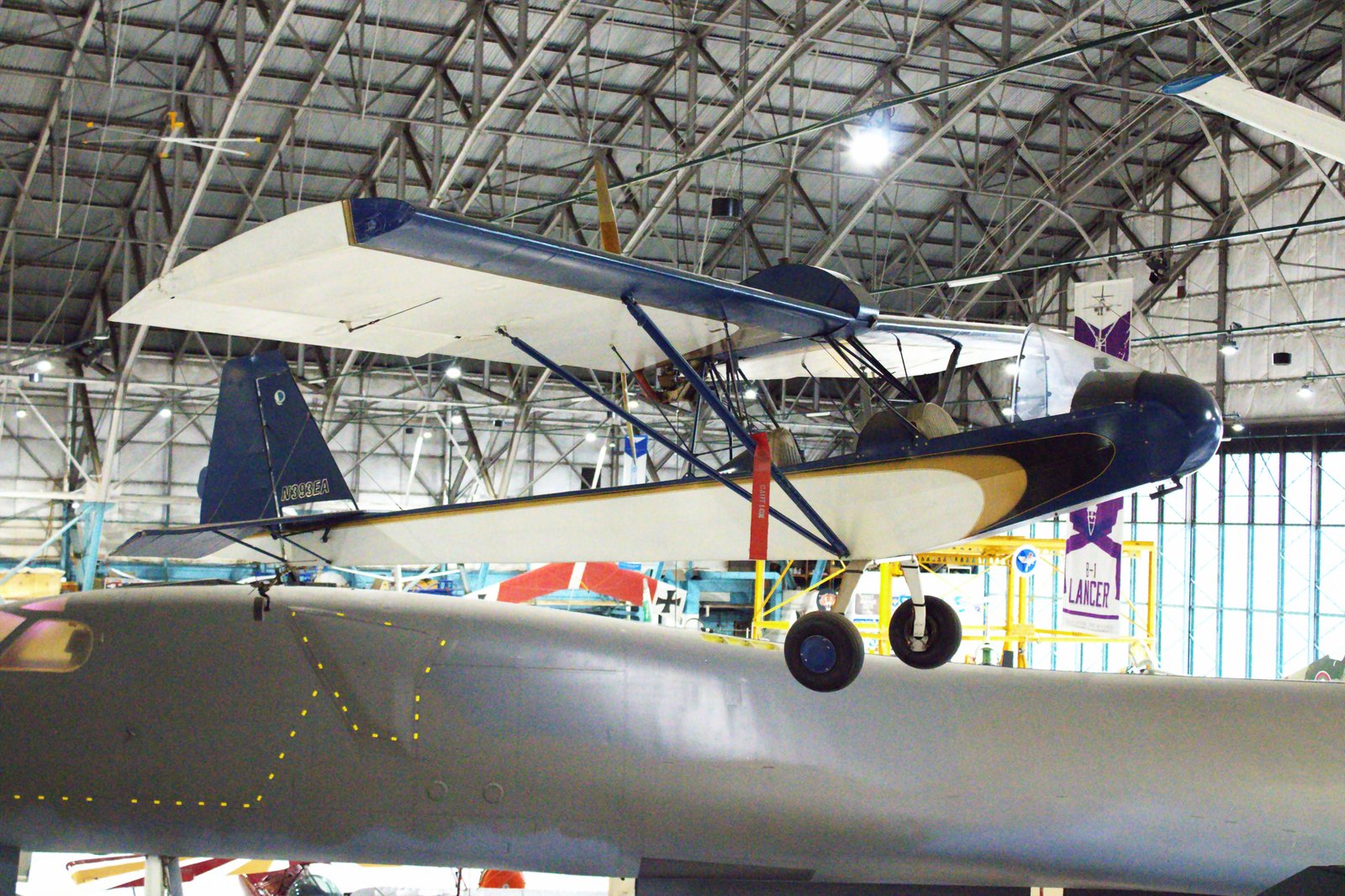
The Woody Pusher featured a distinctive parasol wing configuration with the engine mounted in pusher configuration behind the cockpit. Woods initially designed the fuselage using wooden construction with plywood covering and fabric surfaces, though later variants evolved to incorporate steel-tube fabric-covered fuselages with metal leading edges on the wings. The open tandem cockpits provided seating for pilot and passenger, maintaining the classic sport flying aesthetic of pre-war designs.
Performance Specifications
Powered by the reliable Continental A75 horizontally-opposed four-cylinder engine producing 75 horsepower, the Woody Pusher delivered respectable performance for its era. The aircraft achieved a maximum speed of 98 miles per hour at sea level, with a cruise speed of 87 miles per hour. Its gentle handling characteristics included a stall speed of just 45 miles per hour, making it forgiving for recreational pilots. With 12 gallons of fuel capacity, the aircraft provided an endurance of 2 hours and 30 minutes, translating to a range of approximately 190 miles.
Market Introduction and Production
Aerosport, Inc., the company Woods established specifically to market his design, began offering plans and kits to homebuilders in the early 1960s. Woods personally promoted the aircraft by displaying the prototype at EAA fly-ins in Rockford from 1965 through 1968, with pilot Robert flying demonstration flights during the final two years. By 1980, at least 27 Woody Pushers were actively flying, representing successful completions by amateur builders worldwide.
International Appeal
The design attracted homebuilders beyond American borders, with documented construction projects in New Zealand and Europe. This international interest demonstrated the universal appeal of Woods' straightforward design approach and the aircraft's adaptability to different builder skill levels and regulatory environments. Construction serial numbers reached at least 166 for the WAS-2 variant, indicating sustained interest in the design throughout its production period.
Technical Innovation
For the mid-1960s homebuilt market, the Woody Pusher incorporated several practical innovations. The pusher engine configuration provided excellent forward visibility for both occupants while eliminating propwash over the cockpits. The parasol wing design offered inherent stability and easy ground handling, while the conventional landing gear simplified construction and maintenance requirements. Woods equipped the aircraft with a two-bladed wooden fixed-pitch propeller, keeping complexity and costs manageable for amateur builders.
Legacy and Preservation
Two notable examples of the Woody Pusher remain on permanent display in American aviation museums. The Wings Over the Rockies Air and Space Museum in Denver, Colorado, houses N393EA, featuring the standard 75-horsepower Continental installation. The Florida Air Museum in Lakeland displays N100FQ, serial number 100, which was completed in 1974 and represents the continued building activity a decade after the prototype's first flight.
Modifications and Variants
The basic design proved adaptable to modifications, with some builders creating "STOL Swamp Monster" versions featuring enhanced short takeoff and landing capabilities. These modifications demonstrated the flexibility of Woods' original design concept and its potential for customization based on individual operator requirements.
Cultural Impact
The Woody Pusher gained recognition in aviation publications, notably featured in Kit Planes magazine during the 1980s with Jan Johnson's distinctive yellow example. This exposure helped cement the aircraft's reputation within the homebuilt community and contributed to its status as a representative example of the 1960s revival of classic parasol wing designs. The aircraft stands as a testament to the era when amateur builders sought to recreate the golden age of sport aviation through accessible, buildable designs.