
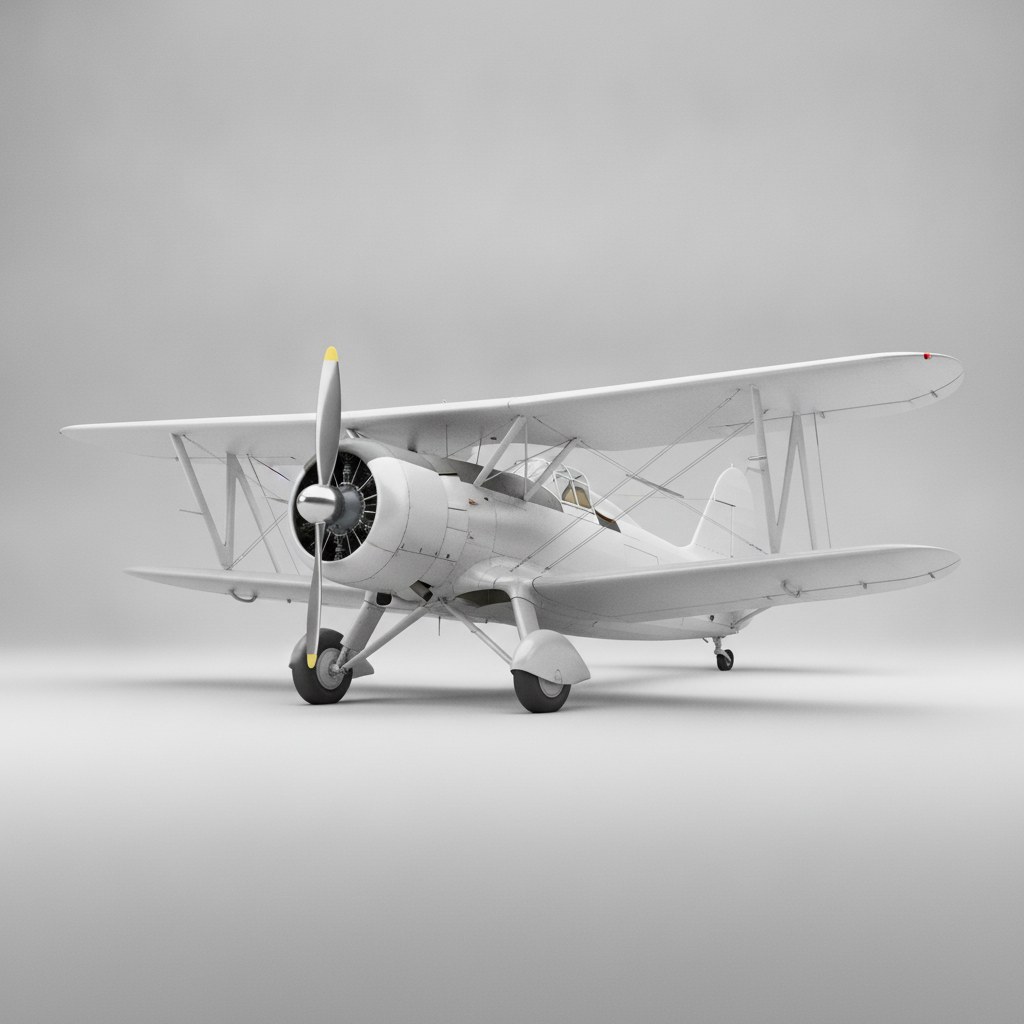
The designation XSB3U-1 does not correspond to any historically attested aircraft. Extensive reviews of U.S. Navy procurement records, manufacturer catalogs, and archival collections—including the Vought Aircraft Company Collection at UT Dallas—confirm that no aircraft designated as an XSB3U or SB3U was ever produced by Vought or the Vought-Sikorsky Aircraft Division.
During the era in question, Vought produced several documented scout-bombers. These included the SBU-1, a biplane scout bomber, and the XSB2U-1, which served as the prototype for the SB2U Vindicator. The SB2U Vindicator, which first flew on January 4, 1936, was significant as the first carrier-based monoplane dive bomber utilized by the U.S. Navy. While the SB2U is well-documented, with 169 units built (including 57 SB2U-3s produced by the Vought-Sikorsky division for the U.S. Marine Corps), there is no evidence that an 'SB3U' series ever existed.
The implied manufacturer, the Vought-Sikorsky Aircraft Division of United Aircraft Corporation, was a combined entity that operated from 1939 to 1942. This division combined the efforts of Chance Vought and Sikorsky, operating primarily out of plants in East Hartford, Connecticut, and the Stratford/Bridgeport area. By 1942, the division was split and reorganized within United Aircraft. While the Vought lineage continues through various corporate successors and Sikorsky remains an active division of Lockheed Martin, the specific Vought-Sikorsky Aircraft Division ceased to exist in 1942.
Because the XSB3U-1 is not a verified aircraft, there are no recorded technical specifications, engine details, or service histories associated with the designation. It does not appear in any military unit assignments or combat records, such as those associated with the Battle of Midway or the Neutrality Patrol, where the SB2U Vindicator was active. Consequently, there are no surviving examples or museum exhibits cataloged under the XSB3U-1 designation. The code is likely a result of a clerical error or a misinterpretation of the XSB2U-1 prototype.