
Development and Design Innovation
The YL-15 Scout emerged from a 1946 U.S. Army contract competition for a dedicated liaison aircraft, with Boeing's Wichita engineering team completing the initial design in approximately one month. The design emphasized extreme STOL capabilities for observation and liaison missions, featuring several revolutionary elements that distinguished it from conventional aircraft of the era.
The most striking feature was the aircraft's sharply tapered rear fuselage, resembling a helicopter more than a traditional airplane, with extensive glazing to provide exceptional visibility for observation duties. Boeing engineers departed from conventional control systems by incorporating spoilers for lateral control instead of traditional ailerons, paired with full-span trailing-edge flaps. The high-mounted tail boom supported twin downward-mounted vertical fins on all aircraft except the first prototype, creating a distinctive silhouette that made the Scout instantly recognizable.
Production and Testing
Boeing manufactured exactly 12 aircraft between 1946 and 1949: two XL-15 proof-of-concept prototypes and ten YL-15 pre-production examples. All production took place at Boeing's Wichita facility, which the company had acquired through its 1934 purchase of Stearman Aircraft. The YL-15 would prove to be the final aircraft design to emerge from the Stearman heritage within Boeing.
The U.S. Army conducted extensive testing of all 12 aircraft from 1947 through 1949, evaluating their performance in the liaison and observation roles. The Scout demonstrated remarkable capabilities, including the ability to be towed at speeds up to 160 mph, disassembled for transport aboard C-97 aircraft, or broken down for transportation in standard military trucks. These features aligned perfectly with Army requirements for deployable observation aircraft.
Engine and Performance
Powering the YL-15 was a single Lycoming O-290-7 engine, a four-cylinder, air-cooled, horizontally-opposed powerplant producing 125 horsepower. Lycoming Engines, operating as a division of Avco since 1929, manufactured thousands of O-290 series engines during the late 1940s and 1950s for various light aircraft applications.
The Scout achieved a maximum speed of 112 mph with a cruise speed of 101 mph, though its true capability lay in slow-speed handling and short-field performance. The aircraft could climb at 628 feet per minute and reach a service ceiling of 16,400 feet, specifications that were entirely adequate for its intended low-altitude observation missions. The tandem seating arrangement placed the pilot forward with a swiveling observer position behind, optimizing visibility for reconnaissance work.
Military Evaluation and Cancellation
Despite superior STOL performance and innovative design features, the YL-15 program faced termination in 1949 when the Army selected the Cessna L-19 Bird Dog for production. The Army had initially planned to order 47 additional aircraft beyond the 12 evaluation examples, but budget considerations and the L-19's more conventional design ultimately prevailed.
The Scout's brief military service involved no combat operations, as production occurred entirely during the post-World War II peacetime period. All 12 aircraft served exclusively in testing and evaluation roles, demonstrating capabilities that included operations from unprepared airstrips, rough terrain landings, and missions requiring extreme slow-speed handling.
Post-Military Service
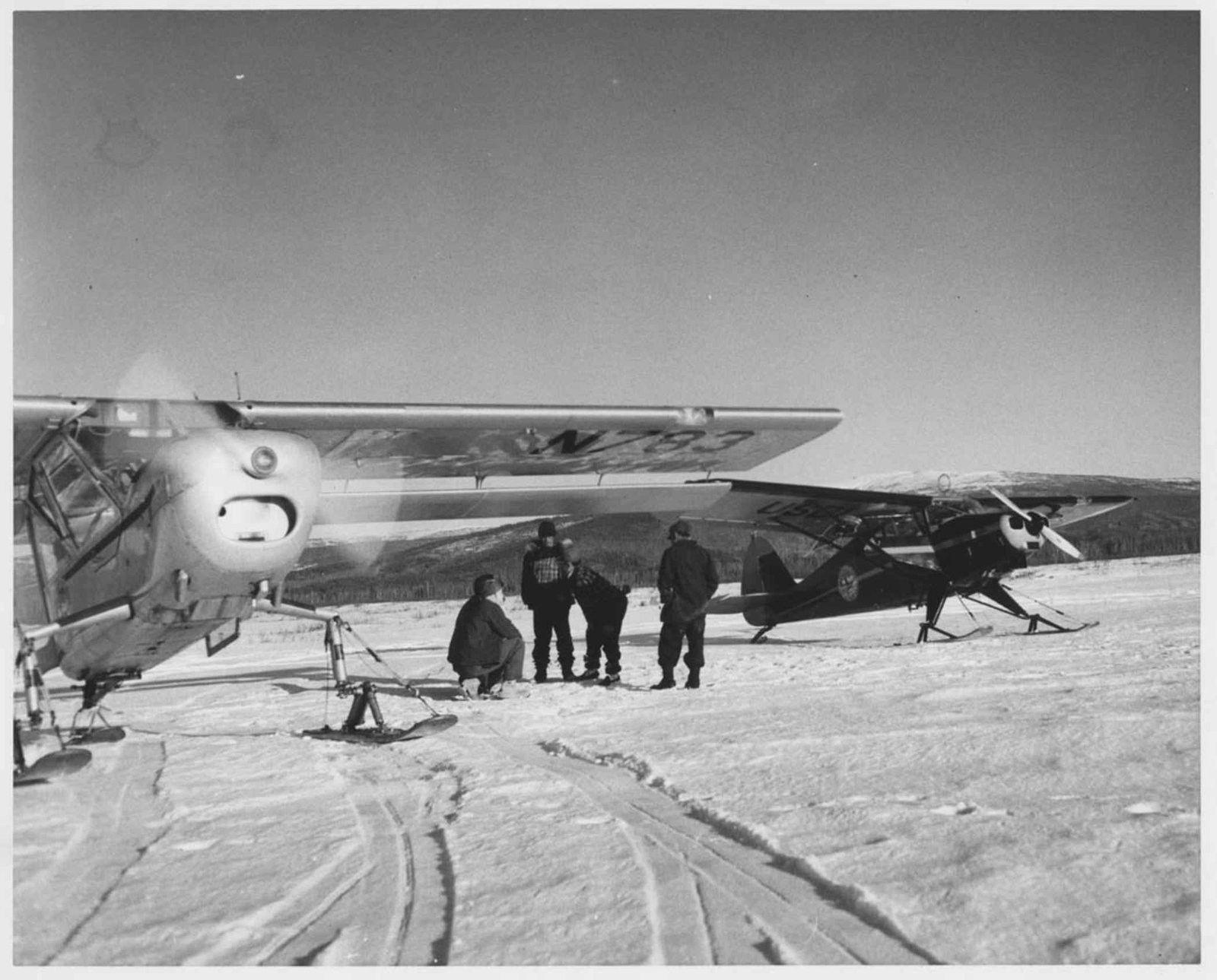
Following Army testing completion around 1949, all 12 YL-15 aircraft transferred to the U.S. Fish and Wildlife Service for deployment in Alaska. The service utilized the Scouts for wildlife patrol and observation missions, taking advantage of their STOL capabilities and ability to operate with skis or floats for seasonal conditions.
One documented example continued flying Fish and Wildlife Service missions until October 15, 1966, when it was placed in storage, representing nearly two decades of operational service in the challenging Alaskan environment.
Restoration and Legacy
A single YL-15 Scout remains airworthy today: serial number 47-432, the final aircraft produced. Following decades of outdoor storage in Alaska, the aircraft was acquired in 1994 and underwent complete restoration by Keith Brumquist. The restoration process included obtaining the type certificate and spare parts for just $25, reflecting the aircraft's obscurity despite its historical significance.
The restored Scout made a memorable appearance at EAA AirVenture Oshkosh 2017, where it captured both the Grand Champion Post-WWII Warbird and Gold Wrench awards. This recognition highlighted both the aircraft's unique design and the quality of its restoration after more than 60 years since first flight.
Historical Significance
The YL-15 Scout represents a fascinating footnote in aviation history as Boeing's final single-engine aircraft design and their bold attempt to diversify into the STOL liaison market during the post-war aviation boom. While the program's commercial failure led Boeing to focus on larger military and commercial projects, the Scout's innovative design elements and exceptional performance characteristics demonstrate the engineering creativity of the immediate post-war era.
Today, the sole flying example serves as a rare reminder of Boeing's experimental period, when the company explored numerous aviation niches before establishing its dominance in commercial jet transport and military aircraft production.