
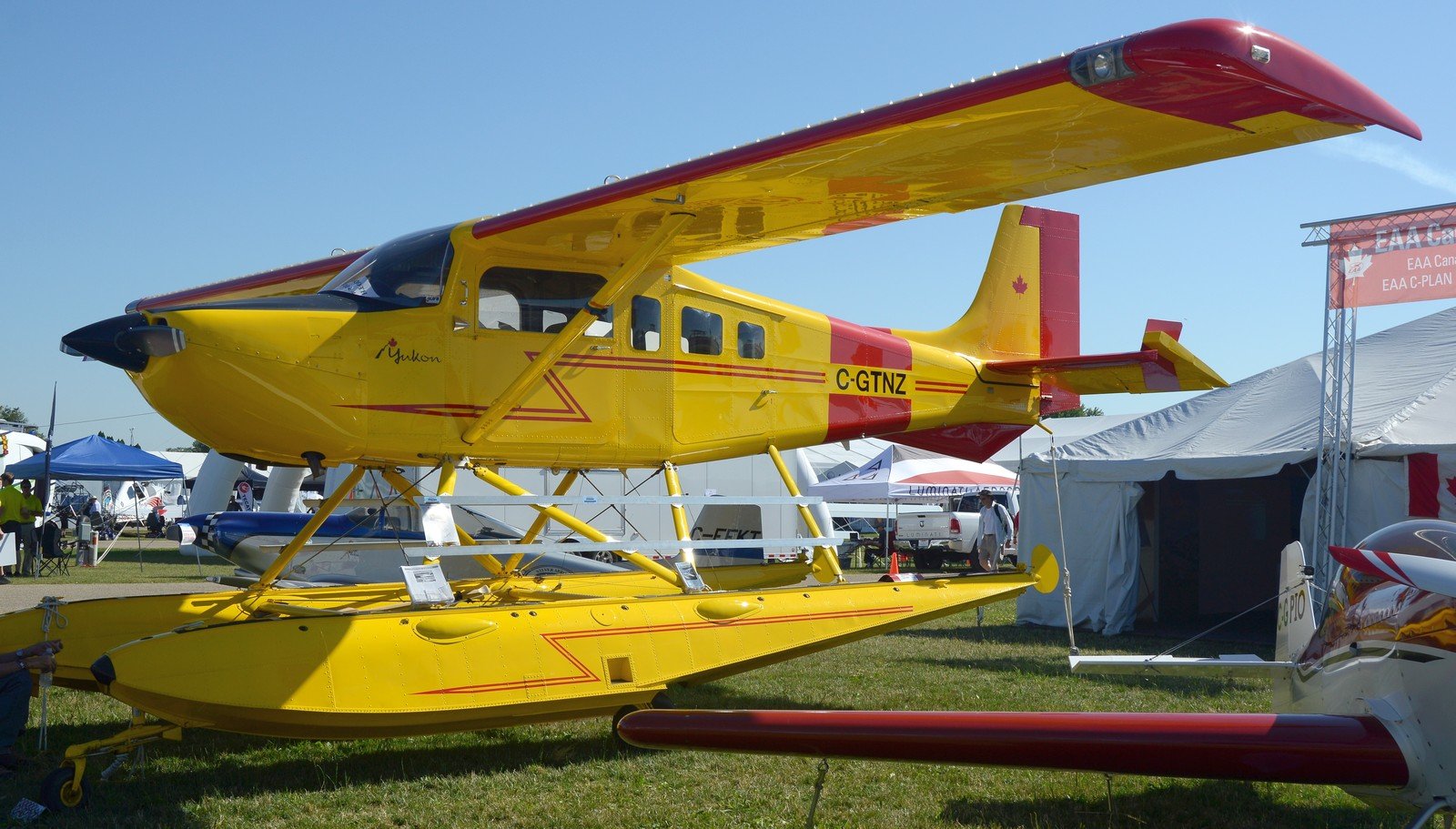
Development and Design Philosophy
The Murphy Yukon emerged from company founder Darryl Murphy's vision to create an accessible bush aircraft for amateur builders operating on limited budgets. Conceived around 1998, the original design evolved over nearly a decade before reaching production. Murphy initially developed the concept as a larger, more powerful aircraft, but customer demands for increased capability led that design to become the radial-engine Murphy Moose instead. The Yukon was then refined as a four-seat alternative that preserved essential bush flying characteristics while offering lower operating costs through its conventional four-cylinder engine.
Murphy derived the Yukon from the established SR2500 Super Rebel and Moose platforms, positioning it strategically between the smaller Rebel and larger Super Rebel in the company's product line. The design emphasized versatility above all else, functioning equally well as a utility transport for cargo hauling or as a recreational aircraft for fishing and camping expeditions into remote areas.
Construction Innovation
The Yukon's most significant innovation lay in its approach to amateur construction. Murphy Aircraft employed semi-monocoque 6061-T6 aluminum construction with all holes pre-punched using numerical control design. This eliminated the need for assembly jigs, a major obstacle for first-time builders lacking workshop space or specialized tools. The simplified construction method made the aircraft accessible to amateur builders who might otherwise find traditional scratch-built designs intimidating.
The aircraft featured a modified NACA 4415 airfoil optimized for short-field performance and low-speed handling. Wings incorporated flaps for enhanced takeoff and landing performance, critical for bush operations. Murphy designed the structure to accommodate multiple landing gear configurations, with builders choosing between tricycle and conventional tailwheel arrangements based on their intended operations.
Performance and Capabilities
Powered by the reliable 180-horsepower Lycoming O-360 in standard configuration, the Yukon achieved a maximum speed of 135 mph and cruised at 120 mph. The optional 210-horsepower IO-390 provided additional performance for operators requiring higher payload or improved high-altitude capabilities. Both engines drove two-bladed Hartzell constant-speed propellers for optimal efficiency across varying flight conditions.
The aircraft's bush flying credentials were established through impressive short-field performance. Takeoff runs required only 350-400 feet, while landing rolls extended to 500 feet, enabling operations from unpaved strips and remote locations. With standard 60-gallon fuel capacity, the Yukon achieved a range of 760 nautical miles and 5.5-hour endurance. Optional 80-gallon tanks extended range for ferry flights or extended wilderness expeditions.
Structural limits of +5.7/-3.8 G exceeded typical utility category requirements, reflecting Murphy's emphasis on durability for rough-field operations. The aircraft's 1,400-pound empty weight and 2,550-pound gross weight provided a useful load of 1,150 pounds, accommodating four occupants with baggage or substantial cargo loads.
Manufacturing and Market Position
Murphy Aircraft announced the Yukon prototype in early 2006, with first flight occurring in 2007. The aircraft debuted publicly at that year's AirVenture show, where it attracted attention from amateur builders seeking affordable alternatives to certified aircraft. Initial kit pricing started at $34,995 for the tailwheel version and $36,600 for the nosewheel configuration, positioning it competitively against similar amateur-built designs.
At least three aircraft had been completed by the time production records were compiled, though exact production numbers remain unclear. Murphy Aircraft's broader success included manufacturing more than 2,000 kits across all models, distributed to customers in 35 countries worldwide. Company founder Darryl Murphy offered the business for sale in January 2014 after 30 years of operation, though Murphy Aircraft continued producing kits through 2019.
Operational Versatility
The Yukon's design accommodated diverse operational requirements through multiple configuration options. Standard wheeled landing gear enabled operations from improved airstrips, while optional floats and amphibious floats opened water-based operations. This versatility proved particularly valuable for Canadian and Alaskan operators accessing remote lakes and rivers.
Cargo compartments and removable rear seats allowed rapid reconfiguration between passenger and freight operations. The high-wing configuration provided excellent ground clearance and simplified fuel system design while offering superior visibility for bush flying operations. Cabin access through conventional doors simplified passenger boarding and cargo loading compared to high-performance designs requiring complex entry procedures.
Legacy and Impact
The Murphy Yukon represents an important development in democratizing bush flying capabilities for amateur builders. By combining proven design elements from Murphy's successful Rebel and Moose families with simplified construction techniques, the aircraft made capable short-field performance accessible to builders lacking extensive workshop facilities or construction experience.
The Yukon's emphasis on affordability and versatility reflected broader trends in amateur-built aviation toward practical, utility-focused designs rather than pure performance. Its continued production through 2019 demonstrated sustained market demand for accessible bush aircraft among recreational and commercial operators alike.