
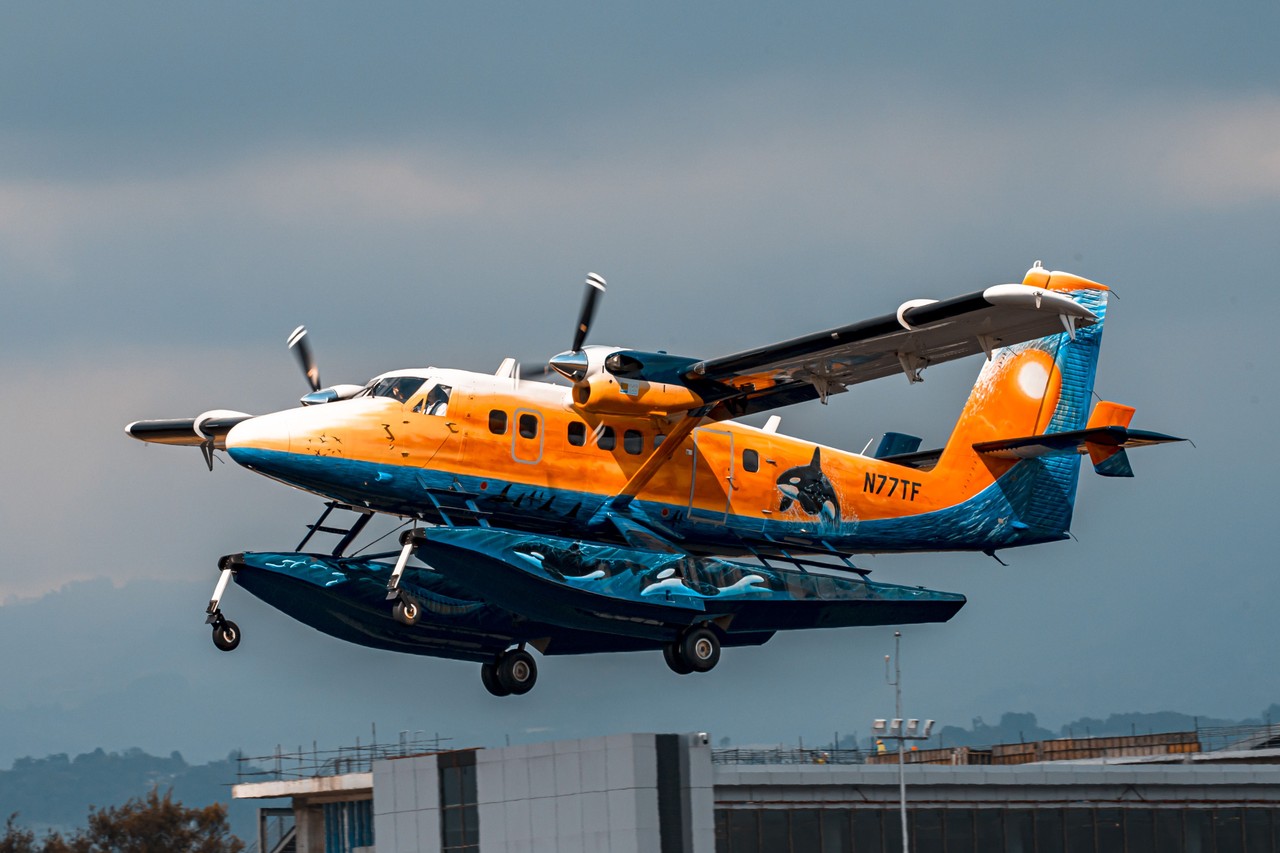
The DHC-6 Twin Otter revolutionized short takeoff and landing aviation as the world's most successful utility transport aircraft. First flown on July 20, 1965, it was a high-wing twin-turboprop that could carry 20 passengers or 3,800 pounds of cargo while operating from strips as short as 1,000 feet. With a wingspan of 65 feet and powered by two Pratt & Whitney Canada PT6A engines, 844 units were manufactured by De Havilland Canada from 1965 to 1988.
View in Encyclopedia| HEX CODE | |||||
|---|---|---|---|---|---|
| British Antarctic Survey | — | 783 | United Kingdom | 4241F4 | |
| British Antarctic Survey | — | 839 | United Kingdom | 4241F5 | |
| British Antarctic Survey | — | 748 | United Kingdom | 4241F6 | |
| British Antarctic Survey | — | 787 | United Kingdom | 4241F7 | |
| British Antarctic Survey | — | 783 | United Kingdom | 4241f4 | |
| British Antarctic Survey | — | 787 | United Kingdom | 4241f7 | |
| British Antarctic Survey | — | 839 | United Kingdom | 4241f5 |
G-IKWP
British Antarctic Survey
S/N: 783United KingdomHex: 4241F4
G-IKWQ
British Antarctic Survey
S/N: 839United KingdomHex: 4241F5
G-IKWR
British Antarctic Survey
S/N: 748United KingdomHex: 4241F6
G-IKWS
British Antarctic Survey
S/N: 787United KingdomHex: 4241F7
VP-FBB
British Antarctic Survey
S/N: 783United KingdomHex: 4241f4
VP-FBC
British Antarctic Survey
S/N: 787United KingdomHex: 4241f7
VP-FBL
British Antarctic Survey
S/N: 839United KingdomHex: 4241f5