
Design and Development
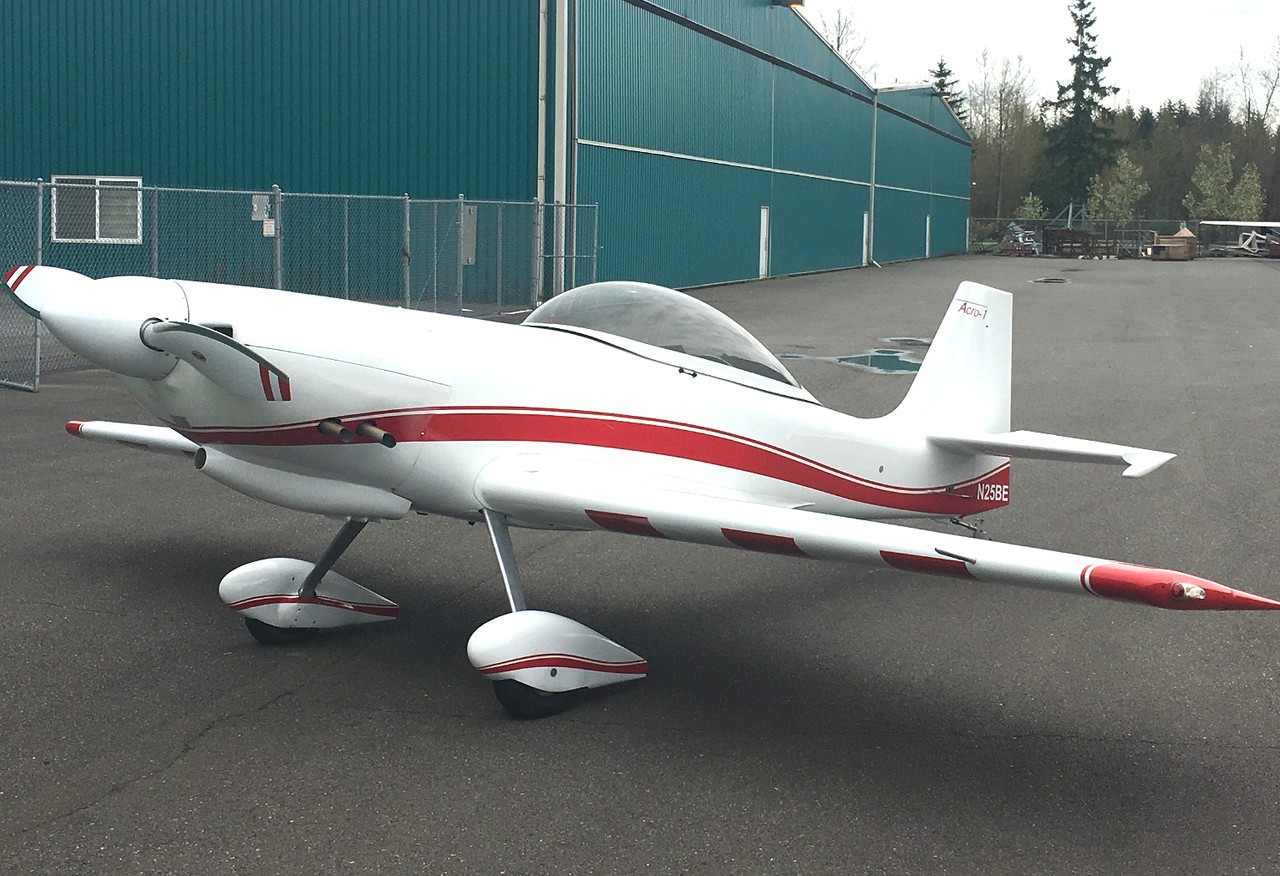
Fred Meyer conceived the Acro 1 as a specialized aerobatic aircraft that would bridge the gap between cross-country performance and competition aerobatic capability. The aircraft incorporated advanced composite construction using graphite and fiberglass materials, representing cutting-edge technology for homebuilt aircraft in the early 1990s. Meyer stressed the airframe to withstand loads of ±15g, enabling pilots to perform the most demanding aerobatic maneuvers while maintaining structural integrity.
The Acro 1's design philosophy emphasized both speed and range alongside aerobatic performance. With its bubble canopy providing exceptional visibility and sleek composite fuselage minimizing drag, the aircraft achieved a cruise speed of 220 mph and maximum range of 1,000 miles. The fixed conventional landing gear configuration simplified construction while maintaining the classic aerobatic aircraft appearance.
Manufacturing and Production
Aircraft Technologies of Lilburn, Georgia offered the Acro 1 through plans and kit form beginning in 1993. The company estimated that builders could complete the aircraft from supplied kits in approximately 700 hours, making it accessible to experienced homebuilders seeking high-performance aerobatic capability. By 1998, the manufacturer reported that one example had successfully flown, demonstrating the viability of the design.
Production remained extremely limited throughout the aircraft's manufacturing life. Federal Aviation Administration records showed three examples registered in the United States by November 2014, representing the known extent of the type's construction. Aircraft Technologies subsequently ceased production, with neither plans nor kits available for new construction.
Technical Specifications and Performance
The Acro 1's powerplant centered on the proven Lycoming IO-360 four-cylinder engine, typically producing 200 horsepower in standard configuration. The design accommodated engines ranging from 100 to 210 horsepower, allowing builders flexibility in performance and cost considerations. The fuel-injected, air-cooled engine drove a two-bladed constant-speed propeller for optimal performance across the aircraft's speed range.
With an empty weight of 780 pounds and gross weight of 1,250 pounds, the Acro 1 provided a useful load of 470 pounds. The aircraft carried 47 gallons of fuel, enabling its impressive 1,000-mile range capability. Performance figures included a stall speed of 58 mph and an exceptional rate of climb of 3,000 feet per minute, reflecting the high power-to-weight ratio essential for aerobatic performance.
Operational Characteristics
The Acro 1's 75-square-foot wing area and cantilever design provided responsive control characteristics essential for precision aerobatic flight. The aircraft's service ceiling of 25,000 feet exceeded most contemporary homebuilt designs, offering pilots access to higher altitudes for extended aerobatic sequences and improved cross-country efficiency. The ±15g structural capability enabled unlimited aerobatic categories including inverted flight, loops, rolls, and competition-level maneuvers.
Pilots appreciated the aircraft's dual-role capability, serving equally well for cross-country travel and aerobatic training or competition. The enclosed cockpit with bubble canopy provided comfort during extended flights while offering the visibility crucial for aerobatic flight. The conventional gear configuration appealed to pilots experienced with tailwheel aircraft handling characteristics.
Legacy and Current Status
The Acro 1 represents a specialized niche in American homebuilt aviation, combining aerobatic capability with cross-country performance in a composite airframe. Despite its advanced design and impressive performance specifications, the aircraft never achieved widespread adoption within the homebuilt community. The limited production numbers reflect both the specialized nature of aerobatic aircraft demand and the complexity of composite construction techniques.
The three known examples registered with the FAA by 2014 represent the aircraft's complete legacy, making it among the rarest American homebuilt designs. The Acro 1 earned recognition in aerobatic aircraft references, acknowledging its contribution to specialized high-performance homebuilt aviation. Aircraft Technologies' cessation of production ended any possibility of expanded construction, leaving the existing examples as the sole representatives of Meyer's innovative design approach.
Today, the Acro 1 stands as an example of the ambitious engineering possible within homebuilt aviation, demonstrating how individual designers could create aircraft matching or exceeding certified aerobatic aircraft performance. The type's rarity ensures its place in aviation history as a unique achievement in composite homebuilt aircraft design.