
Service History
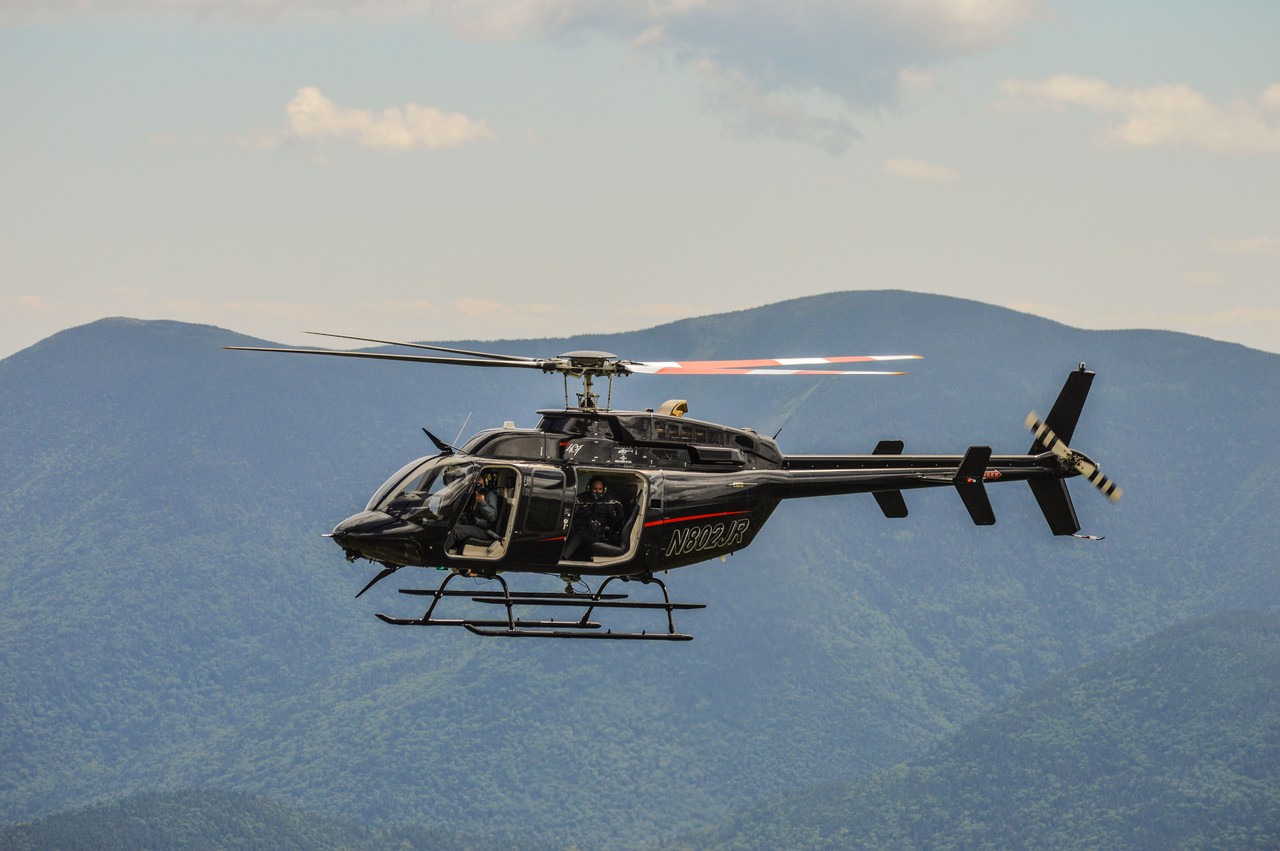
The Bell 407 revolutionized single-engine helicopter operations after entering production in 1996, with approximately 1,855 total units manufactured through 2025. Production peaked at 110 aircraft in 2013, reflecting the helicopter's dominance in air medical services, utility operations, and corporate transport. More than 1,642 civil units remain active today, accumulating over 6 million flight hours by 2021. The aircraft's reliability and low operating costs made it particularly attractive to air medical operators, with companies like HALO-Flight praising its efficiency as "the most efficient air medical helicopter" according to operations manager Tom Klassen.
Limited Military Service
While primarily designed for civilian use, the Bell 407 found modest military applications with approximately 165 units serving various air forces. Operators include the El Salvador Air Force, Iraq Air Force, Jamaica Army, and United Arab Emirates Air Force, though the helicopter saw no major combat deployments. Bell developed several military variants including the 407AH armed reconnaissance version and the 407GT utility variant. The U.S. Army considered the type for its Armed Reconnaissance Helicopter program (ARH-70) and Light Observation Helicopter requirements, but ultimately selected other aircraft for these roles.
The Manufacturer
Bell Textron Inc., originally founded in 1935 by Lawrence Dale Bell as Bell Aircraft Corporation, shifted focus to rotorcraft after World War II and became Bell Helicopter in 1951. The company achieved helicopter industry prominence with the Bell 47 in 1946, the first commercially successful helicopter, and later produced the iconic UH-1 Huey during the Vietnam War. Textron acquired Bell in 1985, with the company eventually rebranding as Bell Textron. Today headquartered in Fort Worth, Texas, Bell remains a leading rotorcraft manufacturer, producing the 407 at its Mirabel, Quebec facility.
Engine & Technical Innovation
Bell's engineering team developed the 407 as a direct successor to the Model 206L LongRanger, addressing customer demands for improved cabin space and performance. The helicopter features a single Rolls-Royce 250-C47 series turboshaft engine, evolving from the original 813-horsepower 250-C47 to the current 862-horsepower 250-C47E in the 407GXi variant introduced in 2018. The four-bladed composite main rotor system, adapted from the OH-58D Kiowa, provides significantly smoother flight characteristics compared to the two-bladed system of its 206 predecessors. Full Authority Digital Engine Control (FADEC) became standard, with dual FADEC systems in the GXi reducing single-point failure risks.
Design Philosophy
The 407's design centered on stretching the proven 206 airframe by 30 inches while maintaining certification under the same type certificate as the JetRanger and LongRanger families. This approach reduced development costs and certification time while providing operators with a familiar platform. The enlarged cabin accommodates up to six occupants including the pilot, with a maximum payload capacity of 2,549 pounds. Bell's engineers prioritized hot-and-high performance, addressing operational limitations of earlier models in demanding environmental conditions.
Performance Characteristics
Pilots appreciate the Bell 407's docile handling characteristics and single-pilot IFR capabilities, making it suitable for demanding air medical missions. The helicopter achieves a maximum speed of 162 mph with a cruise speed of 133 knots and service ceiling of 18,700 feet. Range extends to 324 nautical miles, while climb rate reaches 1,850 feet per minute. These performance figures, combined with the aircraft's 128-gallon fuel capacity, provide operators with significant mission flexibility compared to competing single-engine helicopters.
Production Evolution
Manufacturing began in 1995 with serial production commencing in 1996, continuing through multiple variants. The 407GX introduced in 2011 featured the Garmin G1000H glass cockpit and uprated 250-C47B engine. The 2015 407GXP incorporated the improved 250-C47B/8 powerplant, while the current 407GXi adopted the 250-C47E engine and advanced G1000H NXi avionics suite. Production has stabilized at approximately 51 units annually since 2016, reflecting the helicopter's continued market relevance.
Legacy and Impact
The Bell 407's success spawned development of the twin-engine Bell 427 and 429 helicopters, while its airframe serves as the foundation for the MQ-8C Fire Scout unmanned aerial vehicle. The helicopter established new standards for single-engine rotorcraft reliability and performance, particularly in air medical services where its combination of speed, payload, and operational efficiency proved unmatched. With production continuing into 2025 under the 407GXi designation, the aircraft remains Bell's most successful single-engine helicopter design.