
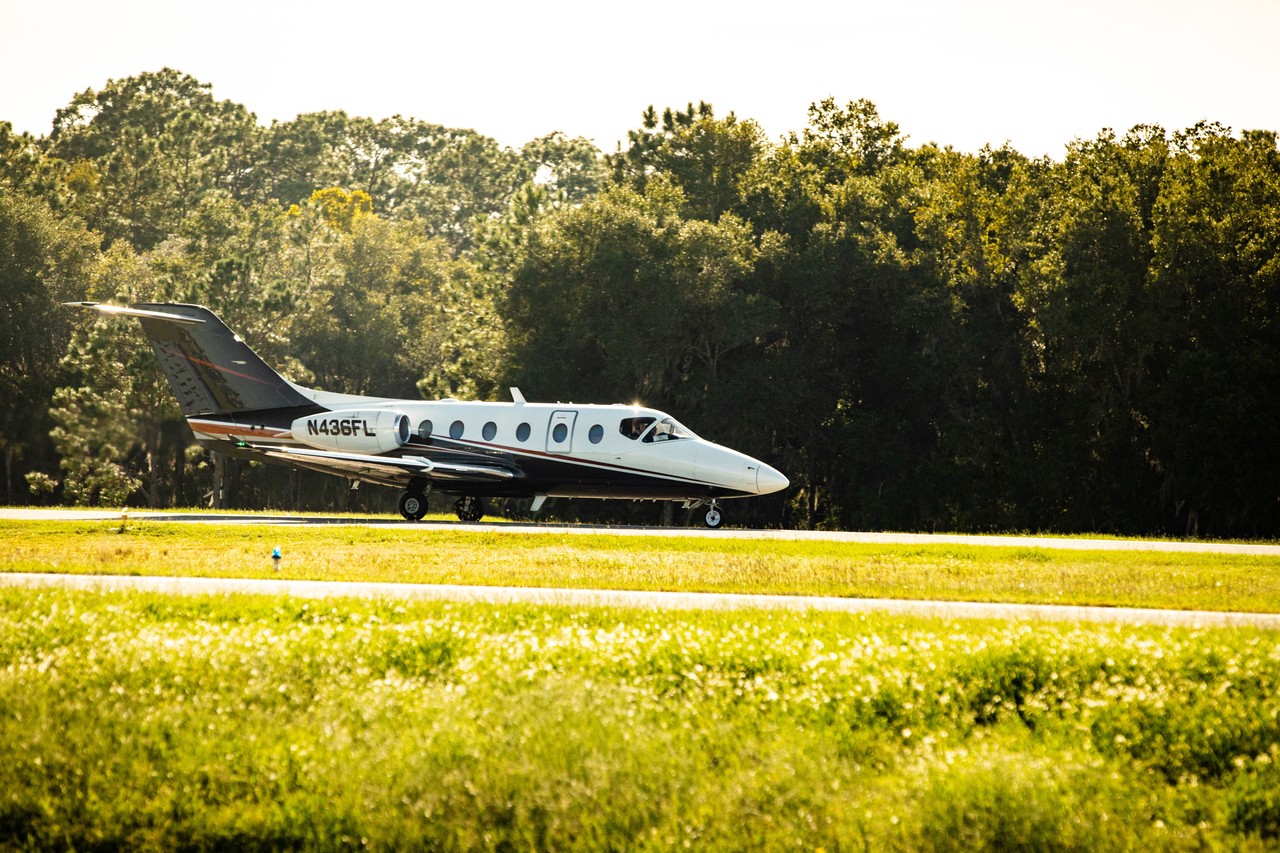
Design Evolution and International Origins
The Hawker 400XP traced its lineage to an ambitious Japanese engineering project of the mid-1970s. Mitsubishi Heavy Industries designed the original MU-300 Diamond for elite business transport, creating a twin-engine configuration that would prove remarkably enduring. The prototype first flew in August 1978, establishing the fundamental design that would eventually become America's most refined small-cabin business jet.
Beechcraft acquired the design rights and production tooling, transforming the Japanese concept into an American success story. The company achieved FAA certification for the Beechjet 400 in May 1986, followed by the improved 400A variant in December 1989. Each iteration refined the aircraft's capabilities while maintaining the efficient twin-engine light jet configuration that made transcontinental flights economically viable for corporate operators.
Manufacturing Legacy and Corporate Evolution
The aircraft's production history reflected the consolidation of American aviation manufacturing. Beech Aircraft Corporation, founded in 1932, operated the program until Raytheon's acquisition in 1980. Raytheon expanded its aviation portfolio in 1993 by purchasing the Hawker business jet division from British Aerospace, subsequently rebranding the Beechjet 400 as the Hawker 400 to capitalize on the prestigious British nameplate.
Raytheon merged its Beech and Hawker divisions into Hawker Beechcraft in 2006, creating a unified business aviation manufacturer. However, market pressures led to bankruptcy filing in 2012, with Textron acquiring the assets in 2014 to form Textron Aviation, which continues operations today.
The 400XP Enhancement Program
Raytheon introduced the 400XP variant in 2004 with substantial improvements over its predecessors. Engineers increased the maximum gross weight by 200 pounds to 16,100 pounds, enabling nine-passenger seating configurations that maximized the 15.5-foot cabin length. The upgrade package included thrust reversers for improved runway performance, Traffic Collision Avoidance System (TCAS) II for enhanced safety, and an emergency locator beacon meeting updated regulatory requirements.
The interior received significant attention, with luxury appointments designed to compete with larger business jets. The cabin measured 4.9 feet wide and 4.8 feet tall, creating a comfortable environment for transcontinental flights. All-glass cockpits became standard equipment, reducing pilot workload and improving situational awareness during complex approaches.
Powerplant and Performance
Two Pratt & Whitney Canada JT15D-5R turbofan engines powered the 400XP, each producing 2,965 pounds of thrust. These twin-spool turbofans represented the final application of Pratt & Whitney Canada's JT15D series in small-cabin business aviation. The engines incorporated thrust reversers, enabling operations from shorter runways that expanded the aircraft's operational flexibility.
The powerplant combination delivered impressive performance metrics for the light jet category. Maximum cruise speed reached 448 knots (515 mph), while the service ceiling of 45,000 feet allowed flights above most weather systems. The 1,950-nautical-mile range enabled nonstop transcontinental flights, positioning the 400XP as a true coast-to-coast business aircraft.
Military Training Applications
While the 400XP remained exclusively civilian, its Beechjet 400 predecessor served the United States Air Force as the T-1A Jayhawk. The military developed this variant between 1992 and 1997 specifically for tanker and transport crew training. The Air Force acquired 180 T-1A aircraft, with an additional seven delivered to the Japan Air Self-Defense Force under the TC-X designation beginning in December 1993.
The T-1A operated from Wright-Patterson Air Force Base in Ohio, training pilots destined for large military aircraft. This application demonstrated the aircraft's docile handling characteristics and reliable twin-engine configuration, qualities that translated directly to civilian operators seeking predictable operating costs.
Commercial Operations and Market Position
Corporate flight departments and charter operators formed the 400XP's primary market. The aircraft filled a specific niche for organizations requiring transcontinental range without the operating costs of larger business jets. Typical crew requirements called for one or two pilots, depending on insurance requirements and operational complexity.
The 400XP competed directly with other light jets but distinguished itself through cabin volume and range performance. Its ability to carry nine passengers on transcontinental flights provided operational flexibility that smaller jets could not match, while maintaining lower operating costs than mid-size alternatives.
Production Conclusion and Continuing Legacy
Raytheon concluded 400XP production in 2010 after manufacturing 225 aircraft over six years. Market conditions during the 2008-2010 economic downturn contributed to the production suspension, as business jet demand contracted significantly. Despite this relatively short production run, the 400XP represented the culmination of more than 900 total Hawker 400 series deliveries.
As of recent surveys, 223 Hawker 400XP aircraft remain in active service worldwide, testament to the type's durability and continuing utility. The aircraft's legacy continues through upgrade programs, including the Nextant 400XT with Williams FJ44 engines (certified October 2011) and the 400XPR variant (certified March 2016). These modernization efforts ensure that the fundamental design pioneered by Mitsubishi in the 1970s continues serving business aviation well into the 21st century.