
Design Heritage and Innovation
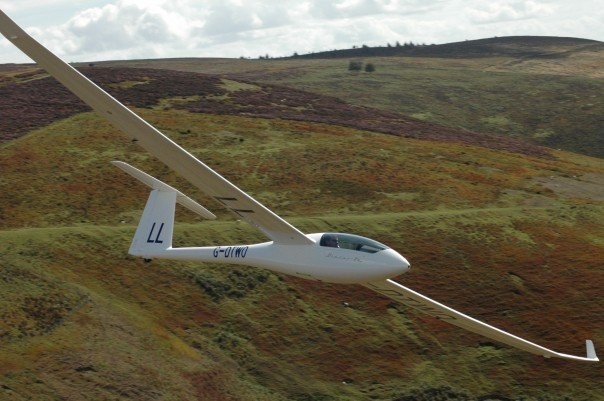
The Discus-2T represents the evolution of one of soaring's most dominant aircraft families. The original Discus, designed by Klaus Holighaus between 1964 and 1994, achieved unprecedented success by winning six consecutive World Championship titles in the Standard Class from 1984 to 1995. Building on this legacy, the Discus-2T incorporates an entirely new wing section with dramatically increased dihedral toward the wingtips, paired with a crash-resistant composite fuselage specifically engineered for the sustainer engine installation.
The aircraft received its type acceptance milestone on December 12, 2006, when the first production example (serial number 23, registered ZK-GOE) was certified in New Zealand. This certification marked the culmination of years of development work that began with the Discus-2 parent design around 1997.
The Manufacturer
Schempp-Hirth Flugzeugbau GmbH traces its origins to January 4, 1935, when it was founded as "Sportflugzeugbau Martin Schempp, Göppingen" in Göppingen, Germany. Over nearly 90 years, the company has established itself as one of the world's premier sailplane manufacturers, consistently pushing the boundaries of glider performance and handling characteristics. The company remains active today, continuing production of the Discus-2T alongside other advanced sailplane designs.
Engine and Technical Specifications
The heart of the Discus-2T's self-launching capability lies in its SOLO 2350 engine, a German-manufactured 2-stroke, 2-cylinder powerplant producing 15.3 kW (20.5 hp). Unlike traditional motorgliders with wing-mounted engines, the Discus-2T houses its sustainer engine entirely within the fuselage, maintaining the aircraft's clean aerodynamic profile essential for soaring performance.
The aircraft's composite construction utilizes DFVLR HQ airfoil sections across its 15-meter wingspan, generating 10.16 square meters of wing area. At 6.41 meters in length and just 1.3 meters in height, the Discus-2T weighs 242 kg empty but can accommodate substantial ballast loading. The aircraft carries 200 kg of water ballast in wing tanks plus an additional 7.8 kg in a tail-unit tank, allowing pilots to optimize wing loading for varying atmospheric conditions.
Performance and Pilot Experience
The Discus-2T maintains the harmonic flight characteristics that made the original Discus family legendary among competition pilots. The aircraft's 22.2 aspect ratio wings provide exceptional lift-to-drag performance, while the increased dihedral angle enhances lateral stability during thermal soaring and cross-country flight.
Pilots appreciate the aircraft's forgiving handling characteristics, which accommodate both experienced competition pilots and those transitioning to high-performance sailplanes. The self-launching capability eliminates dependence on ground support equipment, allowing pilots to operate independently from airports without dedicated soaring infrastructure.
Competition and Recreational Service
The Discus-2T serves primarily in competitive soaring within the Standard Class category, where its 15-meter wingspan places it among the most sophisticated aircraft eligible for national and international championships. The Standard Class represents one of soaring's most competitive categories, where the Discus family has maintained dominance for over four decades.
Beyond competition use, the aircraft serves recreational pilots seeking high performance combined with operational flexibility. Club operations particularly value the self-launching capability, as it reduces operational complexity and costs associated with tow aircraft or winch systems.
Production and Variants
The Discus-2 family encompasses multiple variants addressing different operational requirements. The Discus-2a features a narrow cockpit configuration, while the Discus-2b provides expanded cockpit dimensions. The Discus-2c offers wingspan options of either 15 or 18 meters, with the Discus-2cT providing turbo variants across both wingspan configurations. Most recently, Schempp-Hirth developed the Discus-2c FES (Front Electric Sustainer), representing the latest evolution in self-launching technology.
Legacy and Future
The Discus-2T continues in active production, with Schempp-Hirth maintaining the design as a cornerstone of their sailplane lineup. At AERO 2025, the company announced plans to reintroduce the original Discus design to production beginning in 2026, featuring aerodynamic revisions that incorporate lessons learned from the Discus-2 development program.
This announcement reflects the enduring appeal of Holighaus's fundamental design philosophy, which prioritized predictable handling characteristics alongside maximum performance. The Discus family's sustained success over more than 40 years demonstrates the effectiveness of this approach in competitive soaring.