
Service History
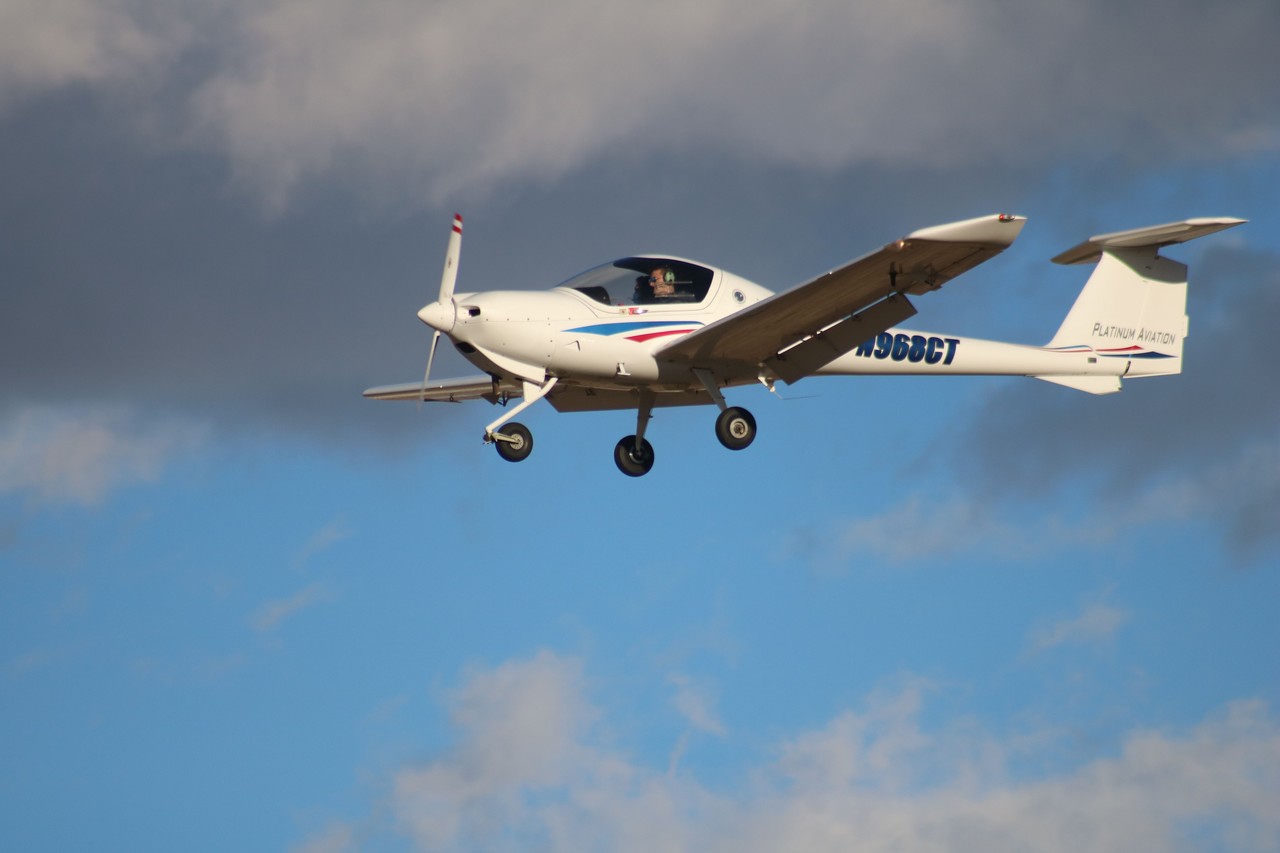
The DA20 Katana transformed flight training worldwide, with well over 1,000 aircraft delivered to flight schools and universities since 1993. Moncton Flight College in Canada operates the largest fleet with 45 units, demonstrating the type's appeal to high-volume training operations. The aircraft earned Flying Magazine's 1995 Flying Eagle Award for best light aircraft, validating its design philosophy of combining advanced materials with practical training capabilities.
Flight schools gravitated toward the Katana because its composite construction eliminated the corrosion and fatigue issues plaguing aluminum trainers. The sleek, rivet-free finish reduced drag and maintenance requirements, while the robust structure withstood the punishment of student operations better than traditional aircraft.
Military Training Service
While never designed for combat, the DA20 found its way into military training programs as air forces sought modern, cost-effective platforms for ab initio pilot training. The Ecuadorian Air Force and Polish Air Force adopted the type for primary flight instruction, appreciating its forgiving handling characteristics and low operating costs. These military operators used the Katana to screen pilot candidates before advancing them to more complex military aircraft.
The Manufacturer
Diamond Aircraft Industries emerged from the Austrian company Hoffmann Flugzeugbau (HOAC AG), which had specialized in motorgliders since the 1980s. The HK36 Super Dimona motorglider, first flown in October 1980 and FAA certified in July 1986, provided the foundation for the Katana's design. Company engineers shortened the Dimona's wings, added flaps, and installed tricycle landing gear to create a dedicated trainer.
In 1992, the company rebranded as Dimona Aircraft and established manufacturing in London, Ontario, Canada. By 1996, it had become Diamond Aircraft Industries, eventually growing into Canada's third-largest general aviation single-engine manufacturer. The success of the DA20 enabled Diamond to expand into twin-engine aircraft like the DA42 and later into unmanned aerial vehicles.
Engine Evolution and Technical Innovation
The original DV-20 and DA20-A1 models used the 80-horsepower Rotax 912, a liquid-cooled inline engine manufactured by BRP-Rotax in Austria. This powerplant, which entered production around 1989 and has since accumulated over 40,000 units across all variants, provided exceptional reliability and fuel efficiency for training operations.
In 1999, Diamond introduced two upgraded variants: the DA20-100 Katana 100 with the 100-horsepower Rotax 912S, and the DA20-C1 Eclipse with the 125-horsepower Continental IO-240-B. The Continental engine, an air-cooled inline four-cylinder produced by Continental Motors in the United States, delivered smoother power delivery and enabled cruise speeds of 135 knots.
Design Philosophy and Performance
The Katana's all-composite construction using glass and carbon-fiber reinforced plastic represented a breakthrough in affordable aircraft manufacturing. This material choice reduced empty weight to just 1,166 pounds while providing superior strength and weather resistance compared to aluminum alternatives. The aircraft's maximum gross weight of 1,764 pounds and 24-gallon fuel capacity provided adequate training endurance without excessive complexity.
Performance specifications varied by engine variant, but the DA20-C1 achieved a top speed of 199 mph, service ceiling between 13,120 and 17,600 feet, and climb rate of 1,000 feet per minute. Takeoff distance over a 50-foot obstacle required 1,106 feet, while landing distance was 1,280 feet, making it suitable for most training airports.
Production Success and Global Reach
Production began in 1993 at Diamond's Wiener-Neustadt, Austria facility, expanding to Canada in 1994 when the first Canadian-built DA20-A1 was delivered to Central Missouri State University. A 1993 demonstration tour across the United States and Canada introduced the aircraft to the North American market, generating substantial orders from flight training organizations.
Continuous production for over 30 years demonstrates the Katana's enduring appeal. The aircraft bridged the gap between traditional trainers and modern technology, proving that composite construction could be both affordable and practical for high-utilization training fleets.
Legacy in Aviation Training
Hundreds of DA20s remain active in flight training roles worldwide, testament to the type's durability and continued relevance. The Katana pioneered the use of composite materials in affordable training aircraft, influencing subsequent designs across the industry. Its success validated Diamond's approach of adapting motorglider technology for conventional aircraft applications, establishing the foundation for the company's continued growth in general aviation manufacturing.