
Service History
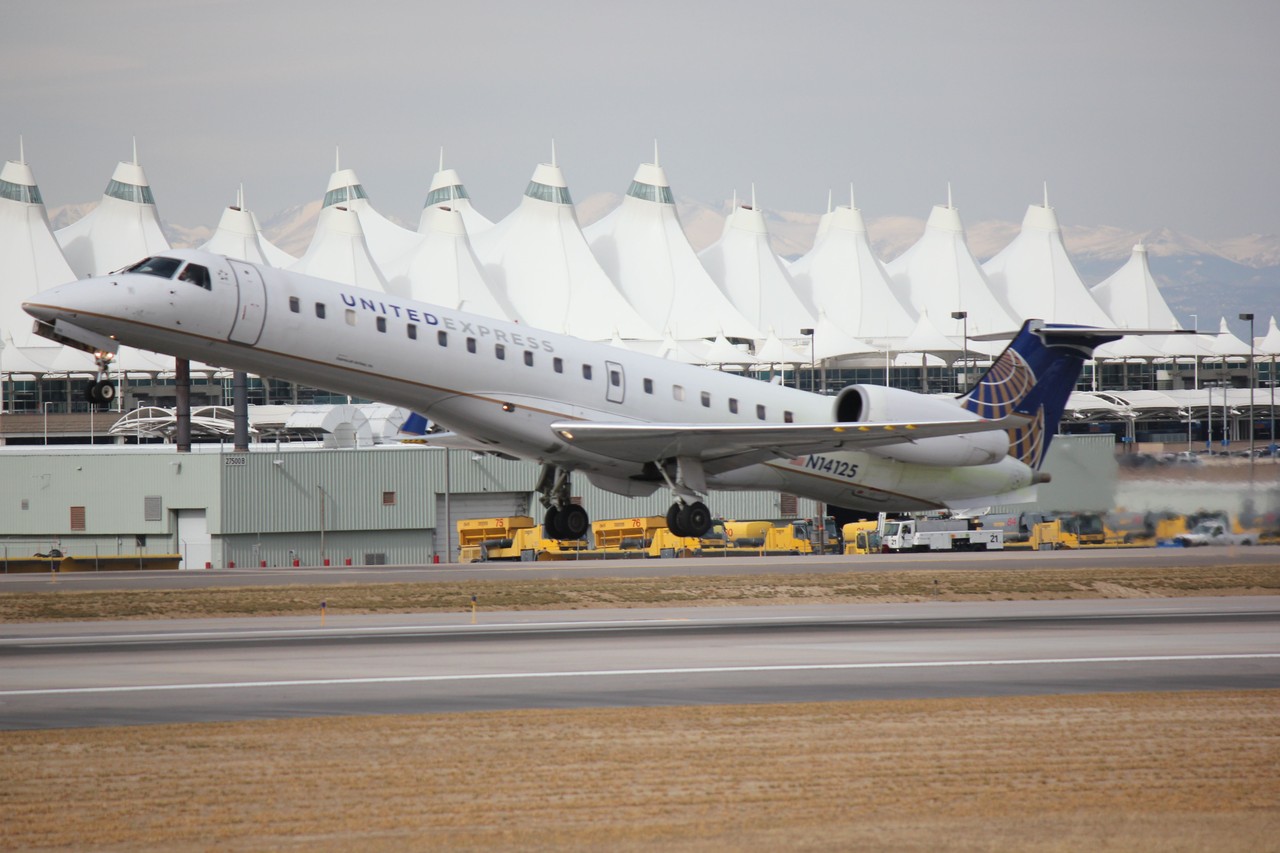
The EMB-145XR entered commercial service as part of the broader ERJ-145 family revolution that fundamentally changed regional aviation in the late 1990s. ExpressJet Airlines served as the launch customer, taking delivery of the first ERJ-145 in December 1996 and entering service on April 6, 1997, operating as Continental Express. By 2006, Embraer had delivered 892 ERJ family aircraft, with production peaking at 48 units per year by 1999, demonstrating the type's rapid market acceptance.
The aircraft found widespread adoption among regional carriers including Comair, which placed the first major order for 60 aircraft in 1993, along with Piedmont Airlines, CommuteAir, JSX, Airlink, and Contour Airlines. Even major carrier JetBlue operated the type briefly in 2007. The ERJ family's efficiency and passenger appeal enabled airlines to replace aging turboprop fleets with jet service on thin routes, fundamentally altering the economics of regional aviation.
The Manufacturer
Embraer S.A., originally Empresa Brasileira de Aeronáutica, developed the ERJ-145XR during one of the most challenging periods in the company's history. Founded in 1969 as a Brazilian state enterprise, Embraer faced near-collapse in 1990 when government funding cuts forced the company to lay off 32 percent of its workforce, reducing employment from 12,800 to fewer than 9,000 employees. The financial crisis temporarily suspended ERJ-145 development for six months in 1990.
Following privatization in December 1994, Embraer recovered dramatically and expanded internationally. In December 2002, the company partnered with Harbin Aircraft Industry Group to establish Harbin Embraer Aircraft Industry in China, which produced 41 ERJ-145s and 5 Legacy 650s before closing in 2016. Today, Embraer S.A. remains a major aerospace manufacturer headquartered in São José dos Campos, Brazil, producing commercial, executive, and defense aircraft worldwide.
Engine and Technical Innovation
The EMB-145XR utilizes two Rolls-Royce AE 3007 turbofan engines mounted on the rear fuselage, a configuration chosen to reduce cabin noise and improve passenger comfort. Originally developed by Allison Engine Company before Rolls-Royce's 1995 acquisition, the AE 3007 was selected in March 1990 after initial sourcing delays. The engines delivered 7 percent better fuel efficiency than originally planned, enabling the low operating costs that made regional jet service economically viable.
Embraer's engineering team designed the ERJ family as a turbofan-powered evolution of the successful EMB-120 Brasilia turboprop, launching the program at the 1989 Paris Air Show. Initial design concepts featured overwing engine mounting, later revised to underwing configuration, and finally to the rear-fuselage arrangement by the early 1990s. The XR variant incorporated specific enhancements including winglets, strakes, an aft ventral fuel tank, and increased cruise speed capability to Mach 0.80, up from Mach 0.78 on standard variants.
Performance and Pilot Perspective
The EMB-145XR demonstrates impressive performance characteristics with a service ceiling of 37,000 feet and maximum cruise speed of 530 miles per hour at Mach 0.80. The extended-range variant's 2,000 nautical mile range capability, achieved through additional fuel tankage, enables nonstop service on longer regional routes that were previously uneconomical.
Operating with a standard two-pilot crew, the aircraft accommodates 50 passengers in a three-abreast configuration within an 18-foot fuselage stretch compared to the EMB-120 predecessor. The rear-mounted engine configuration provides a quieter cabin environment while the swept-wing design delivers jet-smooth ride quality that passengers preferred over turboprop alternatives.
Production Legacy
Embraer manufactured 1,231 total ERJ family aircraft between 1992 and 2020, including all variants of the ERJ-135, ERJ-140, and ERJ-145 series. Production occurred primarily at Embraer's São José dos Campos facility in Brazil, with supplementary manufacturing at the Chinese joint venture in Harbin. By the time of first flight in 1995, Embraer had secured 18 firm orders, 16 options, and 127 letters of intent, indicating strong market confidence.
The ERJ family's success established Brazil as a major player in commercial aviation and demonstrated that regional jets could successfully compete against established turboprop services. Production ceased in 2020, but hundreds of ERJ family aircraft remain in active service with carriers including Piedmont Airlines, Contour Airlines, and numerous international operators. The type's reliability and efficiency continue to provide essential regional connectivity, particularly in markets where larger aircraft remain uneconomical.
Military variants include the R-99 surveillance aircraft introduced in 2001 for intelligence and reconnaissance missions, and the C-99A transport version operated by the Brazilian Air Force, though the basic EMB-145XR remains purely a commercial transport without combat history.