
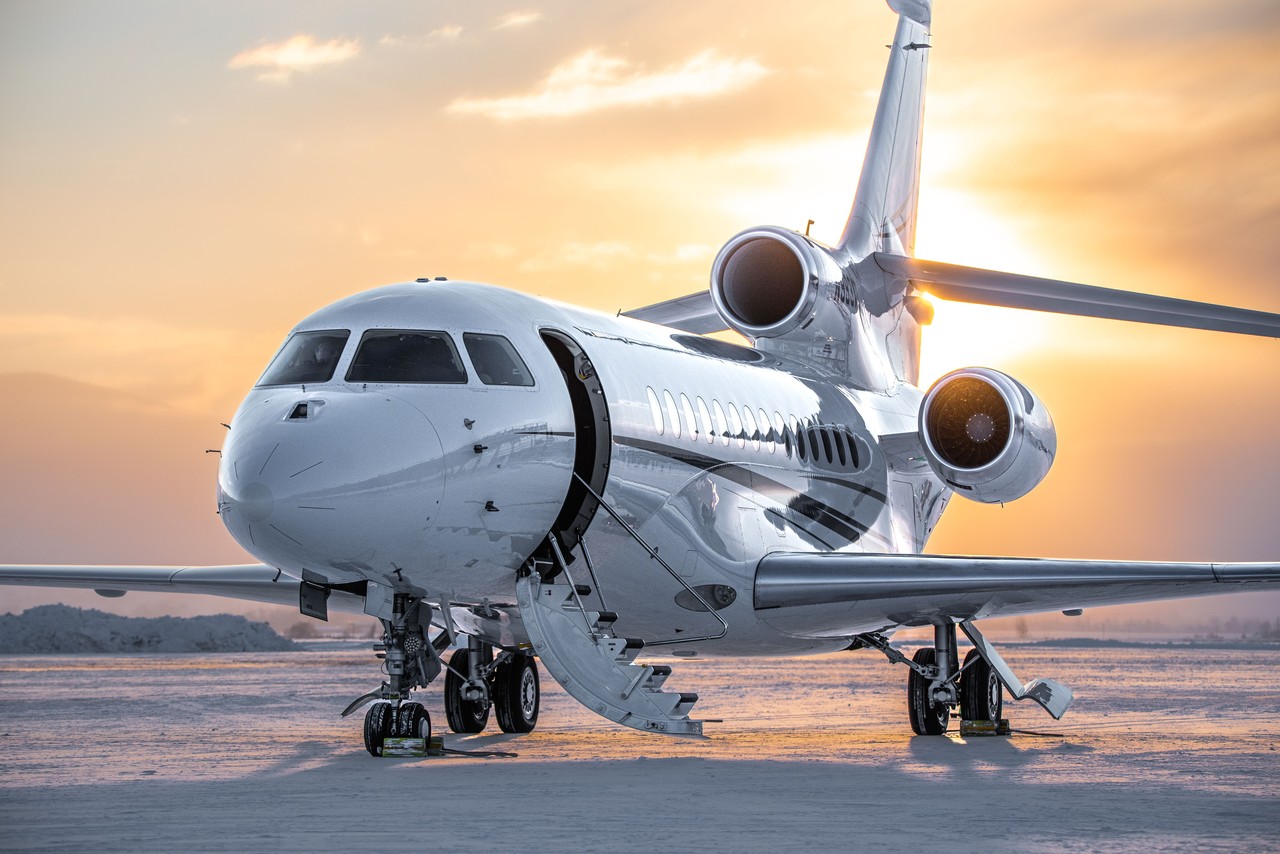
Digital Aviation Pioneer
The Falcon 7X represented a watershed moment in aircraft development methodology, establishing new standards for virtual design processes that would influence the entire aerospace industry. Unveiled at the 2001 Paris Air Show, the aircraft emerged from Dassault's ambitious vision to create an ultra-long-range business jet capable of connecting virtually any two cities worldwide nonstop. The development program spanned four years before the prototype took flight in 2005, followed by a comprehensive 1,200-hour flight test program spanning 15 months.
Service Dominance in Ultra-Long Range Market
Since entering service on June 15, 2007, the Falcon 7X has commanded significant market share in the ultra-long-range business aviation segment. More than 300 aircraft have been delivered as of 2021, with the fleet accumulating over 440,000 flight hours by mid-2016. The hundredth aircraft was delivered in November 2010, demonstrating consistent market demand despite economic uncertainties. By 2016, Europe operated 117 aircraft representing 45 percent of the global fleet, with notable concentrations in Switzerland (18 aircraft), France (13 aircraft), and Luxembourg (8 aircraft).
Dassault Aviation Legacy
Dassault Aviation, founded by Marcel Dassault, has maintained its position as France's premier aerospace manufacturer since the mid-20th century. The company's expertise spans both military fighter aircraft and business jets, with the Falcon series representing decades of refinement in corporate aviation. Dassault continues operations under its original name, manufacturing aircraft at facilities in France while maintaining global support networks. The company's integration of military flight control technologies into civilian aircraft exemplifies its unique position bridging defense and commercial aviation sectors.
Revolutionary Engine and Systems Integration
Three Pratt & Whitney PW307A turbofan engines power the Falcon 7X, each producing 6,402 pounds of thrust for a combined output of 18,000 pounds. These engines, evolved from the PW306 series, consume 318 gallons per hour while delivering the performance necessary for intercontinental operations. The aircraft introduced the first Digital Flight Control System in business aviation, technology adapted from military fighter applications that enhanced handling precision while reducing pilot workload and fuel consumption. The Honeywell Primus Epic avionics suite integrated with the EASy cockpit provides comprehensive flight management capabilities.
Engineering Excellence and Performance
Dassault engineers designed a new high-speed wing 1.86 meters longer than previous Falcon wings, incorporating 5 degrees additional sweep to optimize high-altitude, high-speed performance. The fuselage stretched 20 percent beyond the Falcon 900EX while maintaining identical cabin cross-section dimensions, resulting in a 1,552-cubic-foot cabin volume. This design philosophy improved the lift-to-drag ratio by 10 percent compared to earlier supercritical wing designs while achieving the target 5,950-nautical-mile range at Mach 0.88 cruise speed.
Pilot and Operator Experience
The Falcon 7X requires a two-pilot crew and incorporates fly-by-wire flight controls that significantly reduce pilot workload during long-duration flights. The aircraft's ability to operate from high-altitude airports was demonstrated through testing at Daocheng Airport at 14,500 feet elevation in 2014, expanding operational flexibility for corporate operators. The three-engine configuration provides enhanced safety margins over oceanic routes while the digital flight control system maintains consistent handling characteristics across the flight envelope.
Production Legacy and Market Impact
Dassault has maintained continuous production since 2006, with current aircraft commanding a $54 million list price. The used aircraft market reflects strong residual values, with prices ranging from $15.9 million to $44 million depending on vintage and condition. More than 200 orders were placed during the aircraft's production history, with over 50 firm commitments secured before first flight. The success of the 7X platform enabled development of the extended-range Falcon 8X variant in 2013, which achieved 6,450-nautical-mile capability through aerodynamic refinements and increased fuel capacity, entering service in October 2016.