
Service History
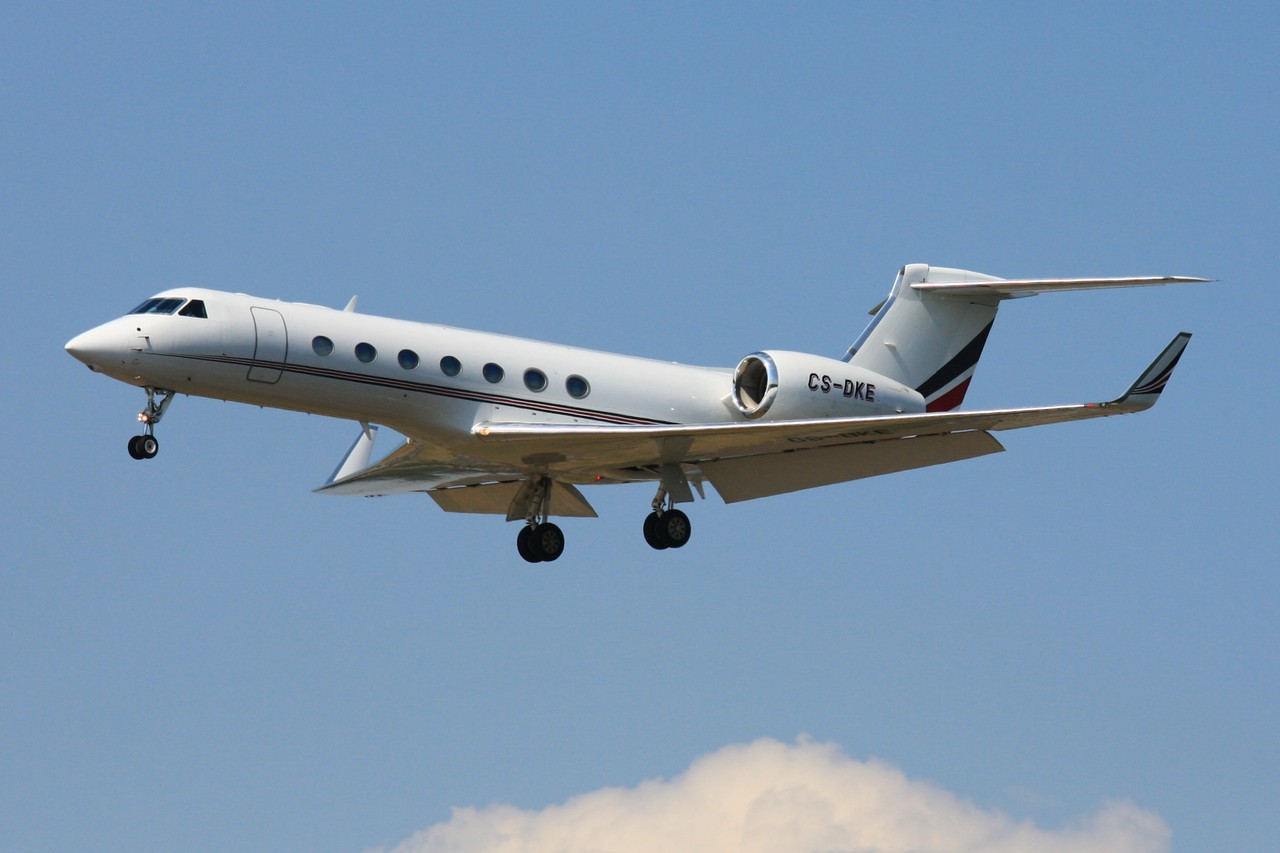
The G550 dominated the ultra-long-range business jet market for nearly two decades, with more than 600 aircraft delivered between 2003 and 2021. Corporate operators embraced the aircraft as the ultimate executive transport, capable of flying nonstop from New York to Tokyo or London to Singapore. The aircraft set more than 50 city-pair speed records during its service life, demonstrating its exceptional performance capabilities that made it indispensable for Fortune 500 companies and heads of state worldwide.
By 2015, when the 500th G550 rolled off the production line, the aircraft had established itself as Gulfstream's best-selling model and earned recognition as the "best-in-value business aircraft" in its class. Airlines, charter operators, and private owners valued the G550's ability to serve as an airborne office, with its spacious cabin and advanced communications systems enabling productive transcontinental flights.
Military Service
The United States military recognized the G550's capabilities and adopted variants for specialized missions. The Air Force operates the C-37B as a VIP transport for senior government officials, while the EA-37B Compass Call variant serves in electronic warfare roles. These military adaptations extended the aircraft's production life beyond commercial deliveries, with special-mission airframes continuing to roll out of Savannah even after the final civilian G550 was delivered in June 2021.
The Manufacturer
Gulfstream Aerospace Corporation, a wholly-owned subsidiary of General Dynamics since 1999, built the G550 at its sprawling manufacturing complex in Savannah, Georgia. The company traces its heritage to Grumman Aircraft Engineering Company, which began developing business aircraft in the late 1950s at Bethpage, New York. Since 1958, Gulfstream has delivered more than 2,000 aircraft, establishing itself as the world's premier manufacturer of ultra-long-range business jets.
The G550 project began in 2001 as an evolution of the successful Gulfstream V, incorporating lessons learned from that aircraft's operational experience. Gulfstream's engineering team focused on extending range, improving fuel efficiency, and enhancing takeoff performance while maintaining the proven aerodynamic design that made the GV series so successful.
Engine & Technical Innovation
Powered by twin Rolls-Royce BR710 turbofan engines, the G550 represented a significant technological leap forward when it entered service. The BR710, a high-bypass turbofan specifically designed for business jet applications, provided 14,750 pounds of thrust per engine while delivering exceptional fuel efficiency. This powerplant enabled the G550 to achieve its remarkable 6,750-nautical-mile range while maintaining competitive operating costs.
The aircraft featured Gulfstream's revolutionary PlaneView flight deck, powered by Honeywell Primus Epic avionics that reduced pilot workload and enhanced safety. The glass cockpit represented state-of-the-art technology in 2003, with four large displays providing comprehensive flight information and weather radar capabilities that allowed pilots to navigate around severe weather systems during long oceanic crossings.
Performance Excellence
Pilots praised the G550 for its exceptional handling characteristics and robust performance across a wide range of operating conditions. The aircraft could cruise at 51,000 feet at Mach 0.80, well above airline traffic, while its maximum operating speed of Mach 0.885 provided schedule flexibility for time-sensitive missions. With a takeoff distance of just 5,910 feet at maximum weight, the G550 could operate from shorter runways that restricted access for competing aircraft.
The G550's impressive climb rate allowed it to reach 37,000 feet in just 18 minutes, quickly ascending above weather and congested airspace. Its maximum certified altitude of 51,000 feet provided access to optimal winds and smooth air, contributing to passenger comfort during transcontinental flights.
Recognition and Legacy
In 2003, the G550 received aviation's highest honor when it won the Robert J. Collier Trophy for its technological advancements and contributions to aeronautical progress. This prestigious award, previously won by the Wright Brothers and Charles Lindbergh, recognized the G550's revolutionary design and its impact on business aviation.
Production concluded in July 2021 after 18 years, replaced by the more advanced G600 and G500 models that incorporated technologies pioneered on the G550. The aircraft's design influence extends beyond Gulfstream, as competing manufacturers studied its aerodynamic efficiency and cabin layout when developing their own ultra-long-range business jets. Today, hundreds of G550s continue to serve operators worldwide, testament to the aircraft's enduring design excellence and operational reliability that made it one of the most successful business jets ever produced.