
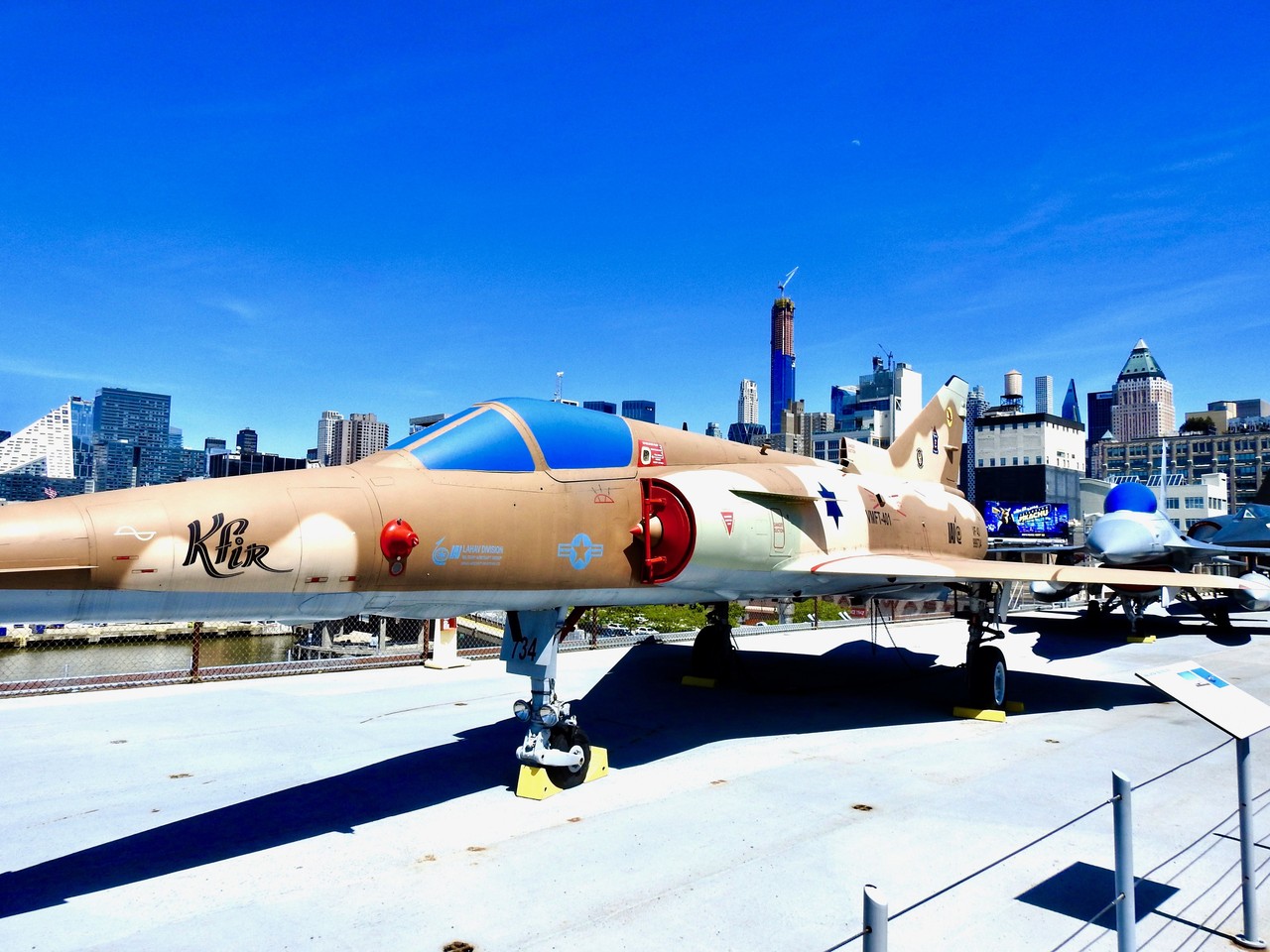
Birth of Israeli Aerospace Independence
The Kfir's development story begins with France's decision to impose an arms embargo on Israel in 1968, cutting off supplies of Mirage aircraft and spare parts. Rather than accept dependence on foreign suppliers, Israeli leadership directed Israel Aircraft Industries to develop a domestically produced fighter. The solution was audacious: reverse-engineer the French Dassault Mirage 5, re-engine it with American powerplants, and integrate Israeli avionics.
The development process proved lengthy and complex. IAI engineers first tested their concept by installing a General Electric J79 turbojet into a modified two-seat Mirage IIIC, which flew in September 1970. A two-seat Kfir prototype followed on October 19, 1970, and an unlicensed Mirage V copy designated Nesher, equipped with the J79 engine, flew in September 1971. The definitive Kfir prototype, initially called Ra'am B (meaning "Thunder"), made its first flight in June 1973.
Design Innovation and Technical Mastery
The Kfir represented far more than a simple engine swap. IAI engineers completely redesigned the aircraft's internal systems, strengthened the landing gear to handle the more powerful J79 engine, and developed an entirely new avionics suite. The J79 turbojet, producing 11,900 pounds of dry thrust and 17,900 pounds with afterburner, transformed the aircraft's performance characteristics. Early production models featured the Elta EL/M-2001B radar system and an improved bombing computer housed in a redesigned nose cone.
The first production airframe, numbered 724, was delivered on April 14, 1975, during Israel's 27th Independence Day celebrations. This initial variant, later designated C.1, saw only limited production with approximately 25 to 30 airframes manufactured at IAI's Lahav division facility.
Operational Service and Combat Record
The Israeli Air Force's 101st "First Fighter" Squadron became the first operational Kfir unit on April 14, 1975, followed by the 113th Hornet Squadron in February 1976. The aircraft's combat debut came in 1977 with strikes against training camps in Lebanon. Two years later, a Kfir achieved the type's only confirmed air-to-air victory by downing a Syrian MiG-21.
However, the Kfir's reign as Israel's premier fighter proved brief. The arrival of American F-15 Eagles in 1976 immediately relegated the Kfir to secondary roles. By mid-1977, the 101st Squadron began replacing its early production Kfirs with the improved C.2 variant, featuring distinctive canard surfaces and "dogtooth" leading wing edges that enhanced aerodynamic performance and handling characteristics.
Technical Evolution and Variants
The Kfir C.2, first flown in 1974 with deliveries beginning in 1976, became the standard production variant. These aircraft incorporated lessons learned from early operational experience, including the aerodynamic improvements that significantly enhanced maneuverability. The C.7 variant focused on enhanced weight performance for the fighter-bomber role, while early production airframes were upgraded under the Kfir Canard (Kfir Gderot) program to near-C.2 performance standards.
Later variants included the export-oriented C.10 with modern cockpit displays, the Elta EL/M 2032 radar, and an in-flight refueling probe. The Kfir 2000 incorporated Elbit radar systems and completely revised avionics architecture.
Israel Aircraft Industries Legacy
Israel Aircraft Industries, now known as Israel Aerospace Industries, established itself as a major defense contractor through the Kfir program. The company's success with the Kfir demonstrated Israeli capability to design, develop, and manufacture advanced combat aircraft independently. This achievement proved crucial during a period when Israeli access to foreign military technology remained uncertain.
International Service and Enduring Legacy
While the Kfir served the Israeli Air Force for approximately twenty years before withdrawal in the late 1990s, the aircraft found new life in international service. Early production Kfirs were leased to the U.S. Navy and Marine Corps for Dissimilar Air Combat Training, providing American pilots with experience against Soviet-style tactics and aircraft performance.
The type continues flying with Colombia, Sri Lanka, and Ecuador, testament to its fundamental design soundness. Additional airframes were sold to South Africa, where they formed the basis for the Denel Cheetah C fighter program. The aircraft's performance specifications—including a service ceiling of 58,010 feet, rate of climb of 45,900 feet per minute, and combat range of 477 miles—remain respectable by contemporary standards.
The Kfir's brief prominence in Israeli service reflected the rapid advancement of fighter technology during the Cold War era, yet its export success and continued operation by multiple nations decades after production ended demonstrates the engineering excellence achieved by Israel Aircraft Industries. More than a fighter aircraft, the Kfir represented Israel's determination to achieve aerospace independence and technological self-reliance during a critical period of national development.