
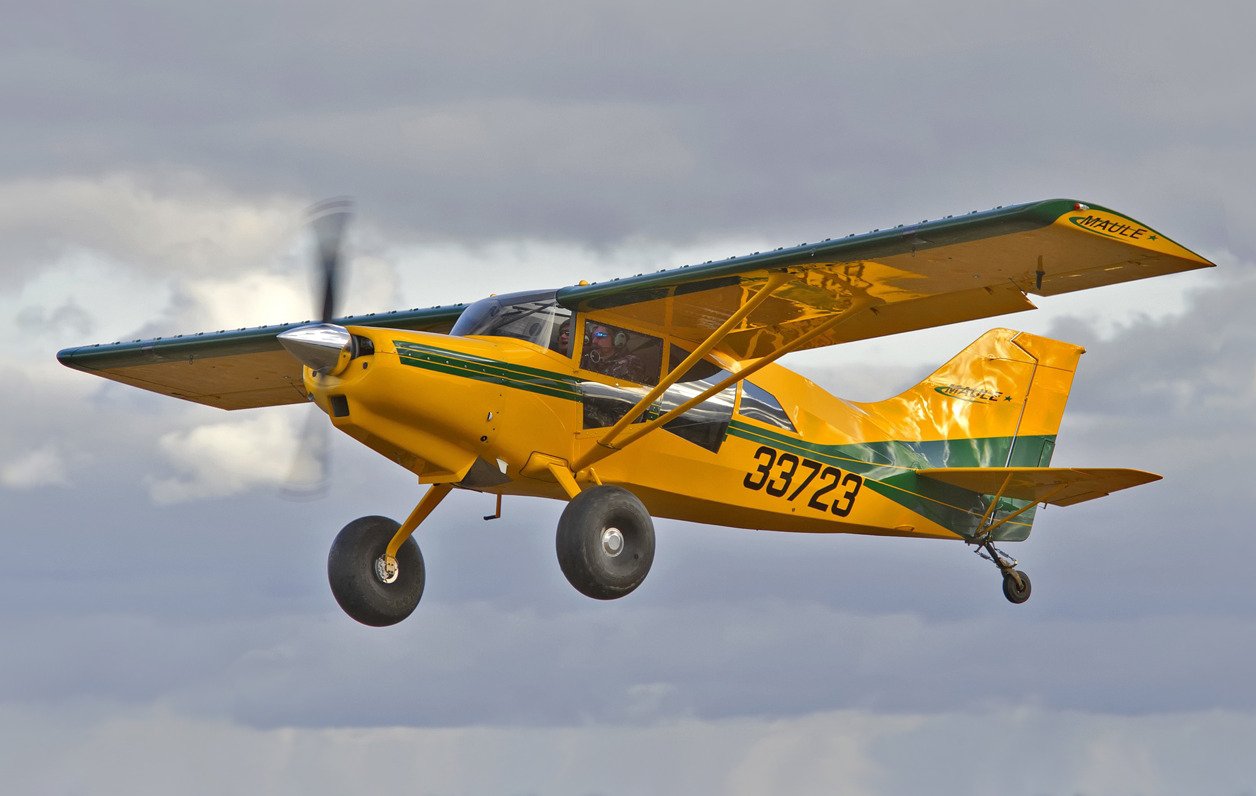
Development and Design Philosophy
The MX-7-180 Star Rocket emerged from Maule Aircraft Manufacturing's systematic expansion of their M-7 series, which had begun in 1984 with the M-7-235 Super Rocket. Originally designated as the "Star Craft," this variant represented a significant departure from Maule's traditional tailwheel configuration by incorporating tricycle landing gear to appeal to flight training schools and pilots preferring conventional ground handling characteristics.
The aircraft's development reflected the vision of B.D. Maule, who had established the company's design philosophy in the 1950s with his M-4 prototype. After relocating the factory from Jackson, Michigan, to the former Spence Air Base in Moultrie, Georgia, in 1968, Maule Aircraft continued hand-building aircraft with relatively unchanged utilitarian characteristics that had proven durable across decades of operation.
Production History and Market Performance
Production of the MX-7-180 Star Rocket remained modest throughout its manufacturing run, reflecting the specialized nature of the general aviation market. Manufacturing records show one aircraft delivered in 1999, seven in 2000, and two in 2001, with no reported deliveries in the first six months of 2002. These limited production numbers were typical of the broader M-7 family, which had produced 970 aircraft by mid-2003 across all variants.
The related MXT-7-180A Comet variant, specifically optimized for flight training schools, achieved somewhat better market penetration with 18 aircraft delivered in 1999, six in 2000, one in 2001, and three in 2002. This variant's success in the training market demonstrated the viability of Maule's tricycle gear configuration for instructional use.
Technical Specifications and Performance
The MX-7-180 Star Rocket is powered by a 134-kilowatt (180-horsepower) Textron Lycoming O-360-C1F piston engine, an air-cooled, four-cylinder, horizontally-opposed powerplant that provides reliable performance across various operating conditions. The aircraft features a Hartzell two-blade constant-speed metal propeller and incorporates five-position flaps for enhanced short-field performance capabilities.
The high-wing configuration provides excellent visibility and inherent stability characteristics valued by both training operators and private owners. The aircraft's fixed tricycle landing gear simplifies ground operations compared to tailwheel variants, while maintaining the rugged construction standards that had become synonymous with the Maule name.
Operational Characteristics and Pilot Experience
Pilots operating the MX-7-180 Star Rocket benefit from what the manufacturer describes as "simple and incredibly capable" flight characteristics. The aircraft features double side doors, facilitating passenger and cargo loading operations. The tricycle gear configuration eliminates the ground handling challenges associated with conventional tailwheel aircraft, making it particularly suitable for pilots transitioning from training aircraft or those operating from paved runways.
The Star Rocket maintains the short-field capability that had become a Maule trademark, continuing the performance legacy established by B.D. Maule's famous demonstration of taking off from inside his hangar and flying out the door with one of his more powerful models. This capability made the aircraft valuable for operators requiring access to unimproved airstrips while maintaining the ground stability of tricycle gear.
Manufacturing Legacy and Current Status
Maule Aircraft Manufacturing has produced just under 2,600 aircraft total across all models since B.D. Maule's first design efforts in the 1950s. The MX-7-180 Star Rocket represents part of this continuing legacy, though production numbers have remained modest in recent decades as the general aviation market has consolidated around fewer manufacturers.
The company continues operations from its Moultrie, Georgia, facility, maintaining the hand-building approach that has characterized Maule aircraft since the company's founding. This manufacturing philosophy, while limiting production volume, has ensured consistent quality and the ability to accommodate customer-specific modifications that larger manufacturers typically cannot provide.
Market Position and Competitive Environment
The MX-7-180 Star Rocket competed in the increasingly challenging four-seat utility aircraft market of the late 1990s and early 2000s. While major manufacturers like Cessna and Piper dominated overall market share, Maule carved out a niche serving operators requiring rugged construction and short-field performance capabilities that mass-produced aircraft often could not match.
The aircraft's positioning between pure training aircraft and more sophisticated touring planes reflected the specialized needs of flight schools requiring robust construction combined with forgiving handling characteristics. The Star Rocket's design philosophy emphasized functionality over luxury, appealing to operators prioritizing operational capability over passenger comfort amenities.