
Market Dominance
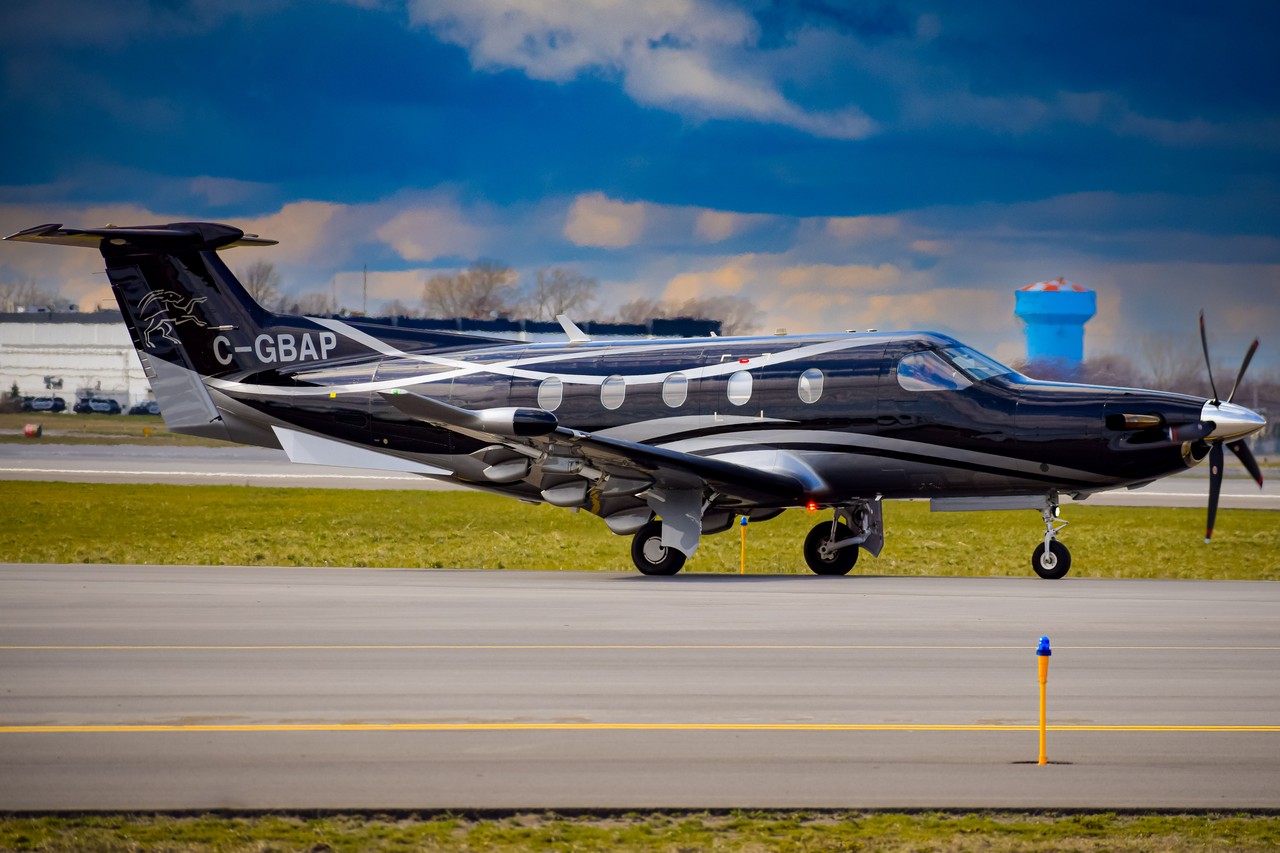
The PC-12 achieved unprecedented success in the specialized single-engine turboprop market, with over 2,000 aircraft delivered by May 2023. By March 2020, approximately 1,050 PC-12s were registered in the United States alone, representing the largest fleet of pressurized single-engine turboprops in the world. The aircraft's performance specifications consistently exceeded its primary competitor, the Cessna Caravan, in range, cruise speed, and climb rate, establishing Pilatus as the dominant force in this market segment.
The Swiss Manufacturer
Pilatus Aircraft Ltd., founded in 1939 in Stans, Switzerland, spent 46 years perfecting single-engine aircraft before launching the PC-12 program. The company had established its reputation with successful trainers like the PC-7 turboprop and transport aircraft, producing 322 PC-11 gliders among other designs. When Pilatus announced the PC-12 development at the October 1989 National Business Aviation Association convention in Atlanta, Georgia, the company leveraged nearly five decades of single-engine expertise to create an entirely new category of aircraft.
Revolutionary Design Development
Development work began in 1987 with a clear mission: create a large single-engine utility aircraft capable of high-speed, long-distance flight in a market segment that simply did not exist. The design team incorporated dual access points—a standard passenger door and an oversized aft cargo door—making the aircraft equally suitable for executive transport and freight operations. A full-size fuselage mockup displayed at the 1989 NBAA convention generated immediate industry interest, leading to the construction of a proof-of-concept prototype in 1990.
The prototype's maiden flight on May 31, 1991, validated the design concept. Swiss Federal Office of Civil Aviation certification came on March 30, 1994, followed by crucial FAA approval on June 15, 1994, opening the lucrative American market.
Engine and Performance Excellence
The PC-12's success stems largely from its Pratt & Whitney Canada PT6A-67 turboprop engine, later upgraded to the PT6A-67B in the PC-12/45 variant. This powerplant delivers exceptional performance characteristics that pilot praise consistently: cruise speeds approaching 280 knots, service ceilings above 30,000 feet, and ranges exceeding 1,500 nautical miles. The pressurized cabin allows high-altitude operations above most weather, while the robust landing gear handles unprepared airstrips that would challenge twin-engine competitors.
Production Evolution
Pilatus organized PC-12 production into distinct series, each incorporating progressive improvements. Series 1 aircraft (serial numbers 101-120) entered service in 1994-1995, followed by Series 2 and 3 variants that introduced the PC-12/45 configuration with increased gross takeoff weight from 9,040 to 9,920 pounds. The PC-12/47 appeared at serial number 683, while the revolutionary PC-12NG (Next Generation) launched in 2008 with serial numbers beginning at 1001.
Production milestones tell the story of sustained market acceptance: 253 aircraft delivered by December 2000, the 1,000th delivery in June 2010, and the 2,000th aircraft handed over in May 2023. Peak production reached 80 aircraft in 2022, with a healthy backlog of 63 units demonstrating continued demand.
Operational Versatility
The PC-12's design philosophy of maximum versatility created a unique aircraft serving remarkably diverse roles. Air taxi operators prize its passenger comfort and jet-like performance, while cargo companies utilize the large aft door for package delivery routes. Corporate flight departments value the aircraft's ability to access shorter airfields while maintaining cabin-class comfort for executives.
By May 2023, the global PC-12 fleet had accumulated over 10 million flight hours across 9.3 million landings. Seventy-one aircraft had exceeded 20,000 flight hours each, with the highest-time example surpassing 35,000 hours—testament to the design's durability and operator confidence.
Legacy of Innovation
The PC-12 succeeded because it created a market rather than competing in an existing one. No manufacturer had previously combined single-engine economics with turboprop performance and pressurized comfort in a large utility airframe. This innovation established Pilatus as the undisputed leader in pressurized single-engine turboprops, with 1,889 aircraft remaining in active service as of May 2023.
Continuous production spanning three decades, from the original 1994 deliveries through the current PC-12NG variant, proves the enduring value of the basic design concept. The PC-12 remains in production at Pilatus's Stans facility, where Swiss engineering precision continues building the world's most successful single-engine turboprop transport.