
Development and Design
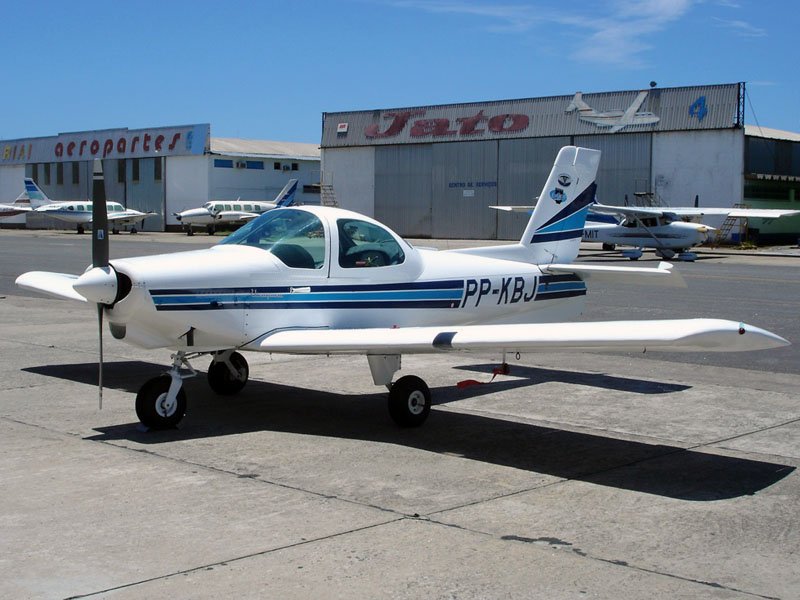
The A-122 Uirapuru emerged from Brazil's ambitious program to develop domestic aerospace capabilities in the 1960s. Designed by Carlos Gonçalves and José Carlos de Sousa Reis, the aircraft represented a significant milestone as Brazil's first indigenous military trainer design. The engineering team focused on creating a modern training platform that could effectively prepare pilots for advanced aircraft operations while incorporating contemporary design features like tricycle landing gear and side-by-side seating configuration.
The aircraft's name "Uirapuru" derives from a small Amazonian bird considered a symbol of good fortune in Brazilian folklore, reflecting the national pride invested in this aviation project. The designers prioritized visibility and communication between instructor and student, positioning both seats side-by-side rather than in the tandem arrangement common in many military trainers of the era.
Manufacturing and Production
Aerotec, founded in 1962 in São José dos Campos under the Brazilian General Command for Aerospace Technology, established Brazil's credentials as an aircraft manufacturer through the Uirapuru program. Production commenced in 1968, three years after the successful maiden flight, and continued through 1977. During this nine-year production run, Aerotec manufactured 155 aircraft including prototypes, demonstrating sustained commitment to the program despite the relatively small market for training aircraft.
The São José dos Campos facility became the center of Brazilian aviation development, with the Uirapuru program serving as a proving ground for manufacturing techniques and quality control processes that would later benefit other Brazilian aerospace ventures. Each aircraft required precise construction to meet military certification standards while maintaining cost-effectiveness for training operations.
Military Service and Operations
The Brazilian Air Force became the primary operator of the A-122 Uirapuru, ordering dozens of aircraft within years of the first flight. The type served as the backbone of Brazilian pilot training programs, providing fundamental flight instruction before students progressed to more complex aircraft. The Uirapuru's docile handling characteristics and forgiving flight envelope made it ideal for primary training missions.
Paraguay emerged as a significant international operator, acquiring 14 T-23 Uirapurus through two separate procurements. Eight new-build T-23s were delivered directly from Aerotec in 1975, followed by six additional T-23As obtained from Brazilian stocks in 1986. This extended service life demonstrated the aircraft's durability and continued relevance in training operations more than two decades after its first flight.
The aircraft's military designation varied by operator, with Paraguay designating their aircraft as T-23 and T-23A variants. These designations likely reflected minor equipment differences or delivery batches rather than significant design modifications. The Uirapuru served exclusively in training roles throughout its military career, never being adapted for combat or specialized mission requirements.
Technical Characteristics and Performance
The A-122 Uirapuru's performance envelope was optimized for training operations rather than maximum capability. With a service ceiling of 5,000 feet and maximum speed of 100 knots, the aircraft provided adequate performance for basic flight instruction while maintaining safety margins appropriate for student pilot operations. The climb rate of 787 feet per minute ensured responsive performance during training maneuvers and emergency procedures.
The aircraft's range of 429 nautical miles provided sufficient endurance for extended training flights without requiring frequent refueling stops. This capability allowed training programs to conduct comprehensive flight lessons including navigation exercises and cross-country flight instruction. The low-wing configuration provided stable flight characteristics while offering students experience with retractable landing gear operations in later training phases.
Civil Applications and Legacy
Beyond military training, Aerotec manufactured additional Uirapuru aircraft for civilian operators, though specific details of commercial service remain limited. The civilian variants likely served flight training schools and private operators requiring reliable, economical aircraft for instruction purposes. The type's straightforward systems and predictable handling made it suitable for civilian flight training operations.
The Uirapuru program established important precedents for Brazilian aerospace manufacturing, demonstrating the country's ability to design, certify, and produce military aircraft to international standards. While production numbers remained modest compared to major international training aircraft, the program provided valuable experience that contributed to Brazil's later success in commercial aviation through companies like Embraer.
The aircraft's service span of over two decades with multiple operators testified to sound basic design and robust construction. Though no longer in production, the A-122 Uirapuru remains an important milestone in South American aviation history, representing Brazil's emergence as a capable aerospace nation during the pivotal 1960s development period.