
Competition Dominance
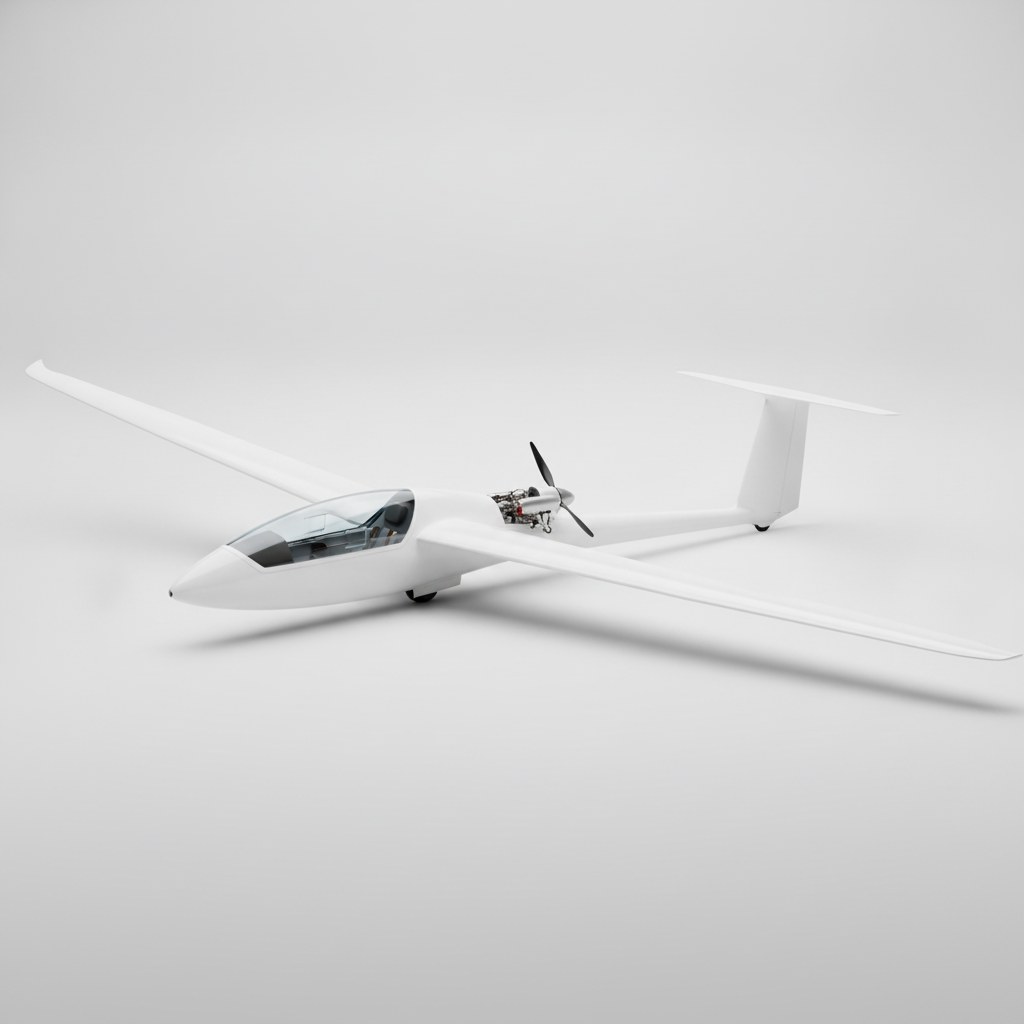
The AS-33Es emerged as the successor to Schleicher's legendary ASG 29, which had dominated the 18-meter competition class for over a decade. At least 32 units across all AS-33 variants have been built through construction number 33032, with the Es variant serving competition pilots and gliding clubs seeking the latest in aerodynamic efficiency. The aircraft represents a new generation of sailplane design, incorporating computational fluid dynamics simulations and wind tunnel testing to optimize performance in the high-speed flight regime.
The Manufacturer
Alexander Schleicher GmbH & Co. has operated continuously since 1930, establishing itself as one of the world's premier glider manufacturers over more than 90 years. Founded by Alexander Schleicher, the family-owned company remains independent and produces 50-60 gliders annually from their facility at Huhnrain Airport near Frankfurt. The company pioneered electric self-launch systems starting with the ASG 32 EL in 2010, developing expertise that would prove crucial for the AS-33 family's electric variants.
Engine and Technical Innovation
The AS-33Es distinguishes itself from the unpowered AS-33 and electric AS-33 Me through its Solo 2350 powerplant, a 22 kW air-cooled two-cylinder two-stroke engine with electric starter. This powerplant enables independent launch capability while maintaining the aircraft's 300 kg empty weight. The sailplane's composite construction features a T-tail configuration with a 10 square meter wing area, yielding an impressive aspect ratio of 32.4 that maximizes lift-to-drag performance.
The design incorporates several advanced features including three-tier airbrakes for precise speed control, independent electric water ballast valves for weight adjustment during flight, and retractable landing gear with disc brakes. The cockpit prioritizes pilot efficiency with an adjustable seat, carbon fiber instrument panel, and integrated control handles designed for extended competition flights.
Versatile Configuration
A key innovation of the AS-33Es is its modular wing design, allowing pilots to compete in both 15-meter and 18-meter FAI classes with the same aircraft. The outer wing panels detach at the 5.1-meter span station, enabling quick reconfiguration for different competition categories. This versatility provides significant cost savings for competition pilots who previously required separate aircraft for different classes.
Performance Excellence
The AS-33Es was specifically engineered to excel in high-speed flight conditions through new wing profiles developed using advanced computational methods. The design team focused on improving three-dimensional airflow characteristics at critical junctions, particularly the fuselage-wing transition and wingtips where previous designs lost efficiency. With a maximum gross weight of 600 kg, the sailplane achieves high wing loading that translates to superior penetration performance in challenging atmospheric conditions.
Pilot Reception
Competition pilots have praised the AS-33Es for its handling characteristics and performance improvements over earlier designs. Pilot Werner Amann noted the aircraft's capabilities during competition events, highlighting the effectiveness of the new aerodynamic refinements. The sailplane's ergonomic cockpit design reduces pilot fatigue during long competition flights, while the crash-safety fuselage construction provides enhanced protection.
Production and Variants
Production continues at Schleicher's Poppenhausen facility as of 2026, with three primary variants addressing different mission requirements. The base AS-33 serves as a pure sailplane without propulsion, while the AS-33 Me features an electric self-launch system, achieving certification as the first electric-powered 18-meter competition glider alongside the AS 34 Me. Test pilot Tobias Mörsel conducted the Me variant's first flight at 11:33 a.m. from Huhnrain Airport, demonstrating the electric system's capabilities.
Legacy and Impact
The AS-33Es has influenced modern glider design beyond its immediate competition role, with aerodynamic innovations transferring to subsequent Schleicher models including the AS 35, which replaced the ASH 31 Mi. The aircraft represents the evolution of gliding technology toward electrification and enhanced aerodynamic efficiency, establishing new benchmarks for the 18-meter class while maintaining the reliability and craftsmanship that has characterized Schleicher products for over nine decades.