
Design Philosophy and Development
Paul Poberezny, founder of the Experimental Aircraft Association, conceived the Acro Sport II in the 1970s as a direct response to the limitations plaguing existing homebuilt biplanes. Earlier "midget" biplane designs suffered from poor handling characteristics and proved challenging for average pilots to fly safely. Poberezny consulted with renowned aircraft designer Curtis Pitts during the development process, incorporating lessons learned from aerobatic aircraft design to create a more forgiving and capable platform.
The design objectives centered on creating an aerobatic biplane that was significantly larger and more stable than existing homebuilt alternatives. Poberezny specifically engineered the aircraft to accommodate pilots up to 66 inches tall and 240 pounds, addressing size limitations that had restricted many enthusiasts from enjoying aerobatic flight. The resulting aircraft featured a 43-inch chord M-6 airfoil and conventional steel tube fuselage construction covered in fabric, combined with wooden wing structures.
Production and Market Impact
Unlike traditional aircraft manufacturing, the Acro Sport II reached builders through plans and material kits distributed by Acro Sport in Wisconsin, with Aircraft Spruce and Specialty supplying construction materials. Approximately 1,000 sets of plans were sold to amateur builders, though only an estimated 250 aircraft were actually completed and flown. This completion rate, while seemingly modest, represented typical homebuilt aircraft statistics where many enthusiasts purchase plans but never finish construction.
By March 2017, the Federal Aviation Administration recorded 83 active registrations in the United States, down from a peak of 129 total registrations. Transport Canada listed 11 registered examples in Canadian territory during the same period, indicating the design's appeal extended beyond American borders.
Technical Excellence and Performance
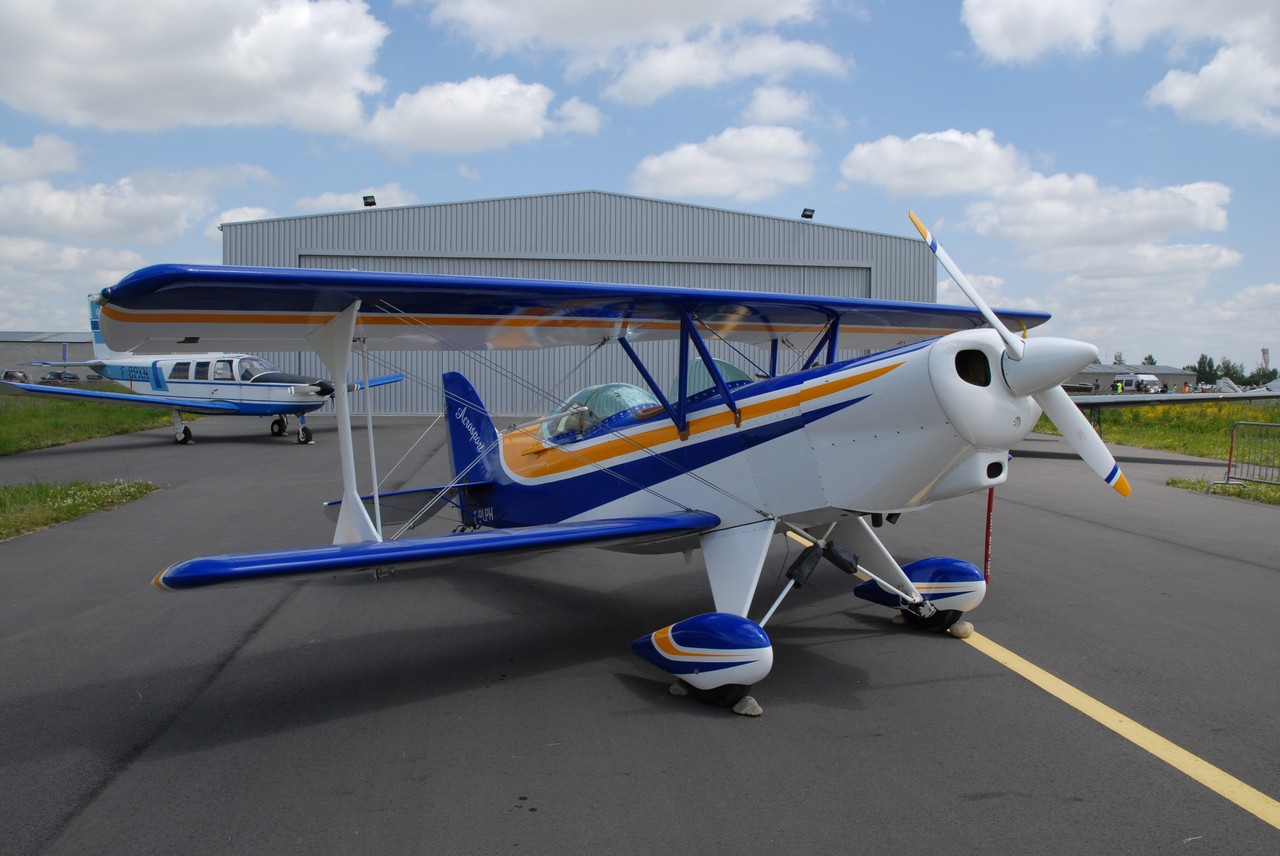
The Acro Sport II's dimensions reflect Poberezny's emphasis on creating a substantial yet manageable aircraft. At 18 feet 10.25 inches in length and 6 feet 7.75 inches in height, the biplane presents classic proportions enhanced by spatted main landing gear that reduces drag while maintaining the traditional taildragger aesthetic. The 21-foot 8-inch wingspan generates 152 square feet of wing area, providing excellent maneuverability characteristics essential for aerobatic performance.
Powered by the proven Lycoming O-360 engine producing 180 horsepower, the aircraft achieves impressive performance figures for its class. The four-cylinder, horizontally-opposed powerplant drives the 875-pound empty weight aircraft to a maximum speed of 152 mph and cruise speed of 123 mph. With a 25-gallon fuel capacity, pilots can expect a range of 430 miles, while the 1,200-foot-per-minute rate of climb and 20,000-foot service ceiling provide excellent operational flexibility.
Pilot Experience and Handling
Pilot reviews consistently praise the Acro Sport II as "a fun, docile sport airplane" without handling surprises or dangerous characteristics. The aircraft's 53-mph stall speed provides comfortable margins for both experienced and developing aerobatic pilots, while the generous cockpit accommodations allow for effective instruction in the tandem seating arrangement. One pilot evaluation described it as "a safe, stable aircraft without any handling nasties or gotchas," highlighting the success of Poberezny's design philosophy.
The aircraft's aerobatic capabilities fulfill its intended role while remaining accessible to pilots transitioning from conventional aircraft. The combination of positive stability and responsive controls creates an ideal platform for learning aerobatic maneuvers without the intimidating characteristics of more aggressive aerobatic designs.
Legacy and Contemporary Status
The Acro Sport II occupies a unique position among homebuilt aerobatic aircraft, competing alongside designs such as the Pitts Special, Sorrell Hiperbipe, Steen Skybolt, Stolp Starduster Too, and Aviat Eagle II. Its distinction lies in achieving one of the lightest empty weights in its class at 875 pounds while accommodating a full 180-horsepower engine installation. This power-to-weight ratio contributes significantly to the aircraft's spirited performance and climb capabilities.
The design's enduring appeal stems from addressing fundamental issues that plagued earlier homebuilt biplanes while maintaining construction techniques accessible to amateur builders. The steel tube fuselage and wooden wing combination represents proven construction methods that balance structural integrity with reasonable building complexity. Modern builders continue to appreciate these characteristics, ensuring the Acro Sport II remains relevant in contemporary homebuilt aviation circles.
As homebuilt aviation continues evolving with composite construction and advanced avionics, the Acro Sport II represents a connection to traditional aircraft building methods and the pioneering spirit of amateur aviation. Paul Poberezny's design successfully bridged the gap between challenging aerobatic performance and approachable construction techniques, creating a lasting contribution to experimental aviation that continues serving pilots decades after its introduction.