
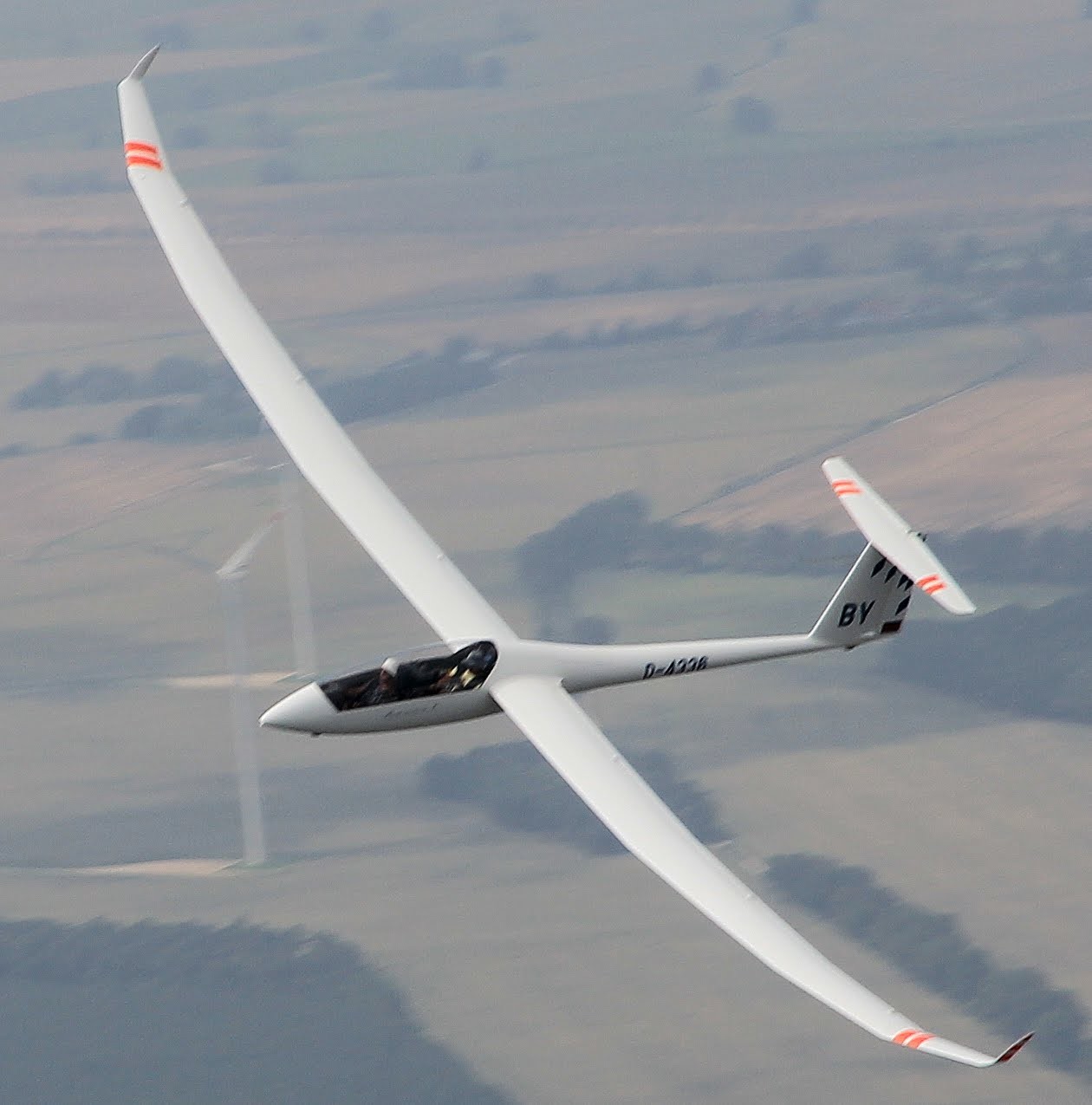
Development and Design Philosophy
The Arcus T emerged from Schempp-Hirth's ambition to create the ultimate two-seat racing-class glider. Development began in the mid-2000s, with engineers designing an entirely new wing featuring full-span flaperons—a significant departure from traditional glider control surfaces. This innovative wing design was mated to the proven "L" cockpit configuration from the successful Duo Discus xL, creating a hybrid that prioritized both performance and pilot comfort.
The motorized T variant addressed a persistent challenge in competitive soaring: the ability to sustain flight without relying entirely on thermal lift or ground-based towing. By integrating a retractable Solo 2350D engine, Schempp-Hirth created a glider that could extend flight duration and provide emergency power when needed, while maintaining the aerodynamic purity essential for competitive performance.
Technical Innovation
The Arcus T's most distinctive feature is its retractable powerplant—a Solo 2350D two-stroke engine manufactured by Oehler. Producing 22 kW (30 horsepower), this compact engine drives an asymmetrical foldable five-blade propeller that retracts completely into the fuselage when not needed. The system carries 16 liters of fuel, providing sufficient endurance for extended flights or emergency situations.
The aircraft's all-composite construction achieves remarkable strength-to-weight ratios while accommodating variable wing loading from 37 to 54.5 kg/m² through integrated water ballast systems. This flexibility allows pilots to optimize performance for different weather conditions and flight objectives, from gentle thermal soaring to aggressive cross-country racing.
The Schempp-Hirth Legacy
Schempp-Hirth Flugzeugbau GmbH has dominated high-performance sailplane manufacturing since Martin Schempp founded the company on January 4, 1935, with just four employees in Göppingen, Germany. The company relocated to Kirchheim/Teck in 1938, where it continues operations today. Klaus Holighaus transformed the company when he joined as design engineer in 1965 and assumed management in 1972, establishing Schempp-Hirth as the premier manufacturer of racing gliders.
The Holighaus family has owned the company since 1977, maintaining its focus on cutting-edge sailplane technology. Following Klaus Holighaus's death in 1994, his wife Brigitte and son Tilo led operations until 2015, when sons Ralf and Tilo Holighaus assumed joint management. This family continuity has preserved the company's engineering philosophy while embracing modern manufacturing techniques.
Performance and Pilot Experience
Pilots praise the Arcus T for its exceptional handling characteristics and performance versatility. The full-span flaperon system provides precise control throughout the speed envelope, while the 20-meter wingspan delivers impressive lift-to-drag ratios essential for competitive soaring. Maximum permitted speed reaches 280 km/h (174 mph), allowing rapid transitions between thermals during cross-country flights.
The aircraft's two-seat configuration makes it invaluable for instruction and recreational flying. Student pilots benefit from the forgiving handling characteristics, while instructors appreciate the excellent visibility and control authority. The retractable engine eliminates the anxiety of off-field landings that traditionally accompanies glider training, making the Arcus T particularly attractive to flight schools.
Production Success and Certification
Production began in 2009, with the Arcus T variant receiving EASA Type Certificate EASA.A.532 approval on May 17, 2011. The aircraft also holds New Zealand Type Acceptance under Certificate TAR 15/21B/22, granted June 29, 2015, expanding its international market reach.
By December 4, 2023, Schempp-Hirth had delivered 400 Arcus aircraft across all variants, demonstrating strong market acceptance. The Arcus family includes the pure glider Arcus, the sustainer-powered Arcus T, and the self-launching Arcus M with a more powerful 50 kW Solo 2625-02i engine. A short-lived Arcus E electric variant was also produced but discontinued.
Modern Applications
Today's Arcus T operators include competitive soaring pilots, flight training organizations, and recreational pilots seeking the ultimate two-seat glider experience. The aircraft's ability to operate independently of ground support makes it particularly valuable at airports lacking dedicated glider towing services. Cloud flying certification, when appropriately equipped, further expands operational capabilities.
The Arcus T remains in active production as of 2025, with FAA registration certificates continuing to be issued for new aircraft. This sustained production reflects both the aircraft's technical excellence and the enduring appeal of high-performance soaring among pilots worldwide.