
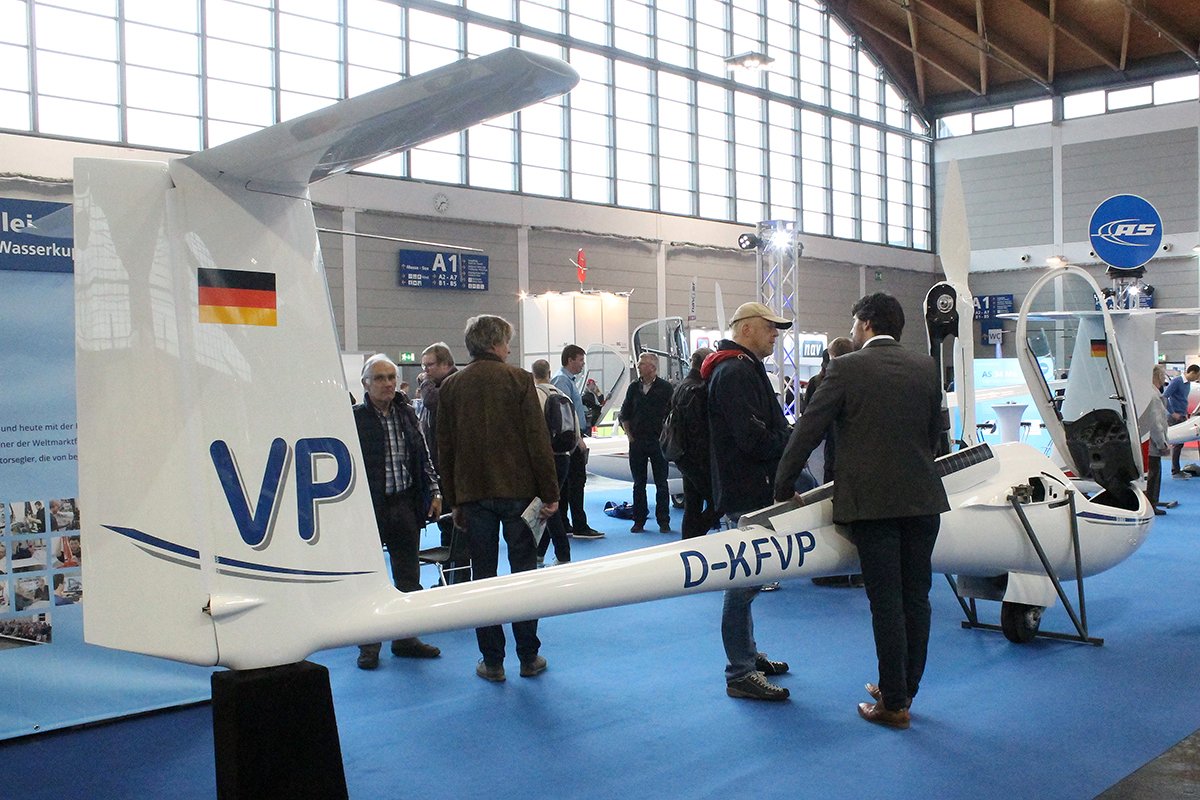
Design Innovation and Development
Designed by Martin Heide and announced at the end of 2008, the ASH-31Mi represented a significant advancement in motorglider technology. Schleicher developed the aircraft to replace the ASH-26, with specific objectives including superior aerodynamics, reliable self-launch capability, and competitive performance in Open Class soaring competitions. The design incorporated several groundbreaking innovations, including extended ailerons, a redesigned wing structure with a thin 13-percent wing section, and a sophisticated blowhole boundary layer system in the flaps and ailerons that trips laminar flow at 95 percent chord.
Technical Excellence
The ASH-31Mi's propulsion system centers on the Austrian-built Austro Engine IAE 50R-AA, a single-rotor Wankel rotary engine producing 41 kilowatts. This liquid- and air-cooled powerplant features dual ignition and fuel injection, proving exceptionally reliable across more than 500 Schleicher self-launching gliders with no mandatory service life limits or overhaul requirements. The engine drives a Schleicher-designed two-bladed retractable propeller measuring 1.55 meters in diameter, which folds completely into the fuselage when not in use.
Fuel efficiency stands as a key advantage, with the standard 16-liter fuselage tank providing adequate power for takeoff and climb, while optional 46-liter wing tanks extend powered flight capability. The folding drive belt system allows the engine to remain stationary when mounted, contributing to the aircraft's clean aerodynamic profile during soaring flight.
Performance Characteristics
With a wingspan of 21 meters and wing area of 13.2 square meters, the ASH-31Mi achieves an impressive aspect ratio of 33.5. The aircraft's maximum takeoff weight reaches 700 kilograms, accommodating a pilot up to 115 kilograms plus 140 kilograms of water ballast for performance optimization. Wing loading peaks at 53.0 kilograms per square meter, while the climb rate reaches 4 meters per second under power.
The glider's exceptional lift-to-drag ratio of 56 places it among the elite performers in Open Class competition, enabling pilots to exploit thermals and ridge lift with maximum efficiency. Control gaps are sealed with Mylar tapes to maintain laminar flow, while the extended aileron configuration provides precise control authority throughout the flight envelope.
Manufacturing Heritage
Alexander Schleicher GmbH & Co. has manufactured the ASH-31Mi since series production began in 2009. Founded by Alexander Schleicher in 1927, the company holds the distinction of being the world's oldest sailplane manufacturer still operating under its original name. Located in Poppenhausen, Germany, the facility weathered significant challenges during World War II, when it maintained training gliders for the Hitler Youth at the nearby Wasserkuppe.
Following Germany's post-war aviation ban from 1945 to 1951, Schleicher adapted by manufacturing furniture until resuming sailplane production in 1951. The family-owned business has maintained continuous operation without major mergers or acquisitions, specializing exclusively in gliders and motorgliders while building a reputation for engineering excellence and reliability.
Production Success
By 2013, Schleicher had delivered serial number 100, indicating robust market acceptance of the ASH-31Mi design. Production records show construction numbers extending at least to 31183, manufactured in 2018, suggesting total production exceeded 183 units by that point. The aircraft remains in active production, serving private pilots and soaring clubs worldwide.
Notable examples include D-KDXY (serial 31003) and D-KSKL (serial 31004) operating in Germany, while N31MX represents the type in the United States. Canadian registration C-FTAD (serial 31183) demonstrates the aircraft's international appeal, though this particular example was involved in a non-fatal accident on May 23, 2025.
Competitive Impact
The ASH-31Mi transformed Open Class competition by eliminating dependence on ground support for launch operations. Pilots can now reach competition altitude independently, then retract the propulsion system for pure soaring performance. This capability revolutionized contest logistics while maintaining the exceptional glide performance demanded by serious competitors.
The aircraft's significance extends beyond competition flying, as it enables recreational pilots to explore soaring sites previously accessible only through aerotow or ground launch. This independence has attracted pilots seeking the ultimate combination of motorglider convenience and Open Class performance, sustaining Schleicher's position at the forefront of sailplane innovation since 2009.