
Commercial Aviation Pioneer
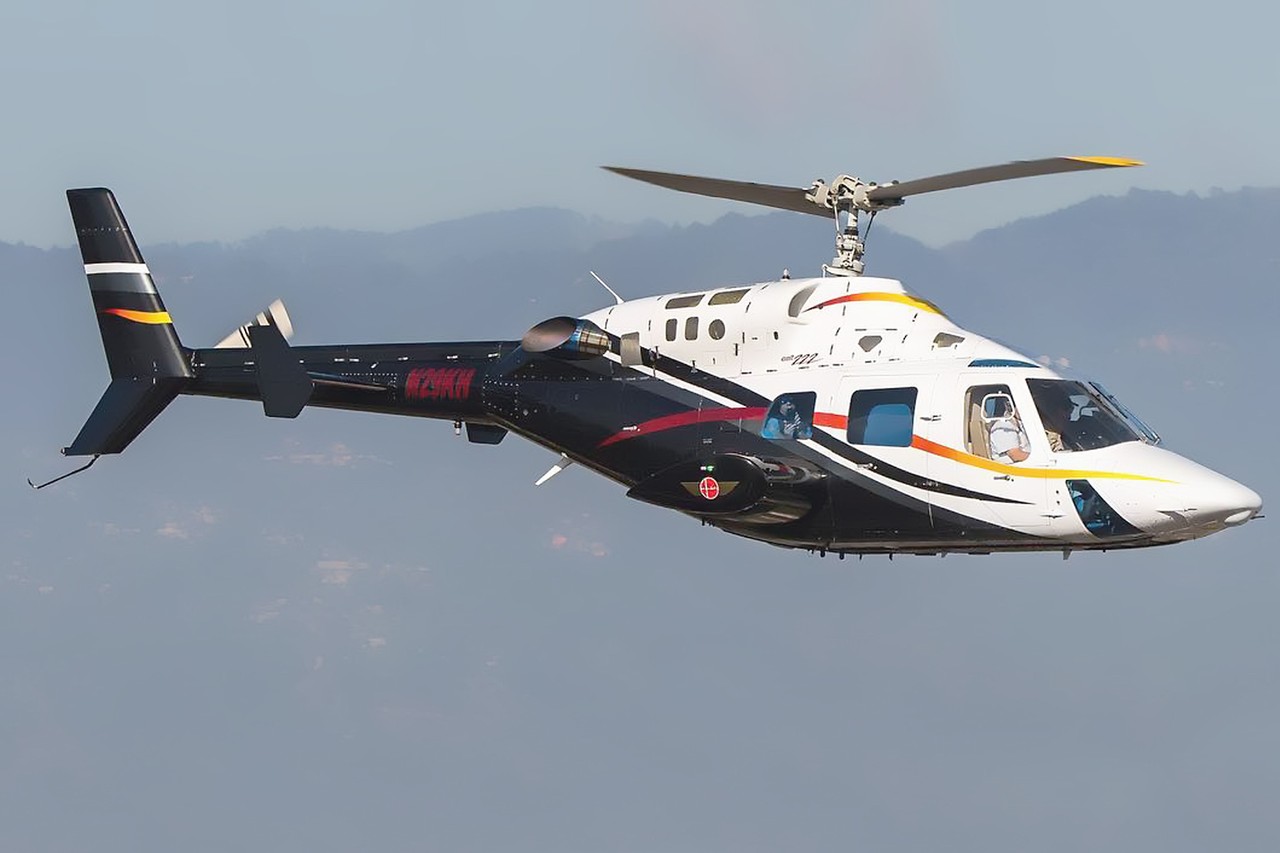
The Bell 222 emerged during the oil boom of the late 1970s when offshore petroleum operations demanded reliable twin-engine helicopters for crew transport. Petroleum Helicopters Inc. became the launch customer, taking delivery of the first production aircraft on January 16, 1980, in New Orleans, ultimately ordering 16 units. By 1977, Bell had accumulated a backlog of 140 orders, demonstrating strong market confidence in this groundbreaking design.
The helicopter achieved Federal Aviation Administration VFR certification on December 20, 1979, followed by crucial IFR approval on May 15, 1980, making it the first light twin helicopter certified for single-pilot instrument flight operations. This capability opened new markets for executive transport and utility operations previously restricted to larger, more expensive aircraft.
Design Innovation and Development
Bell's engineering team began developing the 222 from late-1960s studies, crystallizing into the D-306 concept by 1973. The company launched the program with internal funding in March 1974, targeting a 10-seat business and utility helicopter. Prototype N9988K (construction number 47001) made its maiden flight on August 13, 1976, with test pilot Donald Bloom at the controls.
The aircraft incorporated several firsts for American commercial helicopters: retractable tricycle landing gear, a four-blade main rotor system with composite blades, and an improved windscreen design. The lengthened fuselage provided spacious cabin accommodations while maintaining the agility needed for offshore operations.
Bell Helicopter Heritage
Bell Helicopter traced its roots to Bell Aircraft Corporation, founded in 1935 by Lawrence Dale Bell. The company entered the helicopter business in 1941 and achieved legendary status with aircraft like the Bell 47, certified in 1946 as the first practical commercial helicopter, and the UH-1 Huey, with over 16,000 units produced during the Vietnam era.
Textron Inc. acquired Bell Helicopter in 1980, the same year the 222 entered production. The company continued operations as Bell Helicopter Textron until 2022, when Textron sold its commercial helicopter division to Kawasaki Heavy Industries, forming the current Bell Textron Inc.
Engine Challenges and Evolution
The original Bell 222 employed twin Lycoming LTS 101-650C-3 turboshaft engines, each producing 618 shaft horsepower. However, these powerplants suffered from reliability issues including overheating problems and power inconsistencies that hurt early sales and operational confidence.
Bell addressed these concerns through variant development. The 222B model introduced upgraded LTS 101-750C-1 engines producing 680 shaft horsepower, while the high-performance 222SP and successor Bell 230 adopted the proven Allison 250-C30G/2 engines rated at 700 shaft horsepower. The Allison 250 series, in production since 1959 with over 36,000 units manufactured, provided the reliability and engine-out performance operators demanded.
On November 10, 1987, Bell tested a digital engine control system that allowed real-time in-flight power management adaptations, presaging modern helicopter engine technology.
Production Variants and Performance
Bell manufactured exactly 199 Model 222 helicopters across four variants: 80 Model 222A aircraft, 72 Model 222U utility versions, 26 Model 222B improved models, and 10 high-performance 222SP variants. Production continued from 1980 through 1991.
The baseline 222 achieved a maximum speed of 240 kilometers per hour (130 knots) with a service ceiling of 6,100 meters (20,000 feet) and a range of 600 kilometers (324 nautical miles). The aircraft climbed at 5.3 meters per second (1,040 feet per minute), providing respectable performance for its class.
Cultural Impact and Legacy
The Bell 222 gained unexpected fame as the star of the 1980s television series "Airwolf," where a fictional modified version served as a high-tech military helicopter. This exposure boosted the aircraft's cultural profile despite ongoing real-world engine reliability concerns.
Bell developed the successor Model 230 from 1992 to 1995, producing 38 units with improved engines and systems. However, changing market conditions and competition from other manufacturers limited its commercial success.
Current Status
Approximately 59 Bell 222-series helicopters remain in active service from the original production run. The type continues serving in executive transport, utility operations, and specialized roles worldwide. One notable example became the presidential helicopter of Madagascar in late 2003.
The Bell 222's significance extends beyond its production numbers. As America's first successful light twin-turbine commercial helicopter, it established crucial safety and operational precedents that influenced subsequent designs including the Bell 430, which received its final delivery in May 2008. The 222 proved that twin-engine reliability and single-pilot IFR capability could be combined in a light helicopter platform, opening new possibilities for civilian rotorcraft operations.