
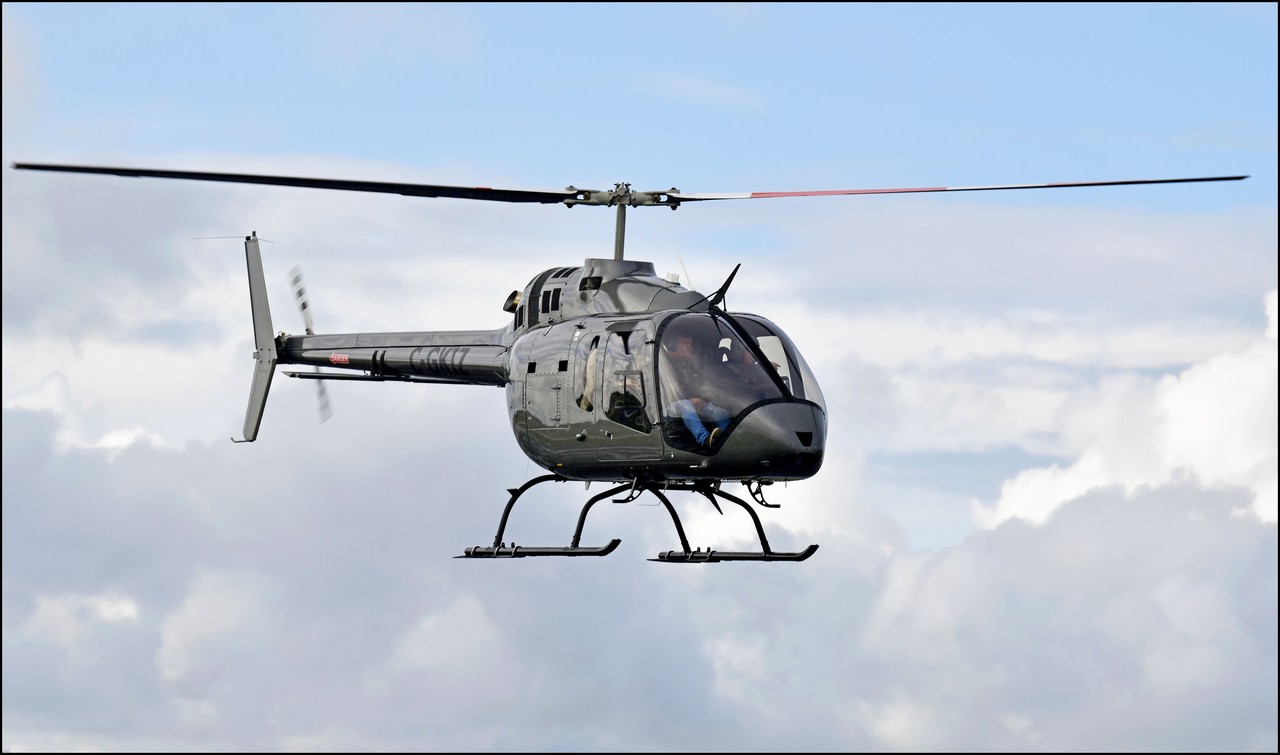
Market Dominance and Service History
The Bell 505 Jet Ranger X entered a marketplace hungry for a modern successor to one of aviation's most successful helicopter families. When Bell ceased production of the 206 JetRanger in 2010 after manufacturing approximately 7,500 variants over four decades, a significant gap emerged in the light turbine helicopter market. By the 505's first flight in November 2014, Bell had already secured more than 240 heavily deposited commitments from operators, effectively locking out the first three years of production before the aircraft even achieved certification.
Since entering service in March 2017, approximately 360 Bell 505s have been delivered worldwide. The aircraft has found favor with diverse operators, from individual owners to government agencies. Jamaica ordered six units in January 2021 for various government operations, while South Korea finalized a substantial purchase of 40 helicopters in May 2022 specifically for training purposes, demonstrating the aircraft's versatility across different mission profiles.
The Manufacturer's Evolution
Bell Helicopter's Mirabel, Quebec facility, where the 505 is manufactured, represents over three decades of rotorcraft production expertise. This Canadian plant has produced more than 5,000 helicopters across 34 years of operation, establishing Bell as a dominant force in the rotorcraft industry. As a division of Bell Textron, the company continues the legacy established by the original Bell Aircraft Corporation, which revolutionized helicopter aviation with designs like the Bell 47 and the iconic 206 series.
The development timeline of the 505 showcased Bell's modern approach to aircraft design. Rather than following traditional manufacturer-driven development, Bell assembled 15 experienced helicopter operators in 2011 to guide design priorities through collaborative brainstorming sessions. This operator-focused methodology resulted in what Bell described as "effectively the fastest time to first flight in Bell's recent history, if not the wider industry as well."
Engine and Technical Innovation
The heart of the Bell 505 is the Safran Arrius 2R turboshaft engine, marking the first collaboration between Bell and the French engine manufacturer. This partnership, initiated in 2014, brought together Bell's airframe expertise with Safran's advanced powerplant technology. The Arrius 2R delivers 504-522 shaft horsepower for takeoff operations and 476 shp maximum continuous power, providing the 505 with authority across its operational envelope.
The engine features dual-channel Full Authority Digital Engine Control (FADEC) with complete redundancy, eliminating the need for manual mixture and propeller controls while optimizing fuel efficiency through electronic regulation. This technology represents a significant advancement over earlier light helicopter designs, contributing to the 505's 3,000-hour Time Between Overhaul interval. The Arrius engine family has accumulated over 6.6 million flight hours across more than 3,000 engines worldwide, demonstrating proven reliability in service.
Operational Performance
Pilots appreciate the 505's blend of modern technology and familiar handling characteristics inherited from the JetRanger lineage. The aircraft achieves a maximum speed of 146 mph and cruises efficiently across its 401-mile operational range. With a service ceiling of 19,997 feet, the 505 operates effectively in diverse geographic and climatic conditions, from sea-level law enforcement missions to high-altitude utility operations.
The five-seat configuration provides flexibility for various mission profiles. In corporate transport role, the aircraft accommodates a pilot plus four passengers in comfortable seating. For training operations, the cockpit layout facilitates instructor-student communication while maintaining the turbine helicopter experience that prepares pilots for larger aircraft transitions. Law enforcement variants can be equipped with specialized surveillance and communication equipment while retaining operational flexibility.
Production Legacy and Future
Bell achieved Transport Canada certification for the 505 in December 2016, followed by production certification in February 2017. The first customer delivery occurred at HAI Heli-Expo in Dallas during March 2017, marking the culmination of a six-year development program that emphasized operator input and rapid certification.
The aircraft's significance extends beyond mere production numbers. By 2019, approximately 200 examples had entered service, with operators reporting high satisfaction rates across diverse mission profiles. The 505 competes directly with aircraft like the Robinson R66, but offers turbine reliability and the operational pedigree associated with the JetRanger name.
The Bell 505 represents more than a simple replacement for the 206 series—it embodies modern helicopter design philosophy that prioritizes operator input, technological integration, and mission flexibility. With roughly 4,500 original JetRangers still flying today after decades of service, the 505 is positioned to continue Bell's dominance in the light turbine helicopter market well into the future. The aircraft's rapid market acceptance and continued production growth suggest that Bell successfully identified and filled a critical gap in the rotorcraft marketplace.