
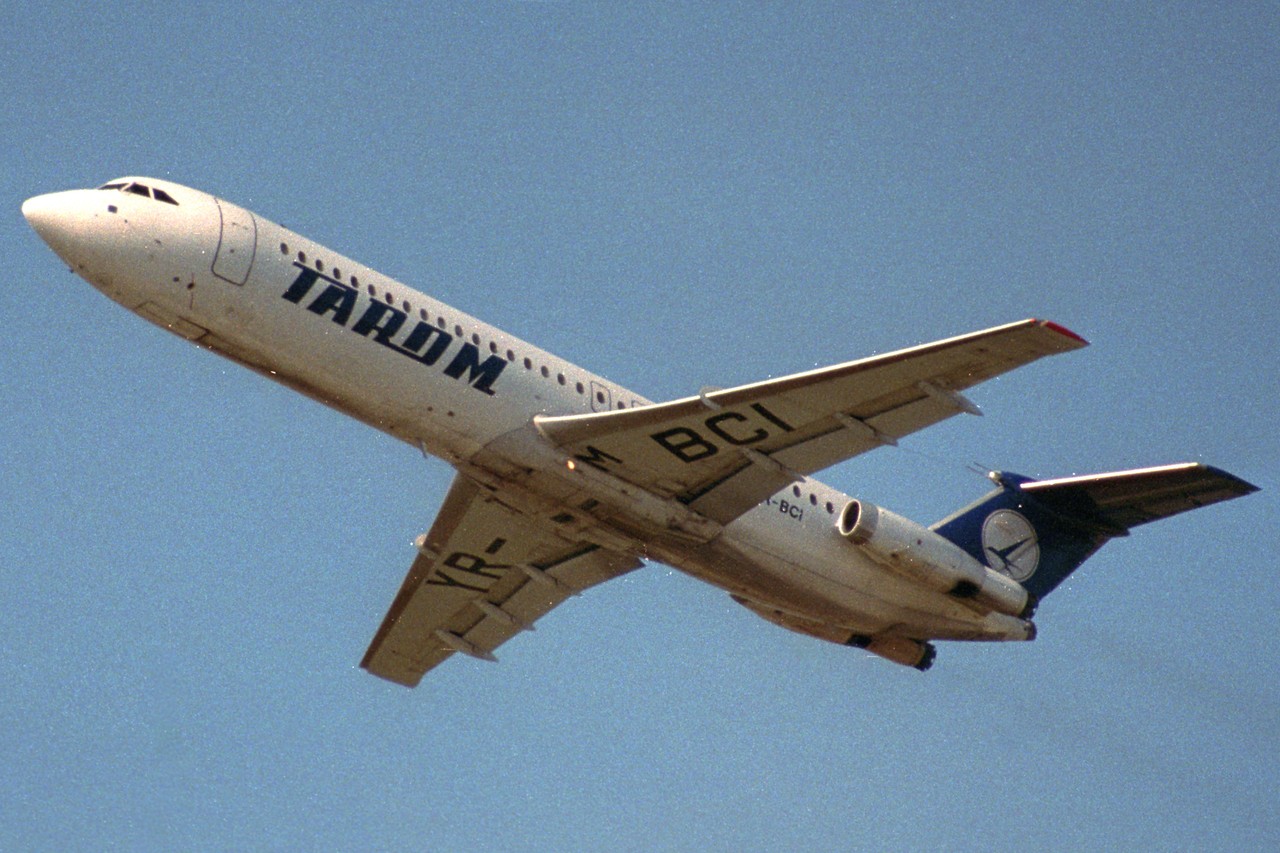
Commercial Success and Market Impact
The BAC 1-11 transformed short-haul aviation by becoming the first jetliner specifically optimized for regional routes, successfully competing against established turboprops like the Fokker F-27 and aging piston-engine aircraft. British United Airways inaugurated revenue service on April 9, 1965, operating flight Gatwick to Genoa with aircraft G-ASJJ, marking the beginning of jet-powered regional travel in Europe. American carriers quickly embraced the type, with Braniff International receiving their first aircraft N1543 on March 11, 1965, followed by Mohawk Airlines on May 15, 1965. American Airlines had demonstrated early confidence by placing an order for 15 aircraft on July 17, 1963, even before the prototype's first flight.
By the end of 1965, BAC had delivered 34 aircraft, with production accelerating to 46 deliveries in 1966 and peaking during 1967-1971 when 120 units were completed. The aircraft's success stemmed from its ability to operate economically on routes previously served by less efficient aircraft, enabling airlines to offer jet service on secondary routes for the first time.
Design Innovation and Development
The 1-11's development originated from the merger of two separate 1950s design studies: the Vickers-Armstrongs BAC 107 and the Hunting Aircraft H.107. When British Aircraft Corporation consolidated these concepts in 1961, they created a revolutionary short-haul design featuring rear-mounted Rolls-Royce Spey turbofan engines and a distinctive T-tail configuration. This layout reduced cabin noise significantly compared to wing-mounted engines while providing excellent ground clearance and maintenance access.
Tragedy struck early in the test program when prototype G-ASHG crashed on October 22, 1963, killing test pilot Mike Lithgow and six others during deep-stall testing. Despite this setback, development continued with enhanced stall characteristics, leading to certification by the Air Registration Board on April 6, 1965. The first production aircraft was delivered to British United Airways on January 22, 1965.
British Aircraft Corporation Legacy
British Aircraft Corporation represented Britain's ambitious attempt to consolidate its aviation industry, formed in 1960 through the merger of Vickers-Armstrongs Aircraft, Bristol Aeroplane Company, English Electric, and Hunting Aircraft. The company operated for 17 years until 1977, when it merged with Hawker Siddeley to form British Aerospace. During its existence, BAC developed several significant projects including the VC10 airliner, the supersonic Concorde (jointly with Sud Aviation), and the TSR-2 strike aircraft.
BAC manufactured the 1-11 primarily at two facilities: Hurn, where the prototype rolled out on July 28, 1963, and Weybridge, which added a second production line in 1965. British Aerospace continued 1-11 production until 1982, eventually becoming BAE Systems in 1999 and remaining active in aerospace today.
Technical Specifications and Variants
The 1-11 featured Rolls-Royce Spey low-bypass turbofan engines, with different variants receiving progressively more powerful versions. The Series 200 baseline model used Spey Mk 506 engines producing 10,410 pounds of thrust each, while the Series 300 employed Mk 511-14 engines generating 11,400 pounds of thrust. These reliable powerplants enabled operations from shorter runways and provided excellent performance in hot and high-altitude conditions.
The original Series 200 accommodated 64-80 passengers in a cabin measuring approximately 92 feet in length with a 25.6-foot wingspan. Later variants included the stretched Series 500, which extended passenger capacity to 119 seats while maintaining the aircraft's efficient operating characteristics. Maximum cruising speed reached Mach 0.85 at 35,000 feet, with range varying from 1,700 miles for the Series 200 to 2,900 miles for the fuel-enhanced Series 300.
International Production and ROMBAC
Total production reached 244 aircraft, with 232 manufactured in Britain across all variants (Series 200, 300, 400, 475, 500, and 670). An additional nine aircraft were completed in Romania under the ROMBAC (Romanian BAC) licensing agreement between 1982 and 1989, designated YR-BRA through YR-BRI. Two additional Romanian airframes remained incomplete when production ended. The ROMBAC variant represented the first non-Soviet jetliner produced within the communist bloc, demonstrating the 1-11's international appeal.
Production at the Baneasa facility in Romania extended the type's manufacturing life by seven years beyond the British line's 1982 closure, reflecting continued demand for the proven design in emerging markets.
Current Status and Legacy
Fewer than 10 BAC 1-11s remain airworthy today, with most surviving examples in private ownership or museum collections. The aircraft's cultural significance extends beyond its commercial success, as it proved that British manufacturers could compete effectively in the emerging jet airliner market against American dominance. The 1-11's rear-engine, T-tail configuration influenced numerous subsequent designs and demonstrated the viability of this layout for short-haul operations.
The type's early export success, with 60 orders placed before the prototype's rollout, established BAC's credibility in international markets and paved the way for future British aerospace achievements. Though modest in production numbers compared to American contemporaries, the 1-11 carved out a crucial niche in aviation history as the aircraft that brought jet-age efficiency to regional routes worldwide.