
Military Training Dominance
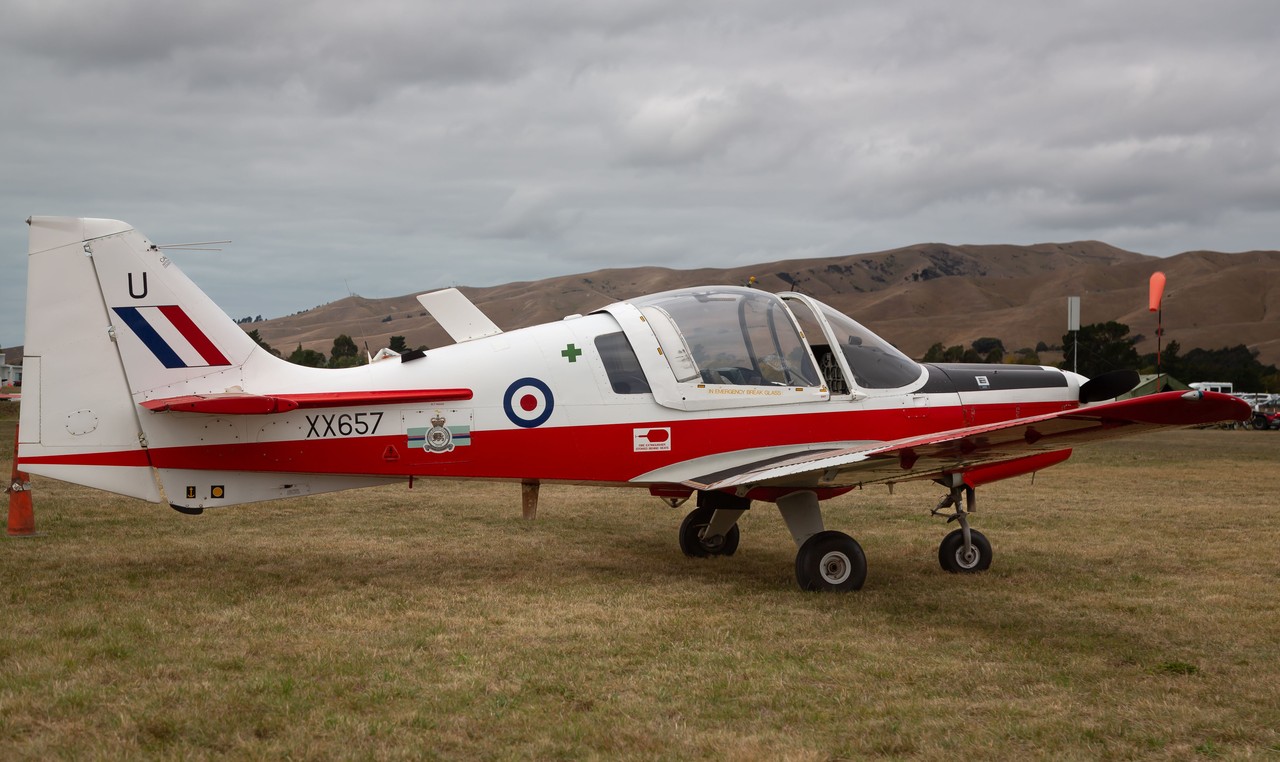
The Bulldog became the backbone of British military pilot training when the Royal Air Force ordered 130 Bulldog T.1 aircraft in 1972. Beginning in October 1973, these trainers equipped 16 University Air Squadrons across the United Kingdom, including London UAS at RAF Abingdon. For nearly three decades, thousands of RAF cadets learned basic flying and aerobatic techniques in Bulldogs before progressing to advanced military aircraft. The type served until 2000, when the Grob Tutor finally replaced it in RAF service.
Sweden became the largest international operator, acquiring 78 aircraft in two batches. The Swedish Air Force and Army designated their aircraft SK 61A/B and FPL 61C respectively, using them for primary training from 1971 until withdrawal in 2001. Following retirement, 26 Swedish Bulldogs found new life with Hungary's AVIA-Rent in 2004.
International Military Service
Across Africa and Asia, air forces recognized the Bulldog's value as an economical trainer. Malaysia operated 15 Model 102 aircraft, while Ghana flew 13 Model 122/122A variants. Nigeria's air force acquired 37 Model 123 Bulldogs, and Kenya operated 5 Model 103 aircraft. The Royal Hong Kong Auxiliary Air Force flew 2 Model 128 variants until the territory's return to China.
Botswana received 6 Model 1210 aircraft configured as light attack variants, representing the closest the Bulldog came to combat service. Test aircraft G-ASAL had demonstrated the type's potential with four underwing hardpoints capable of carrying 290 kilograms of bombs, SNEB rocket pods, or 7.62mm machine guns, though no operator used these weapons operationally.
Scottish Aviation's Revival
Scottish Aviation breathed life into the Bulldog design after Beagle Aircraft's collapse in 1970. The company, operating from facilities at Prestwick Airport originally built for the 1938 Glasgow Empire Exhibition, acquired production rights and established manufacturing operations. This decision proved crucial for maintaining fixed-wing aircraft production at Prestwick during a challenging period for British aviation.
The company's roots traced to post-World War II aviation development, and the Bulldog program sustained operations through the 1970s. Scottish Aviation produced all 329 Bulldogs between 1971 and 1978 before British Aerospace acquired the company in 1980. Today, the heritage continues under BAE Systems, though independent Scottish Aviation no longer exists.
Beagle's Original Design
Beagle Aircraft originally conceived the Bulldog as the B.125, developing it from their successful B.121 Pup design. The prototype G-AXEH made its maiden flight from Shoreham Airport on 19 May 1969, demonstrating the enhanced performance of the 200-horsepower Lycoming IO-360-A1B6 engine over the Pup's less powerful plant.
Design objectives emphasized practical training requirements: side-by-side seating for effective instruction, full aerobatic capability at weights between 975-1,015 kilograms, and rugged construction suitable for intensive training operations. An optional third seat provided flexibility for advanced training scenarios.
Lycoming Powerplant
The fuel-injected Lycoming IO-360-A1B6 flat-four engine, producing 200 horsepower, proved ideal for the training role. This air-cooled powerplant, manufactured by Avco Corporation's Lycoming division (later acquired by Textron), entered production in the early 1960s and continues manufacturing today. The engine's reliability and smooth power delivery made it particularly suitable for aerobatic training, while 154-liter fuel capacity provided adequate endurance for typical training missions.
Performance and Handling
Pilots appreciated the Bulldog's honest handling characteristics and impressive performance envelope. The aircraft achieved a maximum speed of 340 kilometers per hour and could climb at 701 meters per minute to a service ceiling of 8,400 meters. With a range of 1,333 kilometers, the Bulldog provided sufficient endurance for extended training flights while maintaining the agility necessary for aerobatic instruction.
The robust structure withstanding +6/-3G loads allowed comprehensive aerobatic training including loops, rolls, and spins. This capability made the Bulldog particularly valuable for military training programs requiring thorough grounding in aircraft handling at the edges of the flight envelope.
Legacy and Preservation
Following military retirement, dozens of Bulldogs entered civilian hands through Ministry of Defence auctions beginning in 2000. Seventeen ex-RAF aircraft joined the UK civil aircraft register, while others found homes in the United States and other countries. These surplus military trainers became popular warbirds, prized for their aerobatic capability and relatively economical operation.
The National Museum of Flight at East Fortune, East Lothian, Scotland preserves a Series 1 prototype, representing Scottish Aviation's contribution to aviation history. The Bulldog's legacy extends beyond its production numbers, having trained a generation of military pilots and sustained British aircraft manufacturing through a crucial period in the industry's development.