
Design and Development
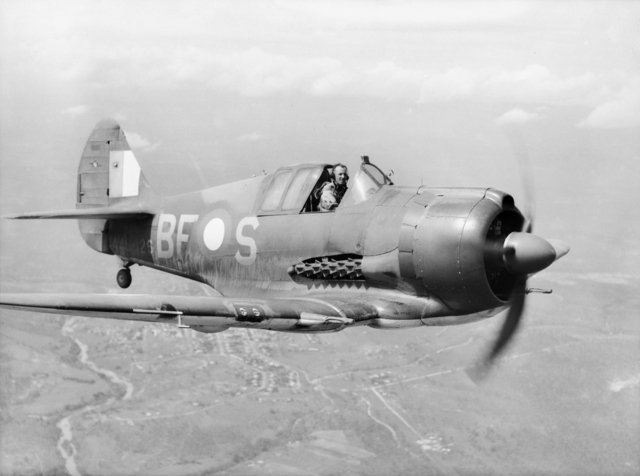
Designed by Sir Lawrence James Wackett, the General Manager and Chief Designer of the Commonwealth Aircraft Corporation (CAC), the Boomerang was conceived as an emergency response to the instability of aircraft supplies from the United States and Europe during the early stages of the Second World War. The design was based on the CAC Wirraway, a trainer derived from the North American NA-16. To transform the trainer into a fighter, Wackett implemented extensive modifications, including a shortened fuselage, a cut-down rear fuselage with a new canopy for improved visibility, and a re-engineered wing and armament system. Design approval for the fighter version, designated as the CA-12, was granted in late 1941.
Production History
The prototype CA-12 first flew on May 29, 1942. Following an initial order for 105 aircraft in February 1942, the total production run was increased to 250 aircraft to maintain CAC's production lines at Fishermans Bend, Melbourne, until the start of Mustang production. Production spanned from 1942 to 1945, with the first production aircraft delivered to the Royal Australian Air Force (RAAF) in October 1942 and the final delivery occurring in February 1945. Variants included the CA-12 and the improved CA-13 production fighters, the CA-14 experimental turbo-supercharged prototype, and the CA-19 tactical reconnaissance modification.
Technical Specifications and Performance
Production Boomerangs were powered by a 14-cylinder, air-cooled, two-row radial Pratt & Whitney R-1830 Twin Wasp engine, produced under license in Australia, which delivered approximately 1,200 hp. The aircraft featured a maximum speed of 305 mph at 15,500 feet, a service ceiling of 29,000 feet, and a range of 930 miles. Its armament consisted of two 20 mm Hispano or CAC-built autocannons in the wings and four 0.303 in Browning machine guns. The aircraft was also equipped with racks for bombs or smoke markers, though these could not be used simultaneously with a large ventral drop tank.
Military Service and Legacy
Operated exclusively by the RAAF, the Boomerang served in the South-West Pacific Area during the Second World War, with deployments to New Guinea, Borneo, and the Solomon Islands. While initially intended as an interceptor, its limited high-altitude performance and speed meant it rarely engaged in air-to-air combat and recorded no confirmed aerial victories. However, it excelled in ground-attack and army cooperation roles, providing close air support, artillery spotting, and reconnaissance. Notable units included No. 83 Squadron, the first operational squadron to receive the type in April 1943, as well as No. 85 Squadron and No. 4 Squadron. Today, the Boomerang is remembered as a symbol of Australian industrial self-reliance, with a few surviving examples, such as A46-25 at the Moorabbin Air Museum.