
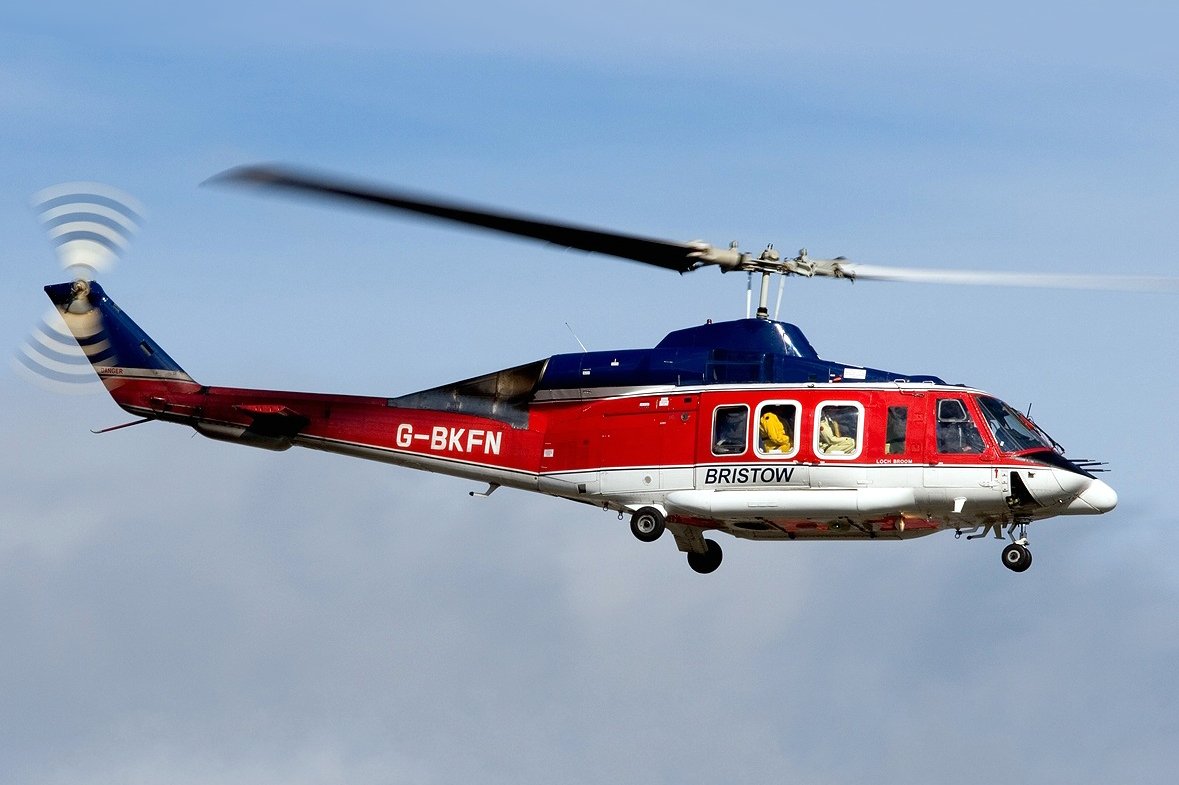
From Military Project to Commercial Success
The 214ST's origins trace to an ambitious military collaboration between Bell Helicopter and the Iranian government in the mid-1970s. Developed from the proven Bell 214B BigLifter design, the project aimed to create an advanced twin-engine transport helicopter for Iranian military forces. Three conforming prototypes followed the initial Texas test flights in 1978, but the Iranian Revolution of 1978-1979 abruptly ended the Shah's funding and forced Bell to completely reimagine the aircraft's future.
Rather than abandon years of development work, Bell made the strategic decision in November 1979 to manufacture an initial series of 100 production aircraft for the commercial market. This pivot from military to civilian applications would prove prescient, as the helicopter industry desperately needed a reliable twin-engine transport capable of long-range offshore operations.
Technical Innovation and Design Philosophy
Bell engineers incorporated several groundbreaking technologies into the 214ST that would influence future helicopter design. The aircraft featured a revolutionary one-hour run-dry transmission system, allowing continued operation even after complete oil loss. Fiberglass rotor blades replaced traditional metal construction, reducing weight while improving durability and performance. Elastomeric rotorhead bearings eliminated the need for frequent lubrication and maintenance that plagued earlier designs.
The twin General Electric CT7-2A turboshaft engines, each producing 1,625 shaft horsepower, provided the redundancy essential for offshore operations where single-engine helicopters faced severe operational restrictions. Bell offered customers flexibility in landing gear configuration, with both skid and wheeled tricycle options available depending on operational requirements.
Dominating Offshore Operations
When deliveries commenced in early 1982, the 214ST immediately found its niche in offshore oil operations. Major petroleum companies recognized that the helicopter's 220-nautical-mile range and twin-engine reliability made it ideal for servicing distant drilling platforms where single-engine aircraft couldn't safely operate. The combination of long range, substantial payload capacity, and engine redundancy gave oil companies unprecedented flexibility in crew transport and supply missions.
The aircraft's 16-17 passenger capacity allowed efficient crew rotations to remote platforms, while its cargo capability supported essential supply operations. Unlike smaller helicopters that required frequent fuel stops or operated under severe weather restrictions, the 214ST could complete missions that previously required multiple aircraft or simply couldn't be accomplished safely.
Military Applications Worldwide
Despite its civilian origins, the 214ST found substantial military applications across multiple continents. Iraq became the largest military operator, receiving 48 aircraft in 1984 during the Iran-Iraq War period. These helicopters provided crucial transport capabilities in desert conditions where their range and reliability proved invaluable.
Peru acquired 11 aircraft for transport operations in challenging Andean conditions, while Thailand operated 9 helicopters for military transport duties. Brunei purchased a single aircraft for government transport, and Venezuela added 4 helicopters to its military fleet. The military variants retained the same basic configuration as civilian models but often featured specialized equipment for tactical transport operations.
Bell Helicopter's Manufacturing Excellence
Bell Helicopter, founded in 1935, had established itself as a premier helicopter manufacturer through innovations like the Bell 47 and UH-1 Huey series. The company's Dallas-Fort Worth facility, where all 214ST aircraft were built, represented state-of-the-art helicopter manufacturing capability. Today operating as part of Textron Inc., Bell continues developing advanced rotorcraft technologies that trace their origins to innovations first implemented on the 214ST.
The decision to limit production to exactly 100 aircraft reflected Bell's strategy of focusing on specialized markets rather than mass production. Each helicopter received extensive quality control and customization to meet specific operator requirements, establishing a reputation for reliability that would serve the type throughout its operational life.
Performance and Pilot Perspectives
Pilots praised the 214ST's handling characteristics and performance envelope. The helicopter's maximum cruise speed of 140 knots provided efficient transport while maintaining the stability essential for offshore operations in challenging weather conditions. The twin-engine configuration offered pilots confidence for overwater flights, with sufficient power available on a single engine to maintain safe flight in emergency situations.
The aircraft's ceiling and range capabilities allowed operations in diverse environments from sea level offshore platforms to high-altitude mountain operations. Pilots particularly appreciated the advanced transmission system and reduced maintenance requirements compared to earlier helicopter designs.
Enduring Legacy
Of the 100 Bell 214ST helicopters manufactured, approximately 39 remain in active service today, excluding those originally delivered to Iraq. This remarkable survival rate after more than four decades demonstrates the aircraft's robust construction and continued operational value. Most surviving aircraft continue serving in their original roles, particularly offshore oil operations where their unique capabilities remain unmatched by smaller helicopters.
The 214ST's influence extends beyond its direct operational contributions. Technologies pioneered on this aircraft, including advanced transmission systems and composite rotor blade construction, became standard features on subsequent helicopter designs. The aircraft proved that specialized, limited-production helicopters could successfully serve niche markets while advancing the entire industry's technological capabilities.