
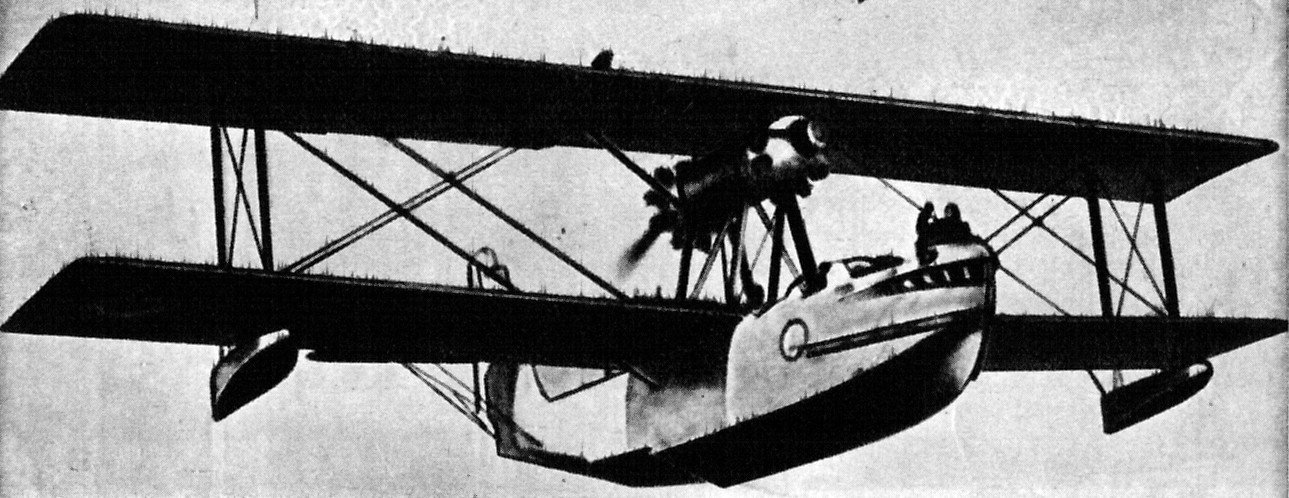
The CAMS 55 was a French interwar biplane reconnaissance flying boat developed for the Aéronautique Navale (French Navy). Designed by Maurice Hurel, who also served as the prototype's pilot, the aircraft was derived from the CAMS 51. It featured a conventional biplane layout with fabric-covered wings that could be folded for storage, a two-step wooden hull, and a cruciform tail. A defining characteristic of the design was the tandem tractor-pusher engine arrangement mounted in the interplane gap. While practical for maritime reconnaissance, this configuration proved hazardous; the proximity of the propellers to crew positions resulted in several accidents, including the loss of limbs and at least one fatality, leading to the installation of protective grilles.
Production took place at the Chantiers Aéro-Maritimes de la Seine (CAMS) factory in Sartrouville, France. Following a 1927 French Navy program, the prototype first flew in the summer of 1928. A total of 112 aircraft were produced between 1929 and 1935, including prototypes and various production subtypes. The 55/1 variant utilized Hispano-Suiza 12Lbr V12 engines, while the 55/2 and 55/10 variants employed Gnome-Rhône radial engines (licence-built Bristol Jupiters). Experimental versions explored all-metal hulls and floats, which reduced weight by approximately 400 kg, though these were rejected due to cost.
Entering service in 1930, the CAMS 55 equipped 15 French Navy escadrilles, including the S1 (Berre) and 4E1 (Karouba) units. Its roles included coastal patrol, reconnaissance, and light bombing, with an armament of four 7.5 mm or 7.7 mm machine guns and a bomb load of up to 150 kg. By 1936, the type was gradually replaced by the more modern Breguet Bizerte. During the German offensive of May 10, 1940, roughly 25 aircraft remained in frontline service, most of which were destroyed by the June armistice. A small detachment of two aircraft operated in Tahiti with the Free French Escadrille 20S—known as the "escadrille du bout du monde"—until January 1941.
Technically, the CAMS 55/10 variant achieved a maximum speed of 195 km/h and a range of 1,280 km, with an endurance of approximately 10 hours. No examples of the CAMS 55 are known to have survived into the modern era.