
Design Heritage and Innovation
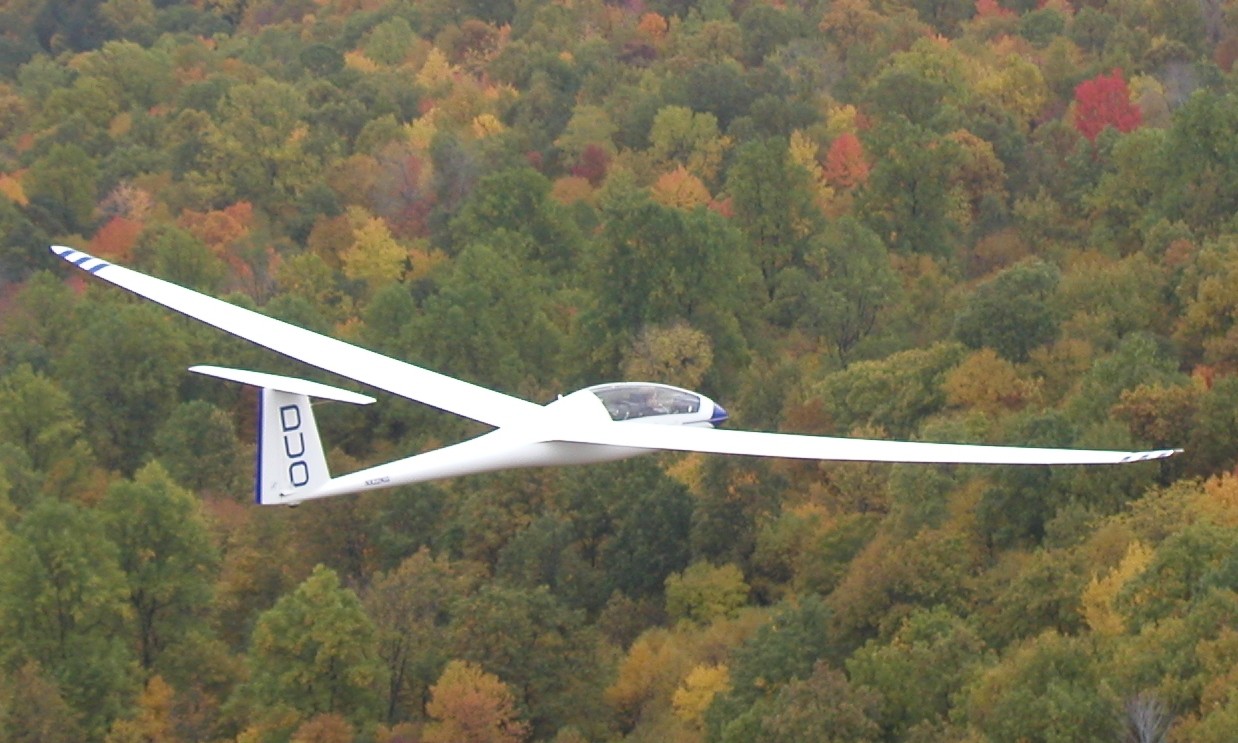
The Duo Discus T represents the culmination of Klaus Holighaus's design philosophy, adapting his highly successful single-seat Discus concept for dual occupancy with motor-sustainer capability. Holighaus pioneered the triple-trapezoidal wing planform that approximates an elliptical distribution for minimal induced drag, combined with new airfoil sections and optional winglets that could be retrofitted to existing aircraft. The "T" variant's defining feature is its ingenious retractable powerplant system - a mast extends electrically from a fuselage hatch behind the cockpit, deploying the engine and five-blade propeller that unfolds automatically in the slipstream.
The Manufacturer's Legacy
Schempp-Hirth Flugzeugbau GmbH traces its origins to 1935 when Martin Schempp and Wolf Hirth began glider production in Göppingen, Germany, with their first design, the Gö-1 "Wolf." The company relocated to Kirchheim/Teck by 1937 for serial production, manufacturing over 100 examples of the Gö-3 Minimoa, recognized as the first high-performance series glider, alongside the Gö-4 two-seat trainer. The firm achieved a breakthrough in 1967 by introducing the Cirrus, the world's first fiberglass glider, revolutionizing sailplane construction and leading to thousands of composite gliders produced worldwide.
Engine System and Technical Challenges
The heart of the Duo Discus T's self-sustaining capability lies in its Solo 2350D powerplant, a two-cylinder, two-stroke petrol engine manufactured by Solo Engines of Germany. The system drives a sophisticated five-blade composite folding propeller mounted on an aluminum alloy hub (Technoflug part number FL5.110/83AV). However, operational experience revealed critical safety concerns when metal fatigue cracking appeared in propeller hubs, prompting Schempp-Hirth to issue Technical Note 890-8/868-11 in September 2006, updated in November 2012 for aircraft through manufacturing serial number 174. The mandatory inspection protocol requires pre-flight checks (Action 1) and annual detailed examinations (Action 2).
Operational Philosophy
Unlike pure sailplanes that depend entirely on atmospheric lift, the Duo Discus T serves as a bridge between powered aircraft and gliders. The sustainer engine provides altitude maintenance or modest climb capability during poor soaring conditions, extending training flights and cross-country opportunities. Typical operations involve deploying the powerplant after takeoff for initial climb assistance, with pilots reporting usage patterns such as five-minute power runs at 3,000 feet to maintain training effectiveness when thermals weaken.
Club Operations and Training Role
The side-by-side seating configuration reflects Schempp-Hirth's understanding of effective instruction methods, dating back to their early two-seat designs. Gliding clubs and syndicates operate the Duo Discus T for primary training, cross-country instruction, and recreational flights. The aircraft's forgiving handling characteristics, combined with powerful airbrakes and low landing speeds, make it particularly suitable for student pilots transitioning from basic trainers to high-performance sailplanes. The sustainer capability proves invaluable for training operations, allowing instructors to extend lessons regardless of soaring conditions and providing safety margins during cross-country flights.
Production and Airworthiness
Manufacturing began in the late 1990s, with documented examples including G-CJPA delivered in 1999, followed by G-CJUM and G-CKGF in 2000, and G-CKHK in 2003. Production continued through at least 2007, evidenced by G-SAXT bearing serial number 158. While exact production totals remain undisclosed, the broader Discus family exceeded 850 units by 2004, with licensed production continuing in the Czech Republic as the Discus CS variant.
Current Operations and Legacy
Multiple Duo Discus T aircraft remain active today across international registers. Notable examples include US-registered N250AR, certified as recently as July 2024, and several UK aircraft including G-CJUM, G-CKGF, and G-CKHK. German registration D-4727 (constructor number 270) represents the type's continued presence in its homeland. The aircraft's legacy extends the Discus family's dominance in competitive soaring - the single-seat variants captured six World Gliding Championships between 1985 and 1995, establishing the design as the Standard Class benchmark.
Technical Significance
The Duo Discus T embodies nearly four decades of Schempp-Hirth's evolution from wooden gliders to advanced composites. Its retractable sustainer system represents sophisticated integration of power and soaring flight, addressing practical limitations of pure sailplanes while maintaining the performance characteristics that made the Discus series legendary. The ongoing technical challenges, particularly regarding propeller hub fatigue, highlight the continuous refinement required in specialized aviation applications, demonstrating how even successful designs require ongoing engineering attention to maintain safety standards.