
Service History
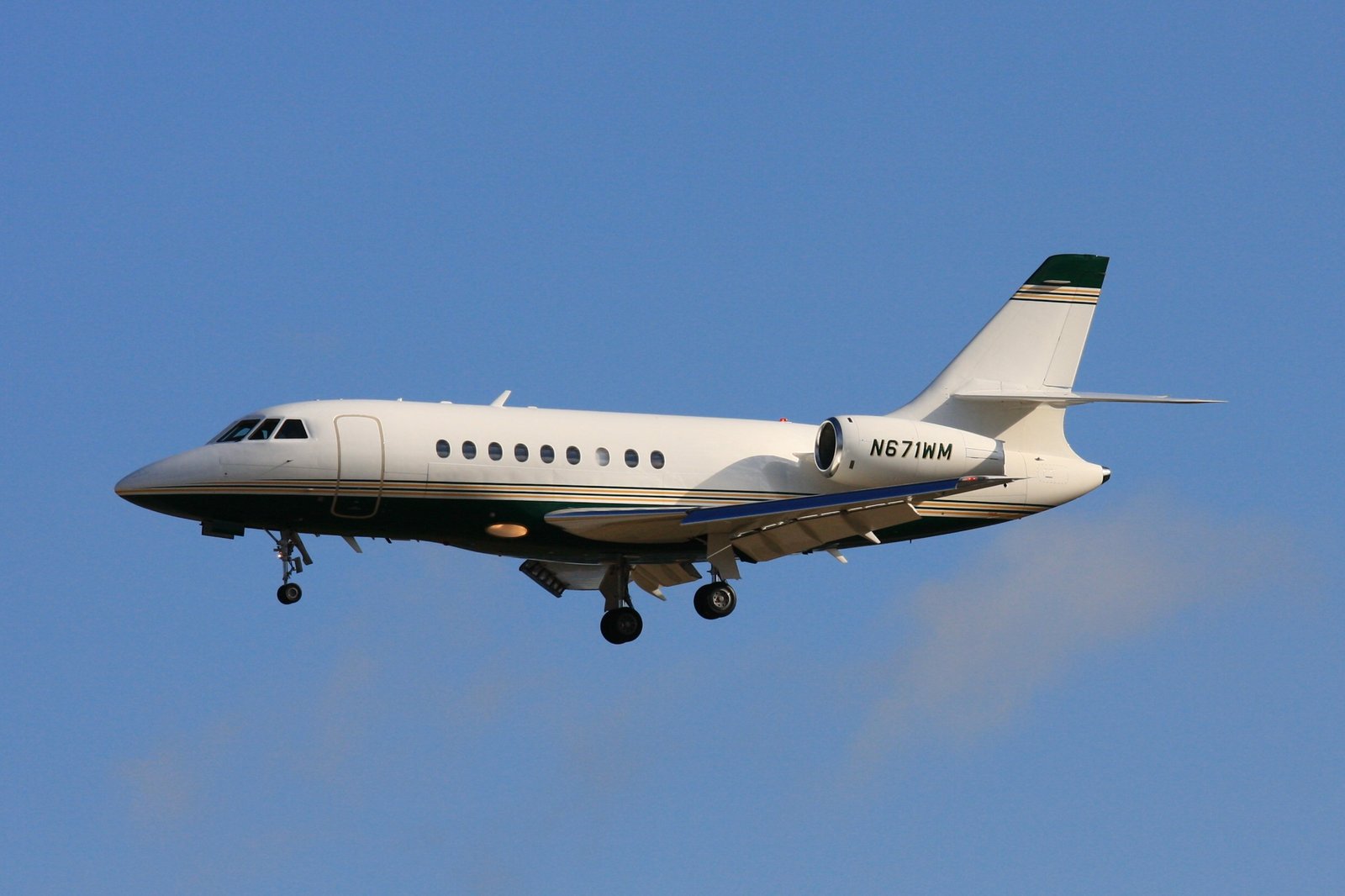
The Falcon 2000S carved out a specialized niche in corporate aviation by combining the range of larger business jets with exceptional short-field performance. With only 47 units delivered worldwide during its eight-year production run, the aircraft served exclusively high-end corporate and private operators who required access to challenging airports. Sixty percent of the fleet operates in North America, with 23 percent in Europe and 11 percent in Asia, demonstrating its appeal to transcontinental business operations. Fifteen percent of the fleet operates under lease agreements, while the remainder serves wholly-owned corporate flight departments.
The Manufacturer
Dassault Aviation traces its origins to 1938 when Marcel Bloch established Société des Avions Marcel Bloch with an engine factory in France. Following World War II, Marcel Dassault rebuilt the company, eventually becoming Dassault Aviation. The company has delivered nearly 2,600 Falcon jets since launching the Falcon 20 in 1965, establishing production capacity of 60 Falcon aircraft annually by the 2000s. The broader Falcon 2000 family, launched in 1995, has achieved remarkable longevity with approximately 700 units built across all variants by 2025, making it one of the most successful mid-size business jet programs in aviation history.
Design and Development
The Falcon 2000 series originated from Dassault's engineering team shortening the three-engine Falcon 900 fuselage by seven feet and adapting it for twin-engine configuration. The design team removed the inboard wing slats and modified the wing leading edge to optimize the aircraft for 8-10 passenger operations. The original Falcon 2000 prototype first flew on March 4, 1993, achieving certification in late 1994 with deliveries beginning in early 1995.
The 2000S variant, launched at EBACE in May 2011, incorporated specific modifications to enhance short-field performance while maintaining the family's proven design philosophy. The aircraft features optional blended winglets that improve fuel efficiency and high-altitude performance, distinguishing it within the competitive mid-size jet category.
Engine and Technical Specifications
The Falcon 2000S is powered by two Pratt & Whitney Canada PW308C turbofan engines, each producing 7,000 pounds of thrust for a combined total of 14,000 pounds. These high-bypass turbofans consume 280 gallons per hour during typical operations, providing the power-to-weight ratio necessary for short-field operations while maintaining fuel efficiency for long-range flights. The PW308C engines represent an evolution from the CFE738 powerplants used on earlier Falcon 2000 variants, with the PW308C family first entering service on the Falcon 2000EX in 2003.
The aircraft accommodates a standard crew of two pilots and features a Collins Pro Line glass cockpit system that reduces pilot workload during demanding short-field operations. The cabin typically seats eight passengers in a double-club configuration, though it can accommodate up to ten passengers in high-density layouts.
Performance Characteristics
The Falcon 2000S delivers exceptional versatility through its combination of short-field capability and transcontinental range. The aircraft achieves a maximum range of 3,540 nautical miles under NBAA IFR conditions with four passengers, enabling nonstop flights between most city pairs within North America or across the Atlantic. Its defining characteristic—the 705-meter landing distance—allows operations from airports inaccessible to most competing mid-size jets.
This short-field performance opens access to challenging destinations including mountain airports, shorter runways in urban areas, and remote locations often required by corporate operations. The aircraft maintains high-speed cruise capabilities typical of the Falcon family, though specific cruise speeds were not detailed in available technical data.
Production and Legacy
Dassault manufactured the Falcon 2000S from 2013 to 2021 following EASA certification in March 2013 and FAA approval in April 2013. The limited production run of 47 aircraft reflects its specialized mission profile rather than market failure—the aircraft succeeded in its intended role of serving operators who specifically required its unique short-field capabilities.
The 2000S represents part of Dassault's broader strategy of developing specialized variants within the Falcon 2000 family. Related variants include the 2000LX and 2000DX, each optimized for different operational requirements while sharing common systems and training protocols. This approach has sustained the Falcon 2000 program for three decades, with production continuing through newer variants as of 2025.
Dassault achieved a significant milestone in 2009 with delivery of the 2,000th Falcon aircraft across all models, demonstrating the enduring success of the business jet program that began with the Falcon 20 in 1963. The company continues expanding its global footprint, with Falcon 2000 component production moving to the Dassault Reliance Aerospace Ltd facility in Nagpur, India, by 2028, ensuring continued support for the worldwide fleet.