
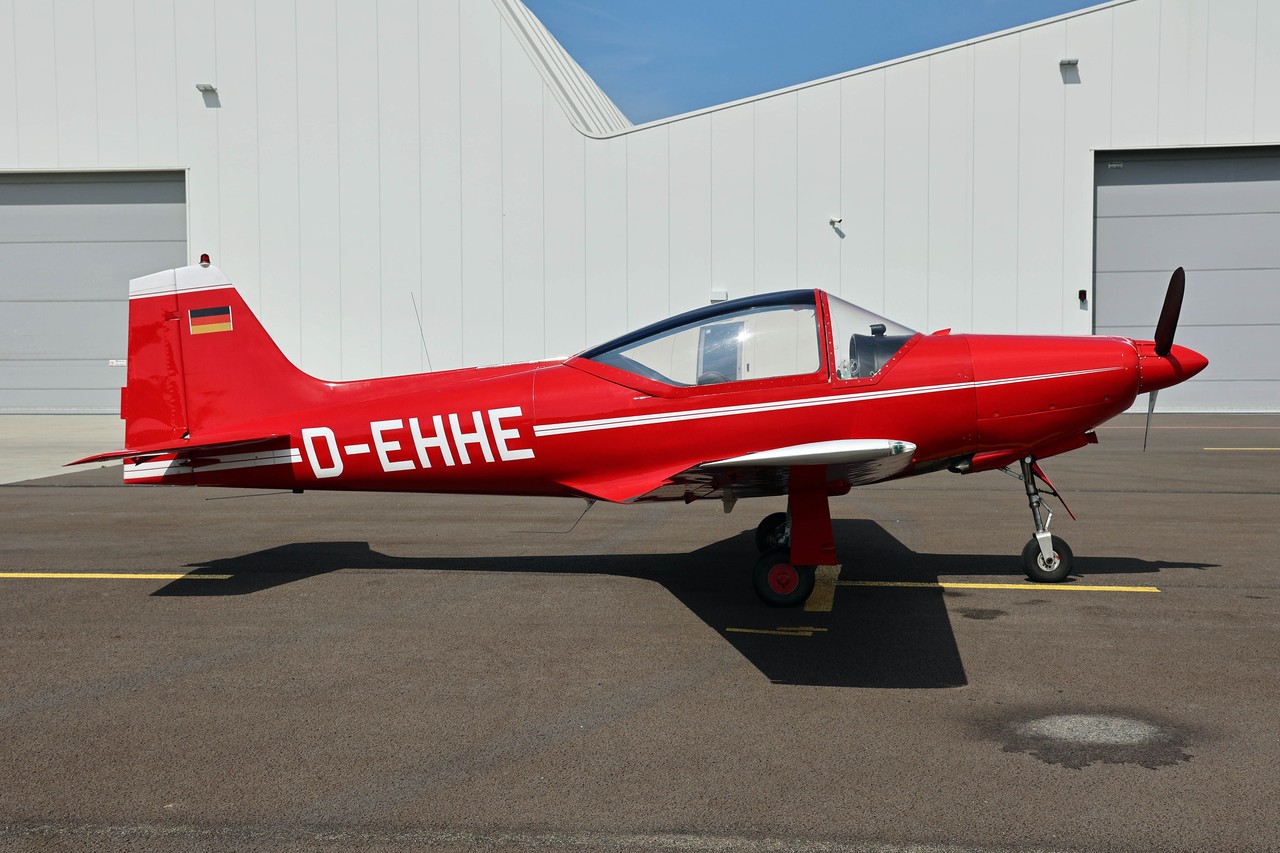
Original Italian Production
Stelio Frati, the acclaimed Italian designer behind the successful SF-260 series, created the Falco as a sophisticated wooden aircraft that would establish new standards for homebuilt performance. Between 1956 and 1968, Italian manufacturers produced 101 certified Falcos, with Aviamilano building the first 10 examples featuring larger wings, followed by production variants from Laverda, the renowned motorcycle manufacturer that expanded into aviation.
The original production aircraft established the Falco's reputation across Europe, where pilots appreciated its unique combination of 190 mph cruise speeds and unlimited aerobatic capability. Unlike most homebuilts of its era, the Falco was engineered from the outset as a high-performance cross-country machine that could execute the full range of aerobatic maneuvers when equipped with an inverted fuel and oil system.
American Kit Adaptation
In the 1980s, Sequoia Aircraft Corporation of Richmond, Virginia acquired the design rights and transformed Frati's creation into one of the most sophisticated homebuilt kits available. The company recognized that American builders sought an aircraft that delivered certified-level performance and handling qualities while remaining accessible to amateur constructors.
The kit conversion maintained the aircraft's distinctive wooden construction, with fuselage and wing skins covered in Dacron fabric. Only the firewall-forward section, landing gear components, and sliding canopy utilize metal construction. This hybrid approach preserves the Falco's elegant lines while ensuring structural integrity and reasonable construction complexity for homebuilders.
Engineering Excellence
The Falco's performance stems from Frati's meticulous attention to aerodynamic detail, particularly in wing and aileron design. The aircraft features fully retractable landing gear operated by a mechanical system, contributing to its clean aerodynamic profile. Standard power comes from a 160-horsepower Lycoming engine, though builders can specify either fixed-pitch or constant-speed propellers depending on their mission requirements.
With a gross weight of 1,808 pounds and empty weight of 1,212 pounds, the Falco achieves its impressive performance through careful weight distribution and efficient design. The 31-gallon standard fuel capacity provides 870 miles of range, while builders opting for 40-gallon tanks can achieve approximately 1,000 miles between fuel stops.
Performance Variations
Real-world performance among kit-built Falcos varies significantly based on construction quality and aerodynamic refinements. While some examples cruise at 180 mph at 7,000 feet using conservative power settings, meticulous builders like Karl Hansen have achieved nearly 230 mph at 6,000 feet, with typical cruising speeds of 195-200 mph at 60-65 percent power. The famous Luciano Nustrini racing Falco reportedly exceeded 240 mph through extensive modifications including ram-air induction, sealed landing gear doors, and elimination of aileron and flap gaps.
These performance differences highlight the Falco's potential when constructed with attention to detail. The aircraft's fuel efficiency of approximately 25 miles per gallon makes it economical for long-distance travel, while its 1,140 feet per minute climb rate and 19,000-foot service ceiling provide excellent high-altitude capability.
Pilot Experience
Pilots consistently praise the Falco's precise handling characteristics and responsive controls. The aircraft stalls at 62 mph and requires 1,150 feet for both takeoff and landing over a 50-foot obstacle, making it suitable for most general aviation airports. Its aerobatic capabilities include unlimited inverted flight when properly equipped, appealing to pilots seeking both transportation and recreational flying in a single aircraft.
The two-place cockpit accommodates pilots comfortably, with the optional third seat suitable for children on family flights. Electric operation of gear and flaps reduces pilot workload during critical phases of flight, while the sliding canopy provides excellent visibility and easy ground access.
Continuing Legacy
More than four decades after Frati's original design, the Falco remains active in both European certified and American homebuilt communities. The aircraft represents a bridge between traditional craftsmanship and modern performance, demonstrating that wooden construction can achieve speeds and efficiency comparable to metal aircraft when executed with precision.
Sequoia Aircraft Corporation continues supporting builders with comprehensive kits and technical assistance, ensuring that new Falcos join the fleet regularly. The design's enduring appeal lies in its combination of aesthetic beauty, engineering excellence, and pilot satisfaction—qualities that transcend the typical homebuilt aircraft category and place it among the finest light aircraft ever created.