
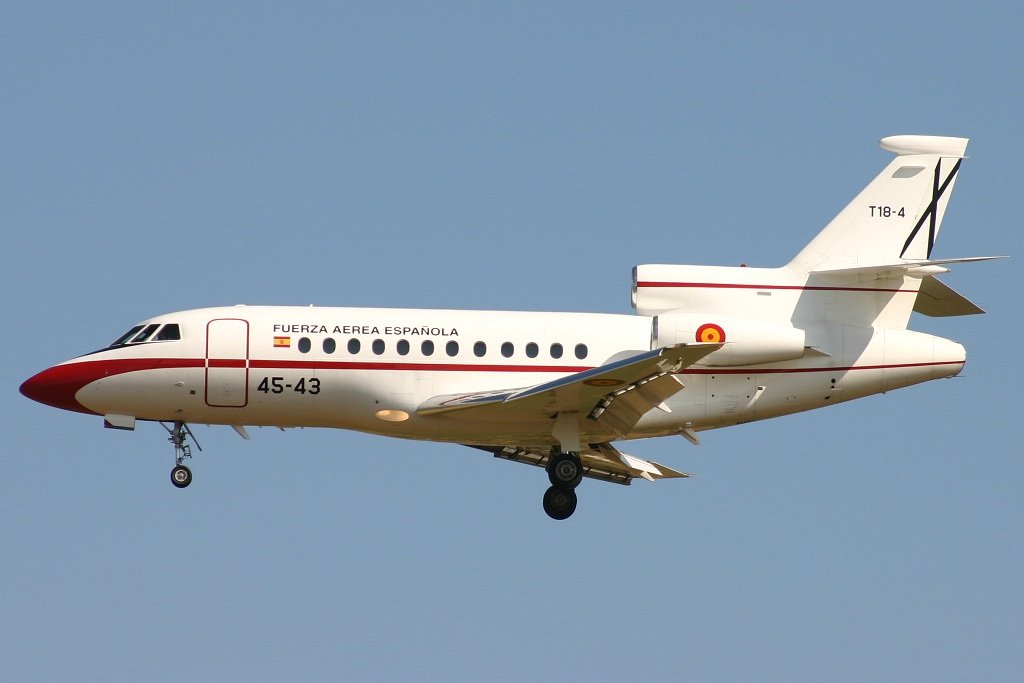
Market Positioning and Service History
The Falcon 900DX carved out a specific niche in business aviation as what Dassault positioned as "just one step down from the top-performing EX." Introduced at $31.95 million in 2005, the aircraft offered operators substantial savings while retaining the exceptional performance characteristics that made the Falcon 900 series legendary in corporate aviation circles. The 900DX could climb to 39,000 feet in just 20 minutes, providing access to optimal cruise altitudes faster than many competing twin-engine designs.
The aircraft's tri-jet configuration distinguished it in a market increasingly dominated by twin-engine business jets. This three-engine layout provided redundancy that appealed to operators flying extended overwater routes or into remote destinations where alternate airports might be scarce. The centerline-mounted rear engine, combined with two wing-mounted units, created a thrust arrangement that reduced takeoff speeds and enhanced performance from challenging airfields.
Dassault Aviation Legacy
Dassault Aviation, the French manufacturer behind the 900DX, brought decades of aerospace expertise from both military and civilian markets to the project. Originally renowned for producing Mirage fighter aircraft, the company had been building business jets for over four decades by the time the 900DX entered service. The Mérignac production facility, where all 900DX aircraft were assembled, served as the final assembly point for test flights and delivery operations.
The 900DX represented an evolution rather than a revolution in Dassault's design philosophy. Rather than developing an entirely new aircraft, engineers modified the proven Falcon 900 airframe to create what they marketed as a more reliable and better-performing variant. This approach allowed Dassault to leverage the certification and operational experience gained from the original Falcon 900, which had completed its maiden flight on September 21, 1984, with test pilots Hervé Leprince-Ringuet and Jérôme Résal at the controls.
Advanced Materials and Construction
The 900DX incorporated significant advances in composite materials technology. Engineers constructed the airframe almost entirely from carbon fiber and Kevlar, with carbon fiber components specifically featured in the tailcone, radome, and cabin doors. This extensive use of advanced composites reduced structural weight while maintaining the strength characteristics necessary for pressurized flight operations at altitudes exceeding 39,000 feet.
The all-glass flight deck represented another technological advancement, providing pilots with integrated flight management systems that reduced workload during complex instrument approaches and navigation procedures. This cockpit design philosophy reflected Dassault's commitment to incorporating lessons learned from their military aviation programs into civilian applications.
Powerplant Performance
The three Honeywell TFE731-5BR-1C turbofan engines each delivered 4,750 pounds of thrust, providing the 900DX with exceptional power-to-weight characteristics. These engines, manufactured by Honeywell following the company's acquisition of AlliedSignal, featured extended inspection intervals of 7,200 hours, reducing operational costs for high-utilization operators.
The tri-jet configuration required less fuel and weight to achieve the same range performance as comparable twin-engine designs. This efficiency translated into practical advantages for operators, allowing the aircraft to carry maximum passenger loads over its full 4,100-nautical-mile range with required IFR fuel reserves. The engines' positioning near the aircraft centerline also contributed to improved handling characteristics during single-engine operations.
Operational Characteristics
Pilots appreciated the 900DX's cruise speed of 590 miles per hour and maximum operating speed of Mach 0.87, performance figures that placed it among the fastest business jets in its class. The aircraft's fuel capacity of 19,160 pounds supported its transcontinental range capability, while the maximum takeoff weight of 45,503 pounds allowed for flexible payload configurations.
The empty weight of 22,608 pounds reflected the benefits of composite construction, providing operators with substantial useful load capacity. With eight passengers aboard, the aircraft maintained its maximum range capability, making it particularly attractive for corporate flight departments operating regular transcontinental routes.
Production Legacy
Dassault manufactured the 900DX for five years, ending production in 2010 as market demands shifted toward newer variants with enhanced range and avionics capabilities. The aircraft joined a broader Falcon 900 family that had produced approximately 500 aircraft since the series' inception in 1984.
The 900DX's legacy lies in demonstrating that tri-jet business aircraft could remain commercially viable in an era when most manufacturers were abandoning three-engine configurations in favor of more fuel-efficient twin-engine designs. The aircraft proved that the unique performance characteristics of three engines—particularly the redundancy and short-field performance they provided—continued to appeal to sophisticated operators willing to accept slightly higher operating costs in exchange for enhanced operational flexibility.