
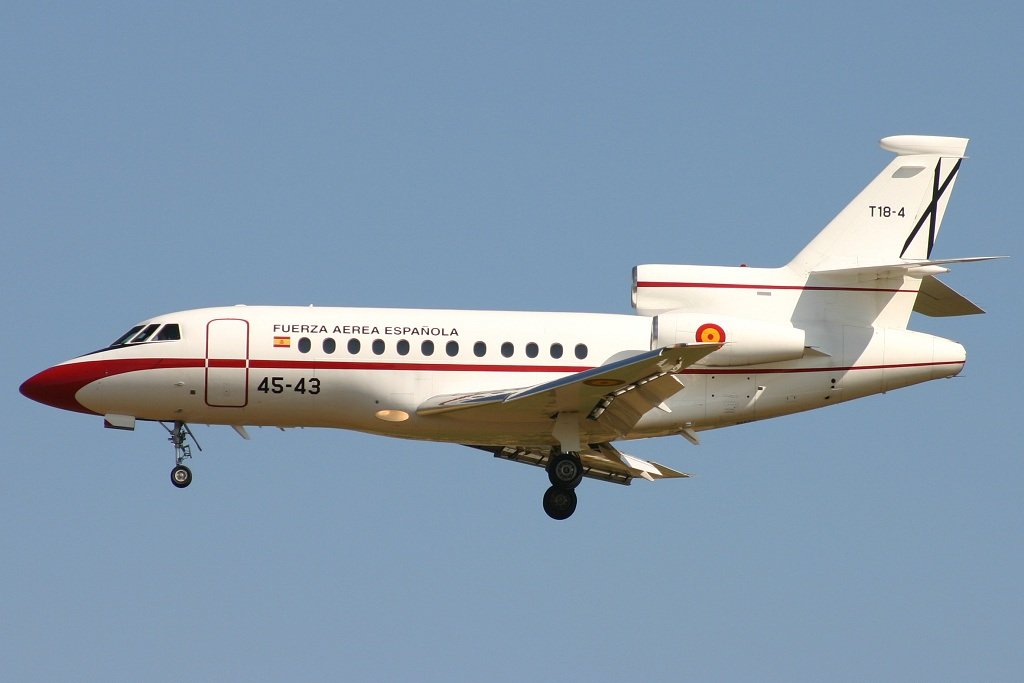
Service Dominance in Executive Aviation
The Falcon 900EX carved out a commanding position in the ultra-long-range business jet market during its production run from 1996 to 2003. Its 4,500-nautical-mile range represented a quantum leap over its predecessors, extending more than 900 kilometers beyond the capabilities of earlier Falcon 900 variants. This performance enabled revolutionary non-stop routes such as Hong Kong to Istanbul and London to Las Vegas, fundamentally changing how executives planned international travel. The aircraft's ability to access shorter runways while maintaining transcontinental range made it particularly valuable for reaching secondary airports closer to final destinations.
The Manufacturer's Legacy
Dassault Aviation's business jet division traces its origins to 1963 with the Mystère 20 prototype, later designated the Falcon 20, which began deliveries in 1965. By 1988, the company had achieved a significant milestone when the 62nd Falcon 900 marked the 1,000th Falcon delivered since the program's inception. Dassault pioneered computer-aided design in business aviation during the 1980s Falcon 900 rollout, enabling precise weight and performance optimization that became industry standard. The company's manufacturing facility in Mérignac, France, served as the exclusive production site for final assembly, test flights, and delivery of all Falcon jets, maintaining strict quality control throughout the 900EX production run.
Technical Innovation and Engineering
The 900EX represented the culmination of Dassault's tri-jet evolution, building upon the foundation established by the Falcon 50 and original Falcon 900 announced in 1984. Each aircraft was powered by three Honeywell TFE731-60 turbofan engines, each producing 22.24 kilonewtons of thrust. The powerplant upgrade from earlier variants delivered significantly improved fuel efficiency and reliability, enabling the aircraft's extended operational envelope. The integration of composite materials throughout the airframe reduced weight while maintaining structural integrity, a critical factor in achieving the aircraft's impressive range performance.
The cockpit featured Dassault's implementation of the all-glass Honeywell Primus flight deck, representing a major advancement in business aviation avionics during the mid-1990s. This digital flight management system reduced pilot workload while enhancing situational awareness during long-range missions. The aircraft maintained a crew requirement of two pilots, standard for business jets of this class and complexity.
Performance Characteristics
With an empty weight of 10,255 kilograms and maximum takeoff weight of 20,640 kilograms, the 900EX could carry substantial fuel loads of up to 8,690 kilograms. The wing design incorporated an aspect ratio of 7.63:1, optimizing lift-to-drag characteristics for efficient cruise performance. These specifications enabled the aircraft to maintain high-speed, long-distance capabilities while retaining the short-field performance characteristics that distinguished the Falcon family.
The cabin configuration typically accommodated 10-14 passengers in a luxurious business environment, though layouts for up to 16 passengers were available depending on customer requirements. Baggage capacity sufficient for 12 large suitcases ensured the aircraft met the practical needs of extended international travel.
Production Achievement and Transition
Dassault manufactured exactly 240 Falcon 900EX aircraft during the model's seven-year production run, adding to the more than 150 Falcon 900 and 900B variants that preceded it. The entire Falcon 900 series eventually exceeded 500 units, demonstrating sustained market demand for tri-jet business aircraft. Production transitioned seamlessly to the upgraded Falcon 900EX EASy variant in 2003-2004, which incorporated enhanced avionics and systems improvements while maintaining the core airframe design.
Continuing Legacy
Many of the 240 Falcon 900EX aircraft remain active today within the global fleet of more than 2,100 Falcons in service from the 2,700+ built across 27 different models since 1965. The 900EX's success directly influenced subsequent developments including the 900DX and 900LX variants, with the latter announced in 2008 featuring winglets and extended range of 4,750 nautical miles. The aircraft's combination of digital avionics, composite construction, and tri-jet reliability established benchmarks that sustained Dassault's leadership position in long-range business aviation, building upon foundations laid with the original Falcon 20 program four decades earlier.