
Development and Design Innovation
The Falcon 900LX emerged from Dassault Aviation's commitment to continuous improvement in business jet performance. Announced at the European Business Aviation Convention & Exhibition (EBACE) in May 2008, the aircraft incorporated high-Mach blended winglets developed by Aviation Partners Inc. These winglets represented a significant technological advancement, reducing drag and cutting fuel burn by 5 to 7 percent while improving climb performance and extending operational range.
Dassault's engineering team designed the 900LX as an enhanced variant of the proven Falcon 900EX, maintaining the trijet configuration's inherent safety and versatility advantages. The three-engine layout provides exceptional performance from shorter runways while offering redundancy that corporate flight departments value for international operations. The design achieved its ambitious range target of 4,750 nautical miles, positioning it competitively in the large-cabin business jet market.
Production and Manufacturing Excellence
Final assembly takes place at Dassault's Mérignac production facility in France, a site that has manufactured over 1,600 Falcon jets since 1965. The facility handles complete aircraft assembly, comprehensive test flights, and customer delivery preparations. Following an intensive certification program, both the Federal Aviation Administration and European Aviation Safety Agency approved the 900LX in July 2010, enabling first deliveries that same year.
As of available production records, 82 Falcon 900LX aircraft have rolled off the assembly line, with manufacturing continuing as of 2021. The aircraft joins a distinguished lineage within the Falcon 900 series, which has accumulated more than 500 deliveries since the original variant's introduction in 1986.
Powerplant and Performance
Three Honeywell TFE731-60 turbofan engines provide the 900LX with exceptional performance characteristics. Each engine generates 5,000 pounds of thrust, giving the aircraft a combined power output that enables impressive speed and range capabilities. The powerplant configuration consumes approximately 260 gallons of fuel per hour during typical operations.
The aircraft achieves a maximum cruise speed of 474 knots (878 kilometers per hour) and maintains a long-range cruise speed of 431 knots (798 kilometers per hour). Under National Business Aviation Association Instrument Flight Rules conditions with four passengers, the 900LX demonstrates a range of 4,650 nautical miles, extending to 4,750 nautical miles under optimal conditions.
The Manufacturer's Heritage
Dassault Aviation's roots trace back to 1938 when Marcel Bloch established an engine manufacturing facility in France. Following World War II and subsequent nationalization, the company evolved into Société des Avions Marcel Dassault before adopting its current name, Dassault Aviation. The organization achieved a significant milestone with the Falcon 20 prototype's maiden flight in 1963, beginning deliveries in 1965.
The company reached another landmark in 2009 with delivery of the 2,000th Falcon aircraft, specifically a Falcon 2000LX. This achievement underscored Dassault's sustained commitment to business aviation excellence and technological innovation across multiple decades.
Operational Profile and Market Position
The Falcon 900LX serves primarily private owners and corporations requiring long-range capability with substantial cabin space. North American operators account for 68 percent of the fleet, while European owners represent 25 percent of total deliveries. Leased aircraft comprise approximately 10 percent of the active fleet, reflecting strong residual values and operational flexibility.
Typical configurations accommodate 12 passengers and 2 crew members within the generous 1,270 cubic foot cabin volume. This spacious environment enables productive work sessions or comfortable rest during extended international flights. By 2021, 36 percent of the fleet had entered the pre-owned market, demonstrating healthy aircraft utilization and owner satisfaction.
Limited Military Applications
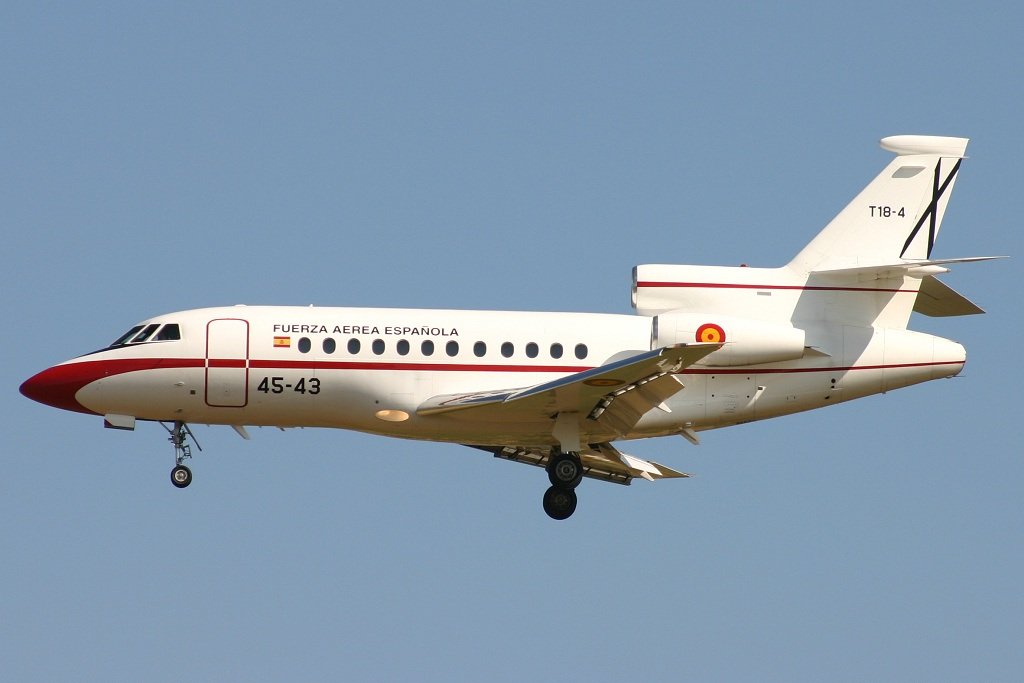
While designed primarily for civilian use, the Falcon 900LX has found limited military applications. The Royal Air Force designates its examples as Envoy IV aircraft for specialized transport missions. Italy operates related variants including the VC-900A (Falcon 900EX) and VC-900B (Falcon 900EX EASy) for non-combat governmental roles.
The Japan Coast Guard utilizes a maritime patrol variant of the Falcon 900 equipped with specialized search radar systems, though this represents a different configuration from the standard 900LX business jet variant.
Current Status and Legacy
Of the 82 Falcon 900LX aircraft manufactured, 81 remain in active service as of 2021, reflecting exceptional operational reliability and owner satisfaction. The aircraft continues the Falcon 900 series' reputation for combining performance, comfort, and operational flexibility in the competitive large-cabin business jet segment.
The 900LX's integration of winglet technology across the Falcon 900 family established new efficiency standards while maintaining the trijet configuration's inherent operational advantages. Its ongoing production status demonstrates sustained market demand for this refined approach to long-range business aviation.