
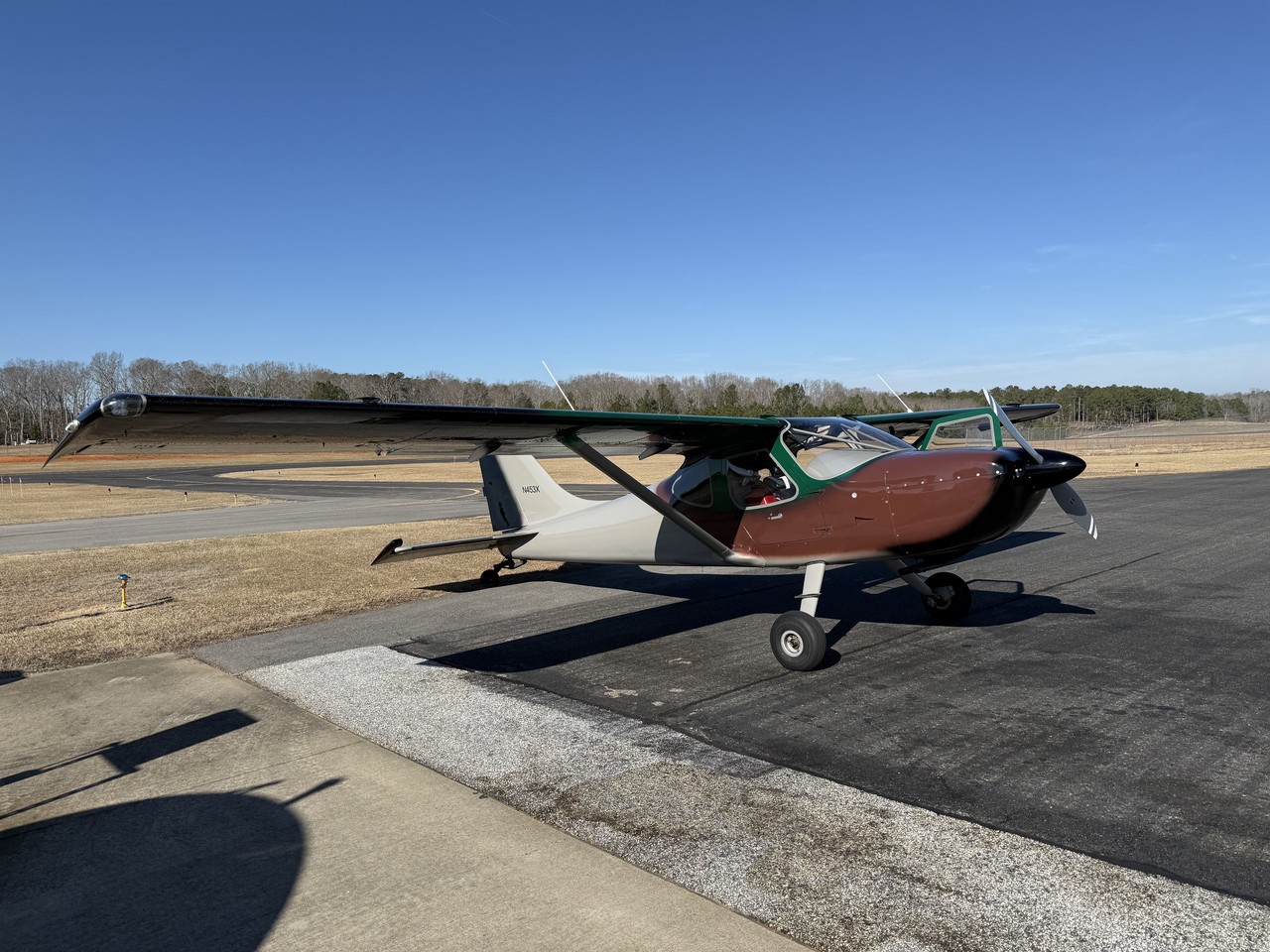
Revolutionary Kit Aircraft Design
The Sportsman 2+2 emerged from Tom Hamilton's innovative GlaStar design, which debuted at the 1994 Sun 'n Fun airshow in Lakeland, Florida. Before the prototype even flew that November, more than 100 builders had placed deposits, recognizing the aircraft's groundbreaking versatility. Hamilton's design philosophy centered on creating a single airframe capable of multiple configurations without requiring structural changes—a concept that would define the aircraft's enduring success.
The Two Weeks to Taxi Revolution
In 2004, Glasair Aviation transformed kit aircraft construction with their Customer Assembly Center program, later refined as "Two Weeks to Taxi." This revolutionary approach allowed builders to complete their aircraft in 18 days under factory supervision while maintaining compliance with the FAA's 51% amateur-construction rule. By 2026, 157 of the 350 Sportsman kits sold had been completed through this program, proving that professional assistance could coexist with homebuilding regulations.
The program addressed a critical industry challenge: traditional kit construction often required 1,000 to 2,000 hours over several years, leading many projects to remain unfinished in garages. Glasair's solution compressed this timeline dramatically while maintaining the legal and educational benefits of amateur construction.
Glasair Aviation's Evolution
Glasair Aviation traces its roots to Stoddard-Hamilton Aircraft, founded to produce composite aircraft kits. The company's progression reflects the evolution of kit aircraft technology: the 1986 Glasair II introduced improved cockpit ergonomics, while the 1989 Glasair II-S added 14 inches of fuselage length. The establishment of Stoddard International that same year demonstrated the company's composite expertise, producing parts for Boeing commercial aircraft.
The transition from GlaStar to Sportsman 2+2 in 2003 marked a significant capability expansion. While the original GlaStar accommodated two occupants, the Sportsman stretched the concept to four seats with 300 pounds of baggage capacity. This evolution required engineering the airframe for a 2,350-pound gross weight—nearly 700 pounds heavier than typical two-seat configurations.
Engine Flexibility and Innovation
The Sportsman 2+2's powerplant options showcase remarkable diversity. Traditional Lycoming IO-360 engines provide 180 horsepower for standard operations, while the IO-390 variant delivers 210 horsepower with optional constant-speed propeller capability. The Continental CD-155 diesel engine, introduced in 2004, represents a significant innovation—one of the few diesel engines certified by both FAA and EASA for general aviation use.
The diesel option burns 9.5 gallons per hour at 75% power while operating on either diesel fuel or jet fuel, providing operational flexibility particularly valuable for international operations where avgas availability can be limited. This fuel flexibility, combined with 50-gallon fuel capacity, enables ranges exceeding 700 nautical miles.
Unmatched Operational Versatility
The Sportsman's defining characteristic remains its configuration adaptability. Pilots can operate the same airframe as a taildragger for backcountry strips or convert to tricycle gear for paved runway operations. The landing gear change requires no structural modifications—simply different attachment points and components. This versatility extends to gross weight variations: the standard fiberglass version operates at 2,350 pounds, while the optional carbon fiber variant increases capacity to 2,500 pounds.
Performance specifications reflect this versatility: stall speeds range from 42 to 48 knots indicated airspeed, enabling operations from extremely short strips, while cruise speeds of 137 to 153 knots provide respectable cross-country capability. Rate of climb varies from 1,000 to 1,950 feet per minute depending on engine and weight configuration, with service ceilings reaching 21,500 feet.
Construction and Materials
The Sportsman employs a hybrid construction approach: fiberglass fuselage combined with all-metal wings and horizontal stabilizer. This design philosophy balances manufacturing efficiency with structural requirements. The fiberglass fuselage provides smooth aerodynamics and simplified kit assembly, while metal wings ensure proven structural integrity and easier field repairs.
Typical empty weights range from 1,300 to 1,350 pounds, leaving substantial useful load for the four-seat configuration. The 23-foot length and 35-foot wingspan provide adequate interior volume while maintaining reasonable hangar requirements.
Legacy and Continued Production
The Sportsman 2+2 continues the legacy established by its GlaStar predecessor, which sold more than 1,000 kits and earned recognition as one of aviation's most successful homebuilt designs. Current production maintains the aircraft's reputation as arguably the most versatile kit aircraft available, serving pilots ranging from backcountry adventurers to cross-country travelers.
Glasair Aviation's continued operation ensures ongoing parts support and technical assistance, critical factors in the kit aircraft market. The robust builder community provides additional support through shared experience and modifications, maintaining the aircraft's viability for future generations of amateur builders.