
Service History
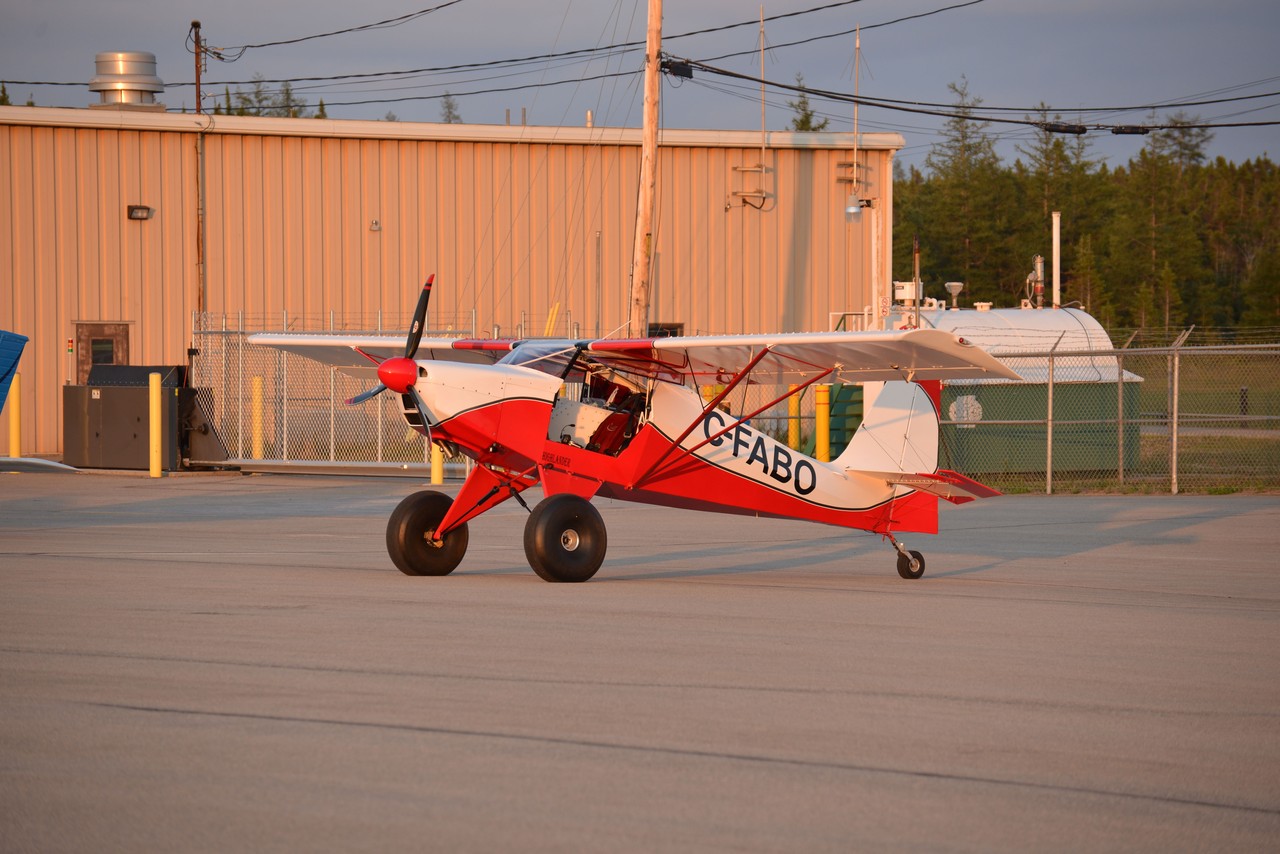
The Highlander quickly established dominance in the recreational STOL market following its Arlington Fly-In debut in 2004. By 2013, the aircraft was outselling Just Aircraft's original Escapade model by a ratio of 10:1, with approximately one-third of sales going to international customers. The aircraft's exceptional short-field capabilities, including takeoff and landing rolls under 300 feet and obstacle clearance in roughly 550 feet, made it the preferred choice for backcountry enthusiasts and bush pilots seeking extreme performance from unprepared airstrips.
The Manufacturer
Just Aircraft LLC was founded in 2002 by designer Troy Woodland and investor Gary Schmitt, initially operating before relocating to Walhalla, South Carolina in 2004. The company established its manufacturing facility complete with its own runway, focusing exclusively on light experimental STOL aircraft for the amateur-built market. Woodland brought previous experience from Flying K Enterprises, where he worked on the Sky Raider aircraft. In April 2025, manufacturing executive Harold Chapman acquired the company after first touring the facility in August 2019, maintaining operations under the original name.
By 2025, Just Aircraft had shipped over 850 kits across all models, with the Highlander representing the majority of sales. The company's product line expanded to five models including the Escapade, Highlander, Highlander XL, SuperSTOL, and SuperSTOL XL, maintaining a sales distribution of 70 percent domestic and 30 percent international markets.
Engine & Technical Details
The Highlander typically employs Rotax powerplants, most commonly the four-stroke Rotax 912ULS producing 100 horsepower, though options include the Rotax 503, 914, or Jabiru 3300 engines. The Austrian-manufactured Rotax 912 series, in production since 1994 with over 100,000 cumulative units produced across all aviation applications, provides the lightweight and fuel-efficient characteristics essential for STOL operations.
Woodland's design incorporated several innovations beyond the original Escapade platform, including extended wings equipped with vortex generators, enlarged tail surfaces with balanced elevator and rudder controls, and reinforced landing gear capable of supporting 29-31 inch tundra tires. The aircraft features automatic self-deploying leading-edge slats and spoilers integrated with the ailerons to counter adverse yaw effects during slow-speed flight.
Construction utilizes 4130 chrome-molybdenum steel tubing for the fuselage, tail, and landing gear structures, covered with fabric. The wings employ an all-aluminum design with wooden ribs and can be folded in under two minutes without disconnecting flight controls. The aircraft met UK BCAR Section S certification standards for static and flight testing.
Pilot Perspective
Pilots praise the Highlander for its exceptional low-speed handling characteristics and forgiving flight behavior. With a stall speed of 24-28 knots with flaps deployed and a climb rate of 880 feet per minute, the aircraft delivers performance that enables operations from extremely confined areas. The side-by-side seating configuration with dual controls provides excellent visibility and communication between occupants during training or recreational flights.
Cruise performance reaches 96-100 knots (110 mph), providing reasonable cross-country capability while maintaining the slow-flight characteristics essential for backcountry operations. The aircraft's convertible landing gear configuration allows switching between nosewheel and tailwheel arrangements in approximately one hour, adapting to different operational requirements and pilot preferences.
Production & Legacy
With over 850 total kits shipped by 2025 and production continuing, the Highlander represents one of the most successful STOL kit aircraft in the experimental aviation market. The design's versatility led to the development of the enlarged Highlander XL variant, featuring a fuselage stretched by two feet to accommodate taller occupants and additional baggage capacity.
The aircraft's cultural significance extends beyond mere production numbers, as it democratized high-performance STOL capabilities for amateur builders who previously required factory-built aircraft costing significantly more. Featured in numerous aviation videos and demonstrations, including notable flights by bush pilot Steve Henry, the Highlander elevated standards for recreational backcountry aviation and influenced subsequent STOL kit designs throughout the industry.
Today, Highlanders operate worldwide in the hands of recreational pilots and backcountry enthusiasts, representing the modern evolution of kit-built aircraft from basic designs to sophisticated, competition-grade STOL performers capable of rivaling factory-built alternatives.