
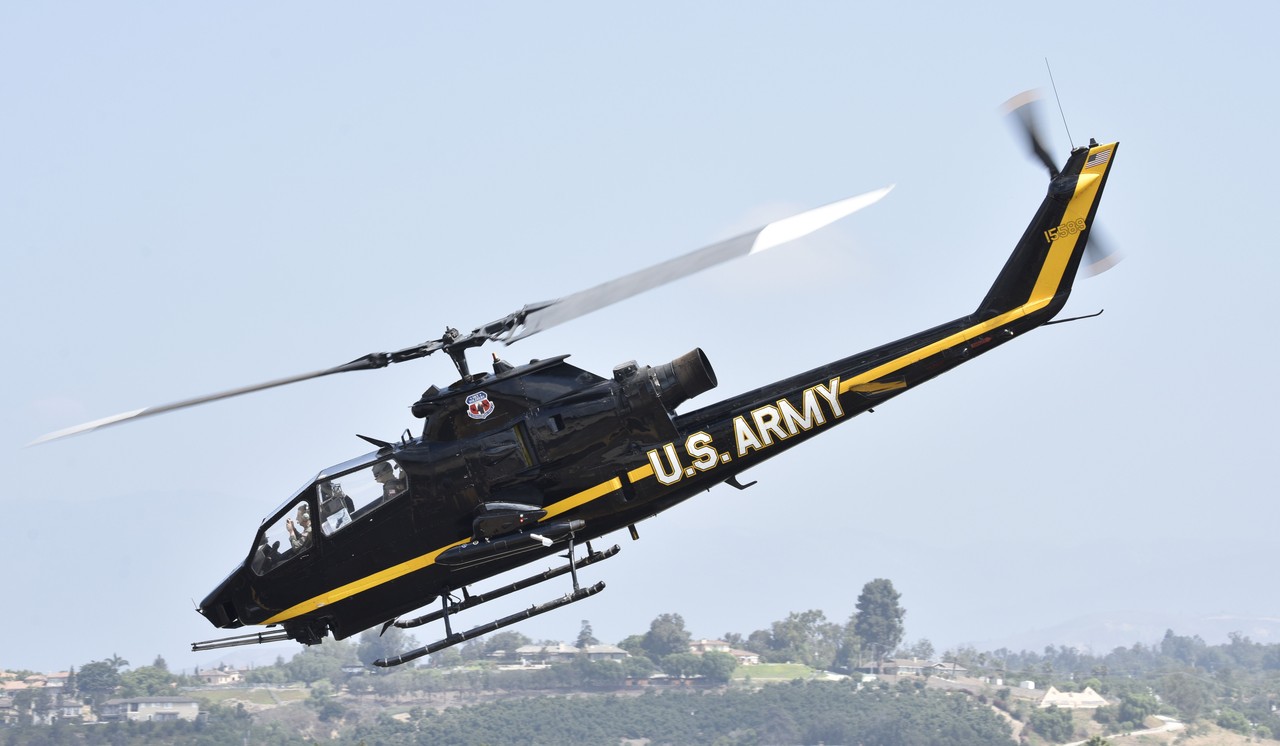
Development and Enhanced Design
The AH-1S emerged from Bell Helicopter's systematic improvement program for their groundbreaking Model 209 attack helicopter design. Building upon the combat-proven AH-1G, which had accumulated over one million operational hours in Vietnam, Bell engineers focused on addressing power and avionics limitations identified during extensive battlefield operations. The upgrade program, initiated in the mid-1970s, represented the second major evolution in the Cobra lineage that would eventually culminate in the AH-1F variant.
Bell's original Cobra concept had revolutionized military aviation when the prototype first flew on September 7, 1965, just eight months after receiving Army approval. The innovative narrow-fuselage design, derived from UH-1 Huey components, created the world's first dedicated armed battlefield helicopter. This streamlined configuration allowed the aircraft to present a minimal target profile while maximizing firepower effectiveness through its tandem crew arrangement.
Combat Heritage and Operational Evolution
The Cobra's combat pedigree began on August 30, 1967, when six AH-1Gs arrived at Bien Hoa Air Base in South Vietnam. Within days, on September 4, the type achieved its first combat success by eliminating a sampan vessel and four enemy combatants. The 334th Assault Helicopter Company became the first operational Cobra unit on October 6, 1967, establishing tactical doctrines that would influence attack helicopter operations for decades.
During peak Vietnam operations, Army Cobras reached a maximum strength of 1,081 aircraft in service. These helicopters pioneered the "hunter-killer" team concept, partnering with OH-6A scout aircraft to locate and engage enemy positions. The OH-6 would conduct low-level reconnaissance flights to draw hostile fire, immediately followed by Cobra strikes against revealed targets. This tactical innovation proved devastatingly effective throughout the Southeast Asian conflict.
Combat losses during Vietnam totaled approximately 300 aircraft from nearly 1,110 delivered between 1967 and 1973. Operation Lam Son 719 in southeastern Laos proved particularly costly, with 26 Army AH-1Gs destroyed and 158 damaged during intensive operations. These experiences provided crucial data for the AH-1S enhancement program, driving improvements in survivability and combat effectiveness.
Technical Improvements and Powerplant Enhancement
The AH-1S incorporated significant powerplant improvements over the original AH-1G's Lycoming T53-13 engine, which produced 1,400 shaft horsepower. Bell engineers upgraded both the engine and transmission systems to provide enhanced performance in demanding operational environments. These modifications addressed power limitations that had occasionally constrained combat operations, particularly in high-altitude or heavily loaded configurations.
The aircraft retained the proven tandem seating arrangement that positioned the pilot above and behind the co-pilot/gunner, optimizing visibility and crew coordination during combat missions. This configuration, combined with the narrow fuselage cross-section, continued to provide exceptional agility and reduced vulnerability compared to conventional helicopter designs.
Advanced avionics systems distinguished the AH-1S from earlier variants, incorporating improved navigation, communication, and fire control capabilities. These enhancements reflected lessons learned from extensive combat operations and emerging technological developments in military electronics.
Bell Helicopter's Manufacturing Excellence
Bell Helicopter, now operating as Bell Textron, established itself as the premier attack helicopter manufacturer through the Cobra program. The company's rapid development timeline—from concept to first flight in eight months—demonstrated exceptional engineering capabilities that became a Bell hallmark. In April 1966, Bell's submission successfully competed against rival designs, securing the initial production contract for 110 aircraft.
Total Cobra series production exceeded 1,400 aircraft across all variants, including both HueyCobra and SeaCobra configurations. Bell built 1,116 AH-1Gs between 1967 and 1973, followed by AH-1S production throughout the mid-to-late 1970s. This manufacturing success established Bell's dominance in the attack helicopter market and provided the foundation for subsequent advanced rotorcraft developments.
International Service and Legacy
Beyond U.S. Army operations, the Cobra series served multiple international operators and military branches. The United States Marine Corps acquired 69 AH-1Gs between mid-1970 and February 1975, adapting the type for amphibious assault operations. Export customers included Israel (six aircraft), Japan, Turkey, and Spain, which operated eight Z.14 variants through the Spanish Navy.
The AH-1S represented a crucial evolutionary step in attack helicopter development, bridging the gap between the combat-proven AH-1G and more advanced variants that followed. Its enhanced powerplant and avionics improvements addressed operational limitations while maintaining the fundamental design excellence that made the Cobra series successful. Today, the aircraft stands as a testament to Bell's innovative engineering and the transformative impact of purpose-built attack helicopters on modern battlefield tactics.