
Service History
The L-39 Albatros dominated military jet training from the 1970s through the 1990s, serving with more than 40 air forces across six continents. Between 1974 and 1995, Aero Vodochody delivered approximately 2,925 aircraft, making it the most successful jet trainer ever produced. The aircraft became the backbone of pilot training programs throughout the Warsaw Pact nations, including the Soviet Union, East Germany, Bulgaria, Hungary, Romania, and Czechoslovakia itself.
Beyond the Eastern Bloc, the L-39 found widespread adoption among developing nations and non-aligned countries. Syria, Iraq, North Vietnam, and numerous African air forces selected the Albatros for its reliability, simplicity, and cost-effectiveness. As of recent assessments, approximately 700 L-39s remain in active military and civilian service, testament to the aircraft's robust design and enduring utility.
Operational Variants
Aero Vodochody developed multiple variants to meet diverse training requirements. The L-39C served as the baseline training version, featuring a purely instructional configuration optimized for basic and advanced pilot training. The L-39ZO variant incorporated weapons training capabilities, including provisions for a centerline-mounted GSh-23 twin-barrel 23mm cannon pod loaded with 180 rounds. This armed trainer could carry up to 284 kilograms of external stores, enabling students to transition from basic flight training to operational combat techniques.
The success of the L-39 family spawned numerous derivatives, including the L-159 Alca light attack aircraft. The Czech Air Force ordered 72 L-159s in 1997, though budget constraints limited initial deliveries to 24 aircraft by 2003. More recently, Iraq acquired 15 L-159s between 2015 and 2018 for counterinsurgency operations against ISIS, demonstrating the continued relevance of the Albatros design philosophy.
The Manufacturer
Aero Vodochody, founded in 1919, emerged as one of Europe's premier aircraft manufacturers during the 20th century. The company's location in Vodochody, Czechoslovakia, positioned it as a key supplier to Warsaw Pact military forces throughout the Cold War era. Prior to the L-39, Aero Vodochody achieved remarkable success with the L-29 Delfin, producing 3,665 units between 1960 and 1974, making it the most successful training aircraft of its generation.
The transition from the L-29 to the L-39 represented a significant technological leap, incorporating lessons learned from over a decade of jet trainer operations. Following the collapse of the Soviet Union, Aero Vodochody successfully adapted to market economics, continuing operations under its original name while developing Western-compatible variants and modern successors.
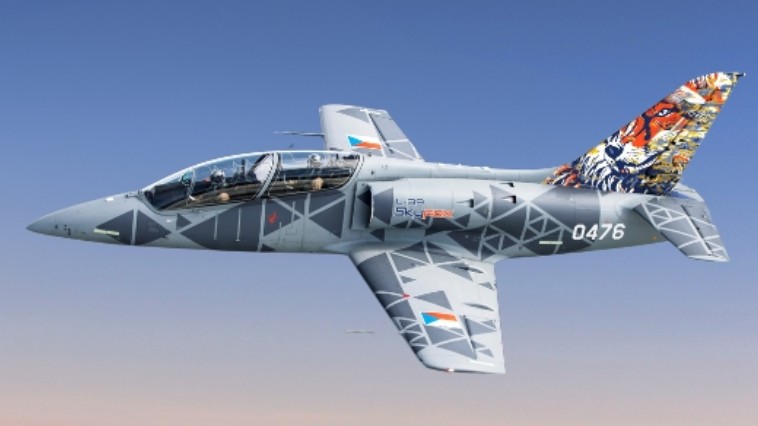
In recent years, the company has pursued next-generation training solutions, culminating in the L-39NG program. This modern variant completed its first flight on December 22, 2018, with serial production formally inaugurated on May 10, 2023, for delivery to the Czech Air Force.
Engine and Technical Innovation
The L-39C's powerplant consists of a single Ivchenko AI-25 turbofan engine, manufactured by Ivchenko-Progress in Ukraine during the Soviet era. This engine produces 3,792 pounds of thrust, providing adequate performance for training missions while maintaining exceptional reliability across diverse climatic conditions. The AI-25's proven track record enabled L-39 operations from arctic bases in Siberia to desert airfields in North Africa.
Design objectives emphasized safety, versatility, and ease of maintenance. The aircraft incorporated larger air intakes and extended engine trunks compared to early prototypes, improvements identified during the development program that began with Rudolf Duchon's first flight of the X02 prototype on November 4, 1968. These modifications enhanced engine performance and simplified ground maintenance procedures.
Performance Characteristics
The L-39C demonstrates impressive performance parameters for a subsonic trainer. With a service ceiling of 36,000 feet and a climb rate of 4,000 feet per minute, the aircraft provides realistic preparation for high-performance combat aircraft. Its range of 590 nautical miles enables extended training sorties without intermediate stops, while short takeoff and landing distances of 1,740 feet and 2,135 feet respectively allow operations from austere airfields.
Pilots consistently praise the L-39's docile handling characteristics and predictable flight behavior. The tandem seating arrangement provides excellent visibility for both instructor and student, facilitating effective training progression from basic flight maneuvers through advanced aerobatic sequences.
Legacy and Preservation
Today, the L-39 enjoys a vibrant second life in civilian hands, particularly among warbird enthusiasts and aerobatic performers. Twenty aerobatic teams currently operate L-39s worldwide, showcasing the aircraft's performance capabilities at air shows and competitions. Notable preserved examples include aircraft at the Estonian Aviation Museum and the Warbird Heritage Foundation in Waukegan, Illinois, which maintains N239PW, a 1979-built aircraft originally operated by Kyrgyzstan.
The L-39's influence extends beyond its production run, establishing design principles and operational concepts that continue to shape modern military training aircraft development. Its success validated the subsonic jet trainer concept, proving that effective pilot training could be achieved without the complexity and expense of supersonic platforms.