
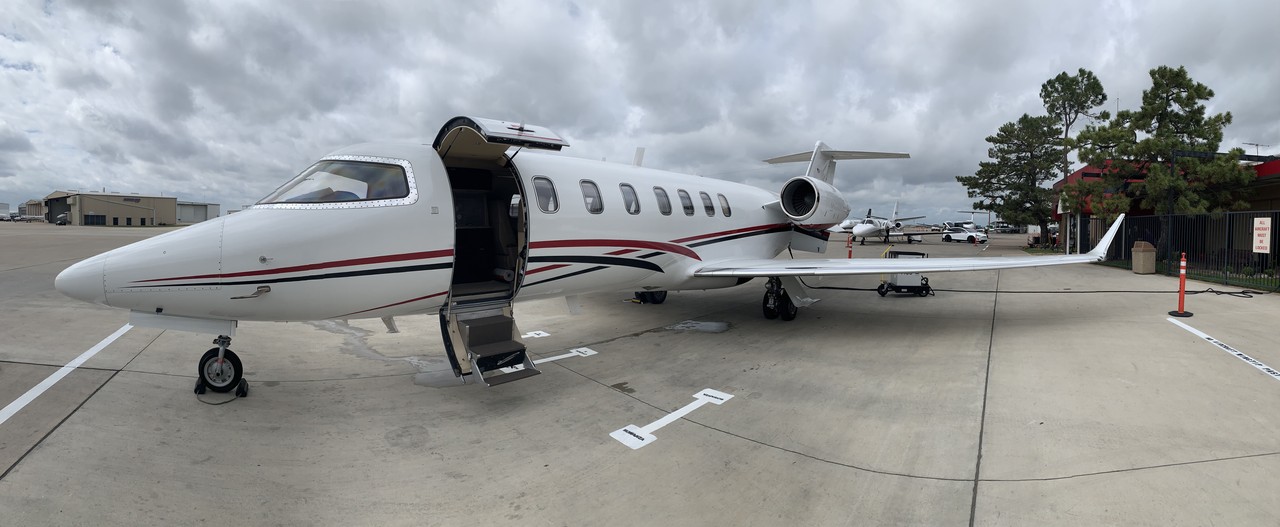
A Brief Production Run
The Learjet 70's production story reflects the challenging economics of the light business jet market in the 2010s. Despite receiving FAA type certification alongside its larger sibling, the Learjet 75, on November 14, 2013, the model struggled to find buyers in sufficient numbers. Manufacturing at Bombardier's Wichita facility continued for just three years, ending in 2016 with only 13 aircraft delivered. This made the Learjet 70 one of the rarest production business jets of the modern era, standing in stark contrast to the Learjet 75, which achieved 154 deliveries before the entire Learjet line ended in March 2022.
Technical Advancement Over Predecessors
Engineered as a comprehensive upgrade to the Learjet 40/45 family, the Learjet 70 incorporated significant improvements in avionics, powerplant efficiency, and aerodynamic design. The aircraft featured Honeywell turbofan engines that delivered substantially better performance than earlier models, extending range from the predecessor's 1,700 nautical miles to more than 2,000 nautical miles. The addition of canted winglets represented a key aerodynamic enhancement, reducing drag and improving fuel efficiency during cruise flight.
The cabin measured 17.7 feet in length, 5.1 feet in width, and 4.9 feet in height, optimized for six passengers in the standard configuration. This represented a focused approach to the light business jet market, offering greater range and efficiency in a package smaller than the eight-passenger Learjet 75.
The Learjet Legacy
Bombardier's stewardship of the Learjet brand began around 2000, approximately 22 years before the final aircraft delivery in 2022. The Canadian manufacturer inherited a legacy that began with William P. Lear's revolutionary vision, which first took flight with the Learjet 23 on October 7, 1963. The original Learjet company had moved rapidly from concept to public offering, going public in November 1964, just over a month after delivering the first production aircraft.
Over nearly six decades of production, more than 3,000 Learjet aircraft were delivered across all models, establishing the brand as synonymous with business aviation. The Learjet 70 represented the final evolution of design principles that had made the brand legendary among corporate pilots and flight departments worldwide.
Market Position and Performance
The Learjet 70 competed in the highly competitive light business jet segment, where range, speed, and cabin comfort determined success. Its 2,000-plus nautical mile range positioned it well for transcontinental flights, while the six-passenger configuration targeted owner-operators and small corporate flight departments. However, the market's preference for slightly larger cabins and passenger capacity ultimately favored the Learjet 75.
As a mid-sized business jet, the Learjet 70 maintained the brand's reputation for speed and efficiency. The Honeywell turbofan powerplants provided the thrust necessary for the quick climbs and high cruise speeds that Learjet customers expected, though specific performance figures reflected the aircraft's position as the smaller of the final two Learjet variants.
End of an Era
The Learjet 70's production cessation in 2016 foreshadowed the eventual end of all Learjet manufacturing six years later. By February 2021, more than 70 percent of all Learjet aircraft ever delivered remained in service, representing approximately 2,145 light and mid-size jets operating across 41 countries worldwide. This remarkable longevity record underscored the fundamental soundness of the Learjet design philosophy, even as market forces ended new production.
Bombardier has committed to continuing service and parts support for the remaining Learjet fleet, ensuring that the 13 Learjet 70 aircraft will continue flying for years to come. These rare aircraft serve as flying reminders of the final chapter in a production run that revolutionized business aviation and established performance standards that influenced an entire industry.
The Learjet 70's brief production run, while commercially unsuccessful, represented the culmination of decades of refinement in business jet design. Its rarity today makes each example a significant piece of aviation history, marking the end of one of the most influential aircraft families ever created.