
Design Philosophy and Development
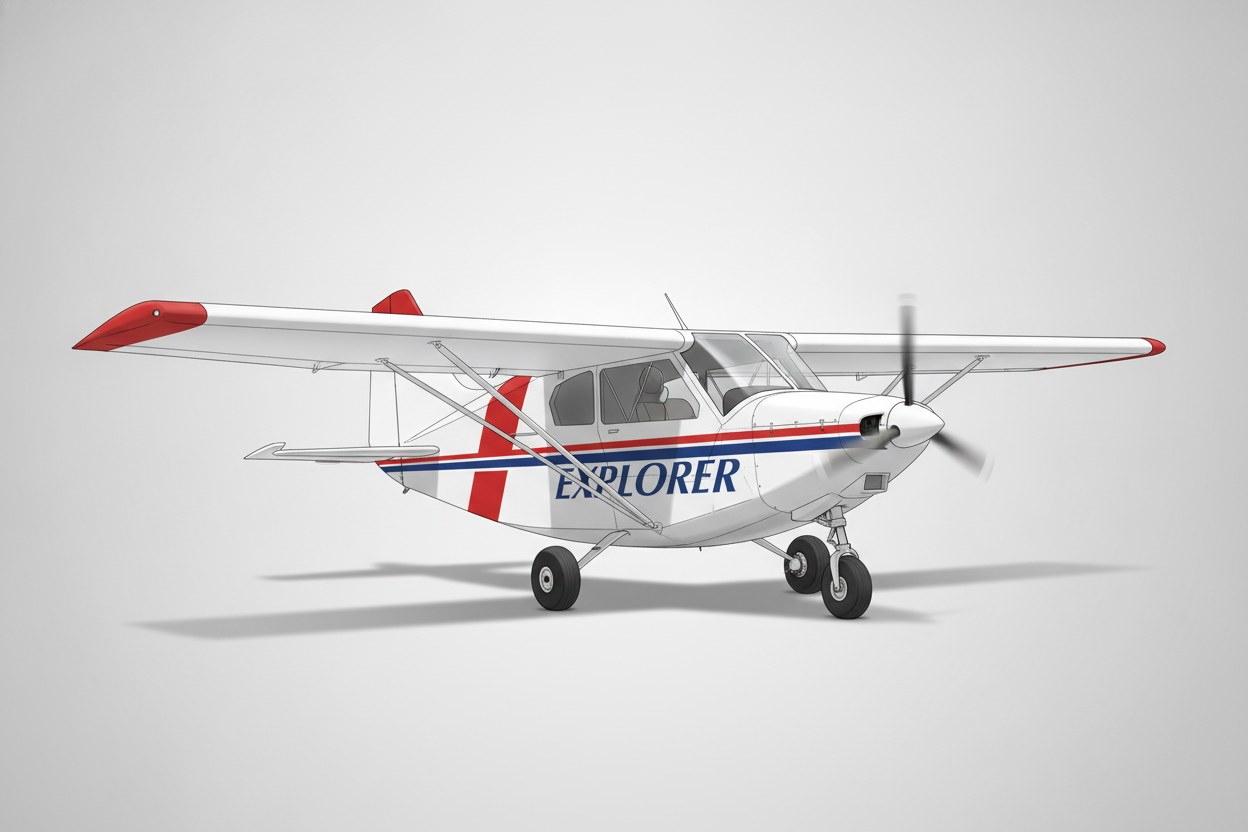
The Nordic 8 Mini Explorer emerged from an unconventional design philosophy that challenged traditional ultralight priorities. Rather than pursuing maximum speed or aerodynamic efficiency, designer Hubert de Chevigny created the larger Personal Explorer with unprecedented cabin volume for recreational camping flights. Norman Aviation adapted this concept in 2011, scaling down the design to meet Canadian Advanced Ultralight regulations while preserving the aircraft's distinctive "flying motorhome" characteristics.
The Mini Explorer's development reflected growing demand among recreational pilots for aircraft capable of extended backcountry adventures. With its 48-inch cabin width—exceptional for the ultralight category—the aircraft provides genuine sleeping accommodation for two adults along with dedicated kitchen space. This ambitious interior packaging drove the aircraft's exterior dimensions to an 11-meter wingspan and 6.4-meter length, making it substantially larger than typical ultralight designs.
Construction and Manufacturing
Norman Aviation of Saint-Anselme, Quebec, brought the Mini Explorer to market as a kit-built aircraft requiring approximately 500 hours of amateur construction time. The company employed traditional but proven construction methods, building the fuselage from welded steel tubing for strength and crash protection, while utilizing wooden wing structures covered entirely in doped aircraft fabric. This mixed-construction approach balanced structural integrity with weight considerations crucial for ultralight certification.
Production remained deliberately limited, with Norman Aviation reporting completion of four examples by December 2011. Transport Canada records indicated only three aircraft remained registered by February 2018, including the prototype, suggesting the specialized nature of the design attracted a select group of builders and operators. The company continued offering kits for amateur construction rather than pursuing factory-built aircraft sales.
Engine Options and Performance
The Mini Explorer accommodates three Rotax powerplant options manufactured by BRP-Rotax GmbH & Co KG of Austria. The base 80-horsepower Rotax 912UL provides adequate performance for the aircraft's camping mission, while the 100-horsepower 912ULS offers improved climb rates and payload capacity. The premium 115-horsepower turbocharged Rotax 914 delivers maximum performance, though the aircraft's generous proportions and camping equipment typically limit cruise speeds to 137 kilometers per hour regardless of engine selection.
Standard specifications using the Rotax 912ULS reveal the aircraft's emphasis on utility over speed. With an empty weight of 297 kilograms and maximum gross weight of 559 kilograms, the Mini Explorer provides 262 kilograms of useful load—sufficient for two occupants, camping equipment, and substantial fuel reserves. The aircraft achieves a respectable climb rate of 4.3 meters per second and maintains a conservative stall speed of 60 kilometers per hour, enhancing safety during backcountry operations.
Operational Characteristics
Pilots describe the Mini Explorer as stable and forgiving, characteristics enhanced by its high-wing configuration and generous wing area of 16.75 square meters. The low wing loading of 33.4 kilograms per square meter contributes to gentle handling and short-field performance essential for accessing remote camping destinations. Fixed tricycle landing gear simplifies ground operations while providing stability during loading and unloading of camping equipment.
The aircraft's never-exceed speed of 210 kilometers per hour and maximum level flight speed of 208 kilometers per hour reflect its deliberate design for leisurely cross-country travel rather than rapid transportation. The substantial cabin volume that defines the aircraft's mission also creates aerodynamic compromises that limit high-speed performance, a trade-off readily accepted by operators valuing comfort over velocity.
Market Position and Legacy
The Nordic 8 Mini Explorer occupies a unique niche within the ultralight aircraft market, representing one of the few designs prioritizing accommodation over aerodynamic efficiency. Its limited production numbers reflect both the specialized nature of its camping-focused mission and the relatively small market for kit-built aircraft requiring extensive construction time. The aircraft appeals primarily to experienced builders seeking an unconventional platform for extended backcountry adventures.
While never achieving widespread commercial success, the Mini Explorer demonstrated the flexibility of ultralight regulations to accommodate innovative design concepts. Its spacious cabin and camping capabilities influenced subsequent recreational aircraft designs, proving that ultralight aircraft could serve roles beyond basic pilot training and local recreational flying. The aircraft remains available as a kit, continuing to attract builders drawn to its distinctive combination of flight capability and camping accommodation.