
Global Training Dominance
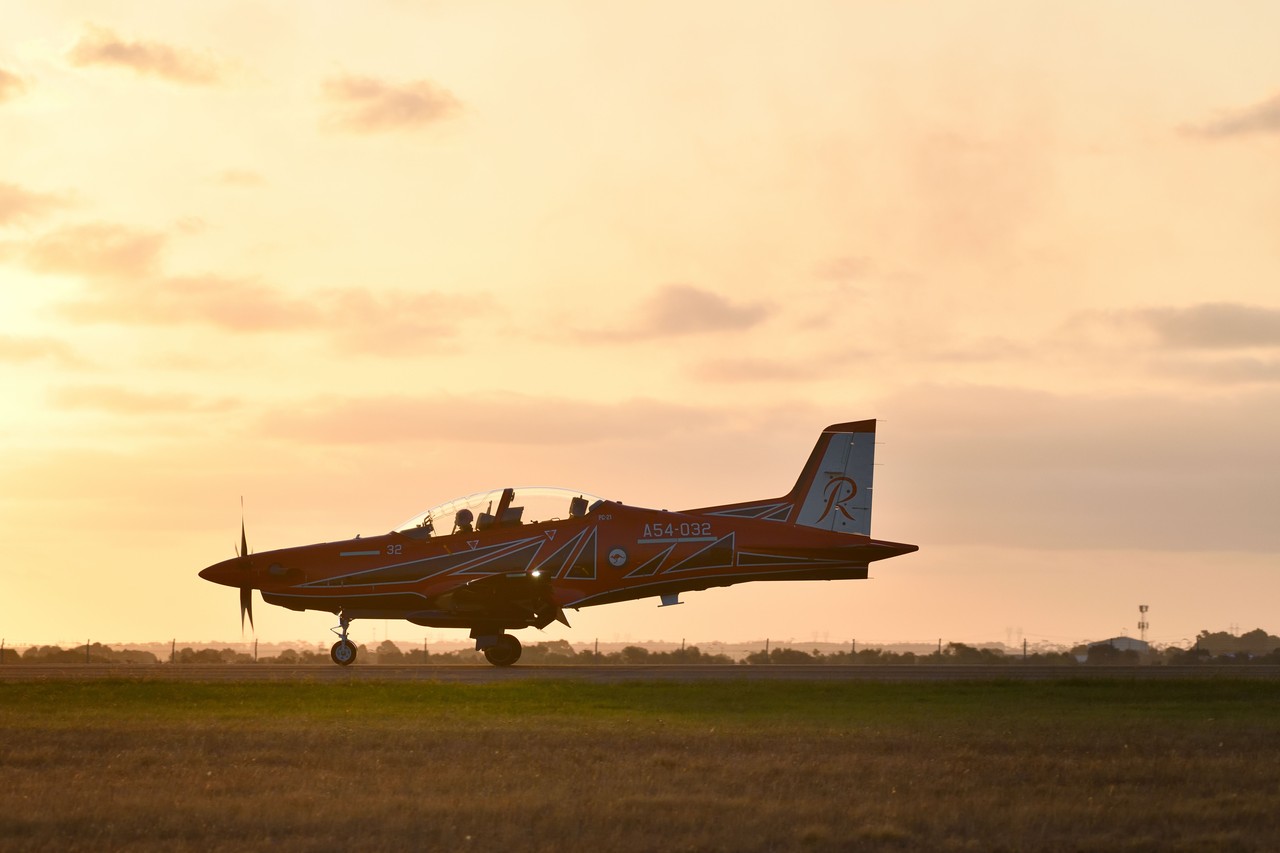
Since entering service with the Republic of Singapore Air Force in April 2008, the PC-21 has established itself as the premier advanced turboprop trainer for air forces seeking cost-effective alternatives to jet aircraft. By 2020, more than 270 units had accumulated over 500,000 flight hours across nine nations, with the type serving as the backbone of pilot training programs from Australia to Spain. The Royal Australian Air Force operates the largest fleet with 49 aircraft delivered between August 2017 and December 2019, while other significant operators include Saudi Arabia, Qatar, the United Arab Emirates, France, and Spain.
Swiss Engineering Excellence
Pilatus Aircraft Ltd., established in December 1939 in Stans, Switzerland, developed the PC-21 as the latest evolution of their renowned trainer family that includes the PC-7 and PC-9. The company's internal design team launched the PC-21 project as a private venture, building upon modifications tested on the PC-7 Mk.II in November 1997. Design objectives centered on creating a turboprop aircraft capable of replicating jet flight characteristics while maintaining lower operating costs over a 30-year service lifecycle. The first prototype rolled out on April 30, 2002, achieving its maiden flight just two months later.
Revolutionary Training Capabilities
The PC-21's advanced design enables it to serve multiple training roles previously requiring separate aircraft types. Its expanded flight envelope allows student pilots to experience jet-like handling characteristics while training on basic, advanced, fighter lead-in, and weapon systems officer curricula. The aircraft's digital avionics suite provides modern cockpit experience essential for pilots transitioning to contemporary military jets. This versatility has made it particularly attractive to air forces seeking to consolidate their training fleets and reduce operational complexity.
Powerplant and Performance
The heart of the PC-21's impressive performance lies in its Pratt & Whitney Canada PT6A-68B turboprop engine, delivering 1,600 shaft horsepower through a five-blade propeller system. This powerplant, part of the legendary PT6 family with over 50,000 engines produced since 1963, enables the PC-21 to achieve maximum speeds of 426 miles per hour while maintaining the reliability and fuel efficiency advantages of turboprop propulsion. The engine's power-to-weight ratio provides exceptional climb performance and maneuverability that closely approximates jet aircraft behavior.
International Recognition
The PC-21's success is demonstrated by its consistent selection by discerning air forces worldwide. Singapore served as the launch customer with 19 aircraft ordered, followed by Switzerland's order for 8 units in 2006. The Royal Air Force acquired 2 aircraft specifically for the Empire Test Pilots' School, with deliveries completed in July 2018. Spain represents the most recent major customer, ordering an initial 24 aircraft in 2020 with first deliveries in September 2021, followed by an additional 16-unit order in 2023 for delivery beginning June 2025.
Manufacturing Legacy
All PC-21 aircraft are manufactured at Pilatus's facility in Stans, Switzerland, maintaining the company's tradition of Swiss precision engineering. Production commenced in 2002 and continues today, with approximately 235 to 270 units completed as of 2020. The 100th PC-21 rolled off the production line in February 2015, coinciding with Pilatus reaching the milestone of 1,000 turboprop trainers produced across all variants. This achievement underscores the company's position as a global leader in military training aircraft.
Operational Impact
The PC-21's design philosophy of providing jet-like training in a turboprop platform has proven highly successful in modern pilot training programs. Air forces report significant cost savings compared to jet trainers while maintaining training effectiveness for students destined for advanced fighter and transport aircraft. The type's 30-year design lifecycle ensures long-term fleet sustainability, while its modern avionics prepare pilots for contemporary military aircraft systems. With production ongoing and no retirements reported, the PC-21 fleet continues expanding as more air forces recognize its training advantages.