
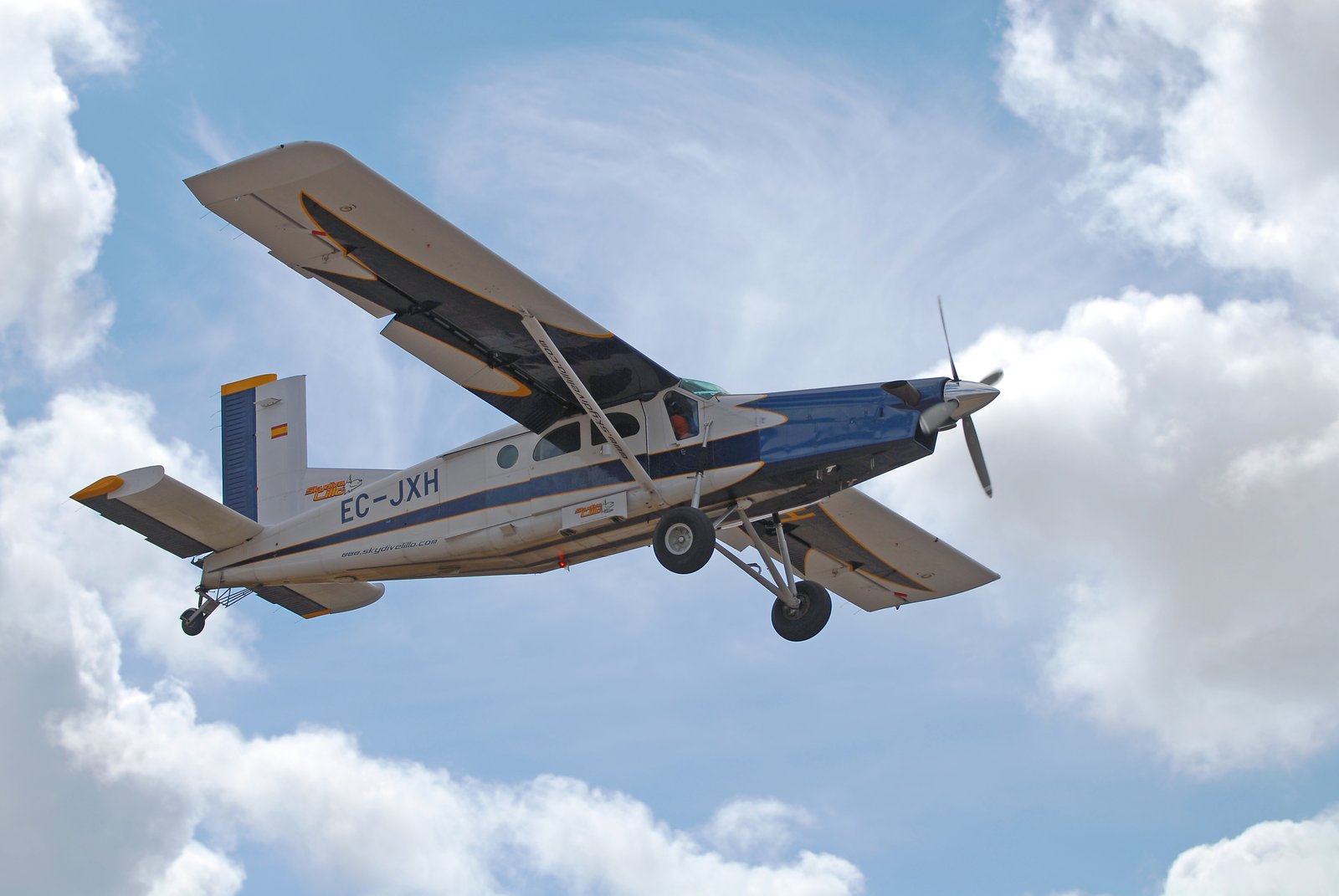
A Swiss Engineering Marvel
The PC-6 Porter emerged from Pilatus Aircraft's Stans, Switzerland facility as an answer to aviation's most challenging question: how to reach places that seemed unreachable. Founded in 1939, Pilatus Aircraft Ltd. had established itself as a specialist in utility aircraft, but the Porter would become their masterpiece and bring worldwide recognition to the Swiss manufacturer.
The aircraft's development began in the late 1950s with a clear mission - create an airplane that could operate from unprepared strips in mountainous terrain while carrying substantial loads. Chief among its design innovations was the combination of a high-wing configuration with exceptional short-field capabilities that would define bush flying for decades.
From Piston to Turbine Power
The original PC-6 Porter took flight powered by a 254-kilowatt piston engine, but Pilatus recognized the potential for turboprop power. Exactly two years after the maiden flight, on May 4, 1961, the first Turbo Porter lifted off with a Turbomeca Astazou II turboprop engine. This transformation proved pivotal - the turboprop variants would dominate production and establish the Porter's reputation for reliability in harsh conditions.
Later variants, including the PC6/B delivered from 1964, received the robust Pratt & Whitney PT6A series engines producing 410 kilowatts. These Canadian-built turboprops became synonymous with utility aviation, offering exceptional power-to-weight ratios and proven durability in remote operations.
Combat Service in Southeast Asia
While designed for civilian use, the Porter found itself thrust into military service during America's involvement in Vietnam. Fairchild Hiller, which had secured licensing rights for U.S. production, built specialized variants for the U.S. Air Force. Fifteen aircraft received the military designation AU-23A Peacemaker, serving as utility transports and liaison aircraft in the challenging conditions of Southeast Asia.
Following American withdrawal, these military Porters found new life with the Royal Thai Air Force, which expanded its fleet to 19 aircraft. The military variants demonstrated the Porter's versatility beyond civilian bush operations, proving equally capable of supporting combat logistics and personnel transport.
International Production Success
Pilatus's decision to license production beyond Switzerland proved remarkably successful. Fairchild Hiller manufactured approximately 100 aircraft in the United States, while additional aircraft were produced under license in China. This international approach brought the Porter to markets worldwide and established manufacturing expertise beyond the aircraft's Swiss origins.
The production numbers tell the story of sustained success: 603 total aircraft over 63 years, comprising 511 from Pilatus in Switzerland and the remainder from licensed manufacturers. Production originally concluded in August 2017, though the final delivery was delayed until 2022 due to pandemic disruptions. The last aircraft, serial number 1019, was delivered to Indonesian Smart Aviation with registration PK-SNK.
Operational Excellence
Pilots praised the Porter for characteristics that made it exceptional in remote operations. With a cruise speed of 213 kilometers per hour and range of 925 kilometers, it offered helicopter-like access with airplane efficiency. The aircraft's ability to takeoff in 195 meters and land in just 130 meters opened airfields that larger aircraft could never attempt.
The Porter's payload capacity of 1,200 kilograms made it economically viable for supply missions to remote locations. Configured for passengers, it could accommodate up to 10 people, making it valuable for both commercial and humanitarian operations in regions with limited infrastructure.
Pilatus Aircraft Legacy
The Porter's success established Pilatus as a leading manufacturer of specialized utility aircraft. The company continues operations from its original Stans facility, having expanded its product line to include the PC-12 single-engine turboprop and PC-21 military trainer. The Porter's reputation for rugged reliability became the foundation for Pilatus's current position as Switzerland's premier aircraft manufacturer.
Today, approximately 295 Turbo Porters remain in active service worldwide, with some aircraft exceeding 40 years of continuous operation. This remarkable service life demonstrates the fundamental soundness of the Porter's design and the quality of Swiss engineering that went into every airframe.
Enduring Impact
The PC-6 Porter fundamentally changed how aviation approached remote area operations. By offering fixed-wing access to locations previously served only by helicopters, it created new possibilities for humanitarian aid, resource development, and passenger service in challenging environments. Its 63-year production run represents one of the longest continuous manufacturing periods in aviation history, testament to a design that perfectly matched its intended mission.
From the Swiss Alps to Indonesian islands, from African bush strips to Alaskan wilderness, the Porter connected remote communities to the broader world while proving that specialized aircraft could achieve both commercial success and operational excellence.