
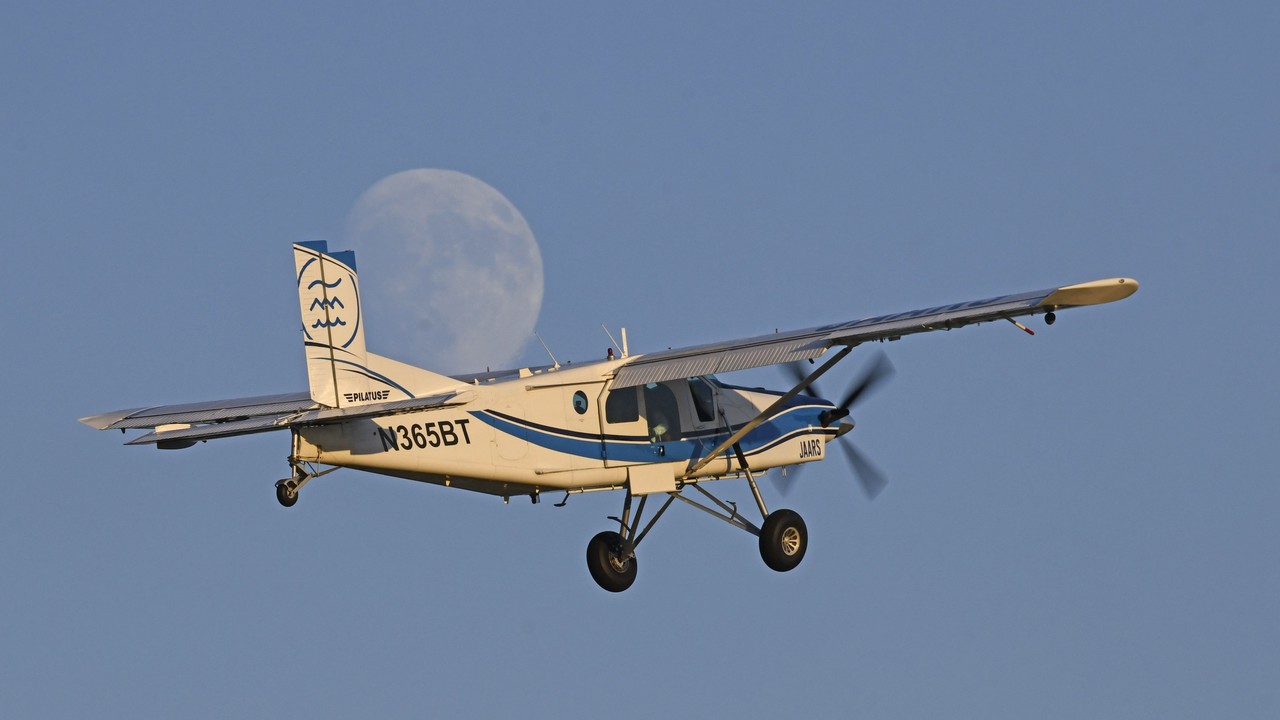
Service Dominance in Extreme Conditions
The PC-6 Turbo-Porter established itself as the definitive aircraft for operations in challenging environments where conventional aircraft could not venture. With its ability to operate from unprepared strips measuring just 60 meters in length, the aircraft opened previously inaccessible regions to aviation services. Of the 604 aircraft produced over six decades, approximately 300 remain active today, testament to the design's enduring utility and robust construction.
Combat Operations in Southeast Asia
The PC-6 saw its most significant military application during the Vietnam War era through the AU-23A Peacemaker variant. Thirty-six PC-6/C2 aircraft were specially configured by Fairchild Hiller with TPE331-1-101F engines producing 665 shaft horsepower and equipped with armament including machine guns and rocket pods. These aircraft served with the Royal Thai Air Force from approximately 1967 to 1972 in counter-insurgency operations, demonstrating the versatility of the basic Porter design when adapted for combat roles.
Pilatus Aircraft Legacy
Pilatus Aircraft Ltd., founded in 1939 in Stans, Switzerland, developed the PC-6 as part of their focus on utility aircraft for specialized missions. The company emerged from the late 1950s with clear design objectives centered on creating an aircraft capable of serving remote mountain communities and challenging operational environments. Unlike many aviation manufacturers, Pilatus maintained its independence throughout the PC-6's production run, though it licensed manufacturing rights to Fairchild Hiller in the United States, which produced approximately 90 units.
Turboprop Powerplant Evolution
The Turbo-Porter designation encompasses several engine variants that transformed the original piston-powered Porter into a more capable aircraft. The most successful variant, the PC-6/B series, employed Pratt & Whitney Canada PT6A engines in various configurations. The PT6A-27 producing 680 shaft horsepower powered 291 Swiss-built and 18 Fairchild-built aircraft, making it the most numerous variant. The first PT6A-powered Porter, registration N187H with a PT6A-6A engine, made its maiden flight on May 2, 1964.
Alternatively, the PC-6/C series utilized Garrett (later Honeywell) TPE331 engines, with the TPE331-25D producing 575 shaft horsepower first flying in October 1965 in aircraft N180K. These engines provided exceptional power-to-weight ratios and proved particularly suitable for hot and high-altitude operations where maintaining performance was crucial.
Operational Excellence
Pilots praised the PC-6 for its forgiving handling characteristics and remarkable short-field performance. The aircraft's maximum speed of 275 kilometers per hour, while modest by transport standards, proved entirely adequate for its mission profile. More importantly, its service ceiling of 9,000 meters and climb rate of 5.9 meters per second enabled operations in high-altitude environments where many competing aircraft struggled.
The standard crew of two could accommodate between six and ten passengers depending on configuration, or alternatively carry up to 1,500 kilograms of cargo. This flexibility made the Porter invaluable for operators serving diverse mission requirements, from passenger transport to cargo hauling and medical evacuation services.
Global Service Record
Beyond military applications, the PC-6 found extensive use in civilian roles worldwide. The Lesotho Flying Doctor Service operated aircraft 7P-FDG until its loss in 1968, exemplifying the type's humanitarian mission profile. Air America, the CIA-affiliated airline, operated multiple Porters including N193X, which crashed on November 27, 1968, highlighting the aircraft's use in politically sensitive operations during the Cold War era.
Production Achievement and Conclusion
Swiss production at Pilatus Flugzeugwerke in Stans accounted for 511 aircraft, while Fairchild Hiller's licensed production contributed approximately 90 additional units. The final PC-6 rolled off the production line in December 2022, ending a remarkable 63-year manufacturing run that spanned from the Eisenhower administration to the present day.
The Porter's legacy extends beyond its impressive production numbers to its fundamental impact on aviation accessibility. By proving that properly designed aircraft could safely operate from impossibly short airstrips, the PC-6 influenced subsequent utility aircraft development and established performance benchmarks that remain relevant today. With approximately 300 aircraft still active worldwide, the Turbo-Porter continues serving the mission for which it was originally conceived: connecting remote locations with the wider world through reliable, versatile aviation.