
Development Origins
The PC-7's development began in the mid-1960s when Pilatus Aircraft sought to modernize their piston-powered P-3 trainer with turboprop technology. Engineers replaced the original Lycoming O-435 engine with a Pratt & Whitney PT6A-20 turboprop in a modified P-3 airframe. However, the program suffered a major setback when the first prototype crashed during a forced landing, delaying the project for several years.
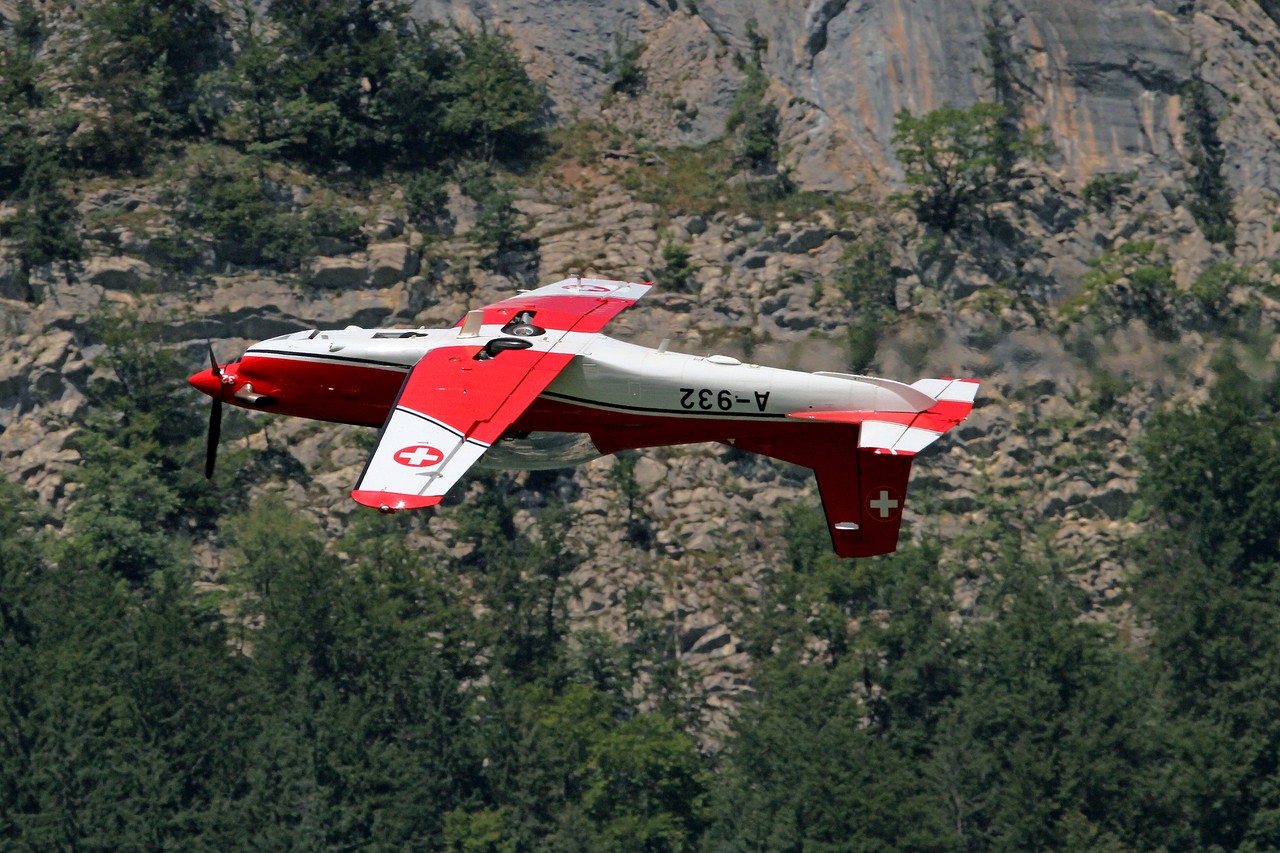
Pilatus resumed development in 1973 using a Swiss Air Force P-3 as the foundation for a second prototype. This aircraft incorporated significant design improvements including a new one-piece wing with integral fuel tanks, an altered tailfin, and a distinctive bubble canopy that became the PC-7's signature feature. The redesigned prototype completed its maiden flight on May 12, 1975, demonstrating the viability of the turboprop conversion.
Production and Variants
Production commenced in late 1977, with the first production PC-7 rolling off the assembly line in August 1978. Swiss civil certification followed on December 5, 1978, immediately enabling deliveries to Burma and Bolivia as the aircraft's first export customers. The timing proved fortuitous as many air forces sought modern, cost-effective trainers during this period.
The PC-7 Mark II, designated "Astra," entered service in 1992 as an enhanced variant combining the proven PC-7 wing with elements from Pilatus's more advanced PC-9 design. This hybrid approach incorporated modern avionics while retaining the reliability that made the original PC-7 successful. The Mark II featured the more powerful PT6A-25C engine rated at 522 kilowatts, compared to the PT6A-25A in earlier variants.
International Success
The South African Air Force became the PC-7 Mark II's launch customer in 1993, ordering 60 aircraft in a contract valued at approximately $175 million. These aircraft were assembled in South Africa by ATLAS/DENEL from kits supplied by Pilatus, with deliveries completed in 2006. This arrangement demonstrated Pilatus's flexibility in accommodating international manufacturing partnerships.
India represented the largest single PC-7 Mark II customer when the Indian Air Force contracted for 75 aircraft in May 2012, valued at $523 million. The first Indian aircraft entered service in May 2013, with 35 delivered by April 2014. This contract validated the design's continued relevance in modern military training programs.
Operational History
More than 450 PC-7s have been delivered to 21 countries, making it Pilatus's most successful military program. Notable operators include the Myanmar Air Force, which received the first production aircraft in 1979, and the Swiss Air Force, which began taking deliveries in 1986. The aircraft also serves with the air forces of Austria, Bolivia, Angola, Botswana, Chile, France, Guatemala, Iran, Netherlands, UAE, and Uruguay.
The PC-7's operational versatility extended beyond training roles. During the Iran-Iraq War, Iraqi Air Force PC-7s were employed for close air support missions and, controversially, for delivering chemical weapons against Iranian forces. This combat use demonstrated the aircraft's capability beyond its intended training mission, though such applications remained exceptional.
Modernization Programs
By 2006, the South African Air Force faced significant avionics obsolescence issues with their PC-7 Mark II fleet. The original avionics manufacturer had ceased operations, making spare parts unavailable and threatening the fleet's operational capability. This situation led to Project Ithambo in October 2008, a comprehensive modernization program for 35 aircraft.
The upgrade program installed modern avionics certified for Instrument Flight Rules operation, effectively bringing the aircraft to contemporary standards. The first two upgraded aircraft were delivered on July 13, 2010, with subsequent deliveries occurring monthly through March 2013. Following these modifications, the aircraft were redesignated as standard PC-7 MkII models, eliminating the "Astra" designation.
Technical Excellence
The PC-7's success stems from its combination of reliable turboprop power, docile handling characteristics, and robust construction. The PT6A engine family's reputation for reliability proved crucial in military training environments where consistent availability is essential. The aircraft's tandem seating arrangement provides excellent visibility for both student and instructor, while the bubble canopy enhances the training experience.
With over one million flight hours accumulated worldwide, the PC-7 has demonstrated exceptional durability and operational economy. The aircraft's ability to operate from unpaved airstrips expanded its utility in developing countries, while its relatively simple systems reduced maintenance requirements compared to more complex jet trainers.
Continuing Legacy
The PC-7 program established Pilatus as a major player in the military trainer market, paving the way for subsequent designs like the PC-9 and PC-21. The aircraft's commercial success enabled Pilatus to invest in advanced technologies while maintaining the conservative approach that made the PC-7 reliable. Today, PC-7s remain in active service with multiple air forces, testament to the design's enduring value in military pilot training programs worldwide.