
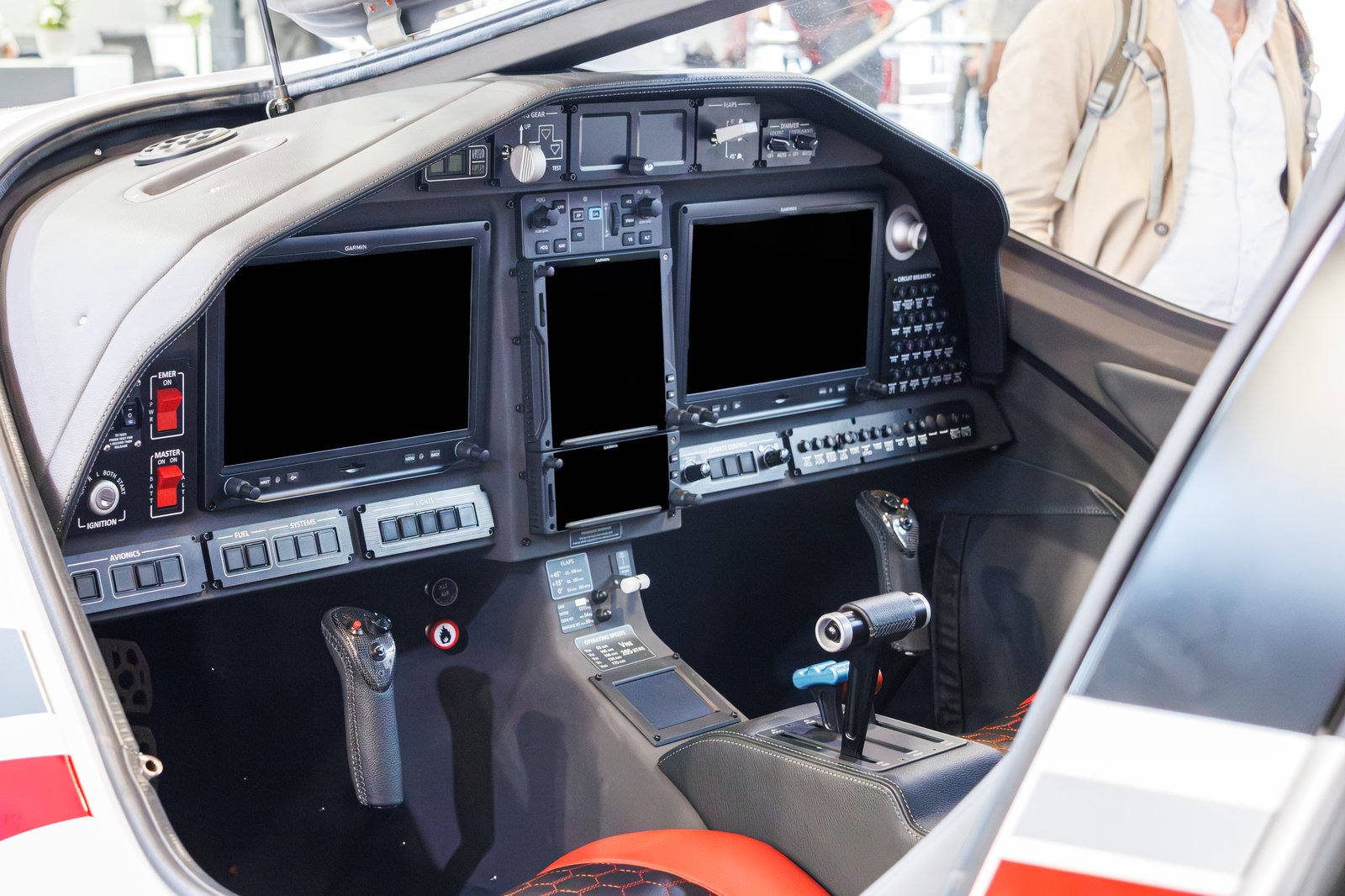
Development and Design Philosophy
The Panthera emerged from Pipistrel's vision to create a high-performance touring aircraft that could match the speed of premium singles while consuming significantly less fuel. Under the leadership of company founder Ivo Boscarol, Pipistrel's design team drew upon their extensive glider heritage to optimize the aircraft's aerodynamic efficiency. The all-composite construction utilized advanced fluid dynamics principles to minimize drag, targeting cruise speeds near 200 knots true airspeed with fuel consumption rates comparable to much slower aircraft.
Design work began in 2011 with clear performance objectives: achieve 1,500 nautical mile range capability, maintain fuel burns between 14-15 gallons per hour, and incorporate provisions for future hybrid and electric powerplant variants. The modular drivetrain design specifically accommodated this transition strategy, positioning the Panthera as a technological bridge to electric aviation.
Flight Testing and Engine Evolution
The prototype's maiden flight on April 4, 2013, lasted 54 minutes and validated the basic design concept. The initial aircraft utilized a Lycoming IO-390 engine producing 210 horsepower, but flight testing revealed limitations in useful load capacity. In 2014, Pipistrel switched to the more powerful Lycoming IO-540-V4A5, a six-cylinder engine generating 260 horsepower.
This engine change required significant modifications, adding approximately 90 pounds to the empty weight while increasing maximum takeoff weight from 2,899 to 3,000 pounds. The larger powerplant enabled the aircraft to carry 91 US gallons of fuel with 83 gallons usable, supporting the ambitious range targets. At 75 percent power and 8,000 feet altitude, the IO-540 variant achieved 194 knots true airspeed while consuming 14.8 gallons per hour, closely matching the original specifications.
Manufacturing Plans and Facilities
Pipistrel established manufacturing plans centered around a new production facility at Gorizia Airport in Italy, with groundwork beginning in February 2012. The company intended to offer both factory-built experimental aircraft and kit versions for amateur builders, following successful strategies used with their earlier designs. However, certification challenges and regulatory complexities prevented the transition from prototype to production status.
The experimental category positioning limited market appeal compared to certified competitors, while EASA rule changes further complicated the certification pathway. Despite extensive development investment and promising performance characteristics, fewer than ten prototype and demonstration aircraft were constructed.
Pipistrel's Aviation Heritage
Founded around 1995 by Ivo Boscarol, Pipistrel evolved from a garage-based hang-glider operation into a significant aircraft manufacturer, producing over 2,000 aircraft by March 2019. The company achieved several aviation milestones, including victory in NASA's Green Flight Challenge with the electric Taurus G4 and certification of the world's first electric aircraft, the Velis Electro, by EASA on May 18, 2020.
Pipistrel's military contracts included a substantial 2015 agreement for 194 Virus SW 80 trainers for India's military forces, demonstrating the company's capability beyond experimental aircraft. This diverse portfolio positioned Pipistrel as a leader in both traditional and electric aviation technologies.
Corporate Acquisition and Program Termination
Textron Aviation acquired Pipistrel in April 2022, integrating the Slovenian company into their newly formed eAviation Division. The acquisition focused primarily on Pipistrel's electric propulsion expertise and certification experience rather than traditional piston aircraft programs. Under Textron ownership, the Panthera program was effectively discontinued as resources shifted toward electric aviation initiatives.
The timing proved unfortunate for the Panthera, as certification delays had pushed expected approval well beyond the original 2022 timeline. Textron's strategic priorities favored electric aircraft development over competing with their existing Cessna and Beechcraft piston aircraft lines.
Technical Innovation and Performance
The Panthera incorporated several advanced features uncommon in its class, including a ballistic recovery parachute system and sophisticated composite construction techniques. The retractable landing gear contributed to the aircraft's impressive cruise efficiency, while the spacious cabin accommodated four adults with full fuel loads for ranges exceeding 1,000 nautical miles.
Stall speed with flaps extended measured just 55 knots, providing good low-speed handling characteristics despite the aircraft's high-performance cruise capability. Never-exceed speed reached 220 knots, giving pilots substantial speed margins during normal operations. The empty weight of 1,797 pounds left useful load capacity of approximately 1,100 pounds in the maximum gross weight configuration.
Legacy and Current Status
No Panthera aircraft achieved type certification or entered full-scale production, limiting the program's impact to technology demonstration and proof-of-concept validation. The prototypes accumulated extensive flight testing hours throughout Europe, generating valuable data for future composite aircraft development and electric propulsion integration studies.
While the Panthera program itself concluded without commercial success, its technological contributions continue influencing Pipistrel's current electric aircraft initiatives under Textron ownership. The lessons learned in composite construction, aerodynamic optimization, and modular powerplant integration directly support ongoing electric aviation certification efforts, ensuring the Panthera's engineering legacy persists in next-generation aircraft development.