
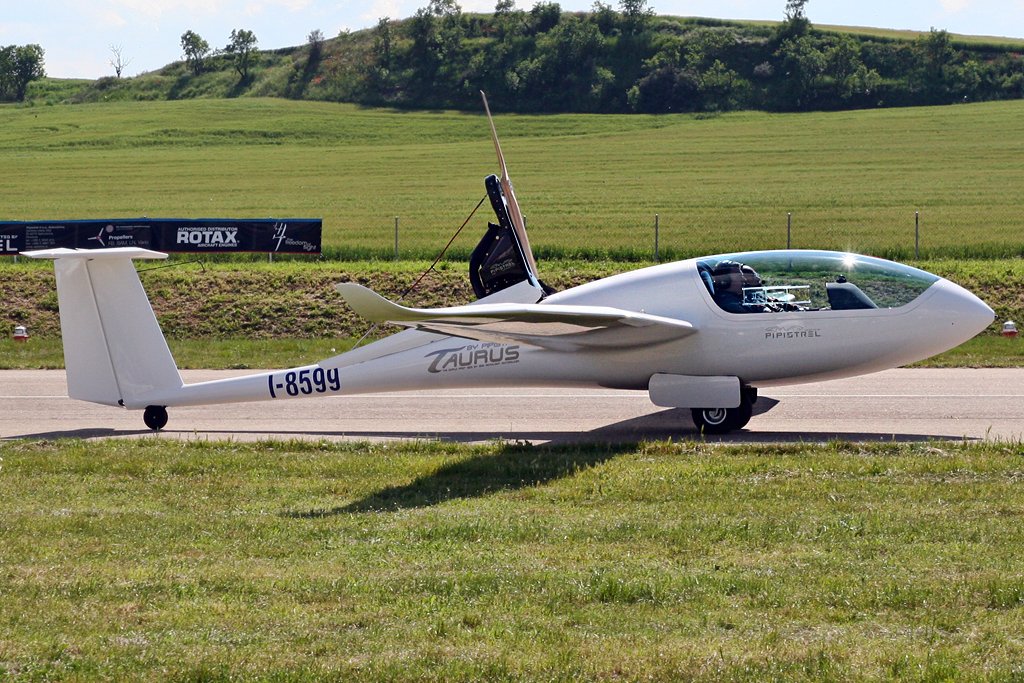
Revolutionary Self-Launch Design
Development of the Taurus 503 began on June 21, 2001, when Pipistrel's engineering team embarked on creating something unprecedented in the microlight world. The company adapted wings from their successful Sinus aircraft and mated them to an entirely new two-seat fuselage designed specifically for self-launched gliding operations. The centerpiece innovation was a fully retractable propeller system that stored behind the cockpit when not in use, allowing the aircraft to achieve pure glider performance after launch.
The first flight occurred approximately three years after development commenced, marking the successful realization of Pipistrel's vision. The aircraft could transform from a powered microlight during takeoff to a clean glider configuration once airborne, with pilots able to retract the propeller system completely for optimal soaring performance.
The Manufacturer's Vision
Pipistrel d.o.o., established in Slovenia in 1992, had already built a reputation for innovative ultralight designs since receiving authorization for ultralight production in 1987. The company introduced their first series aircraft, the Basic trike, in 1989 and steadily expanded their capabilities throughout the 1990s. By the time they launched the Taurus project, Pipistrel had established international distribution networks for both kit and factory-built aircraft.
The Taurus 503 entered production around 2002, continuing through at least 2012 when Light Sport Aircraft-compliant models were still being manufactured. By 2011, Pipistrel had delivered 100 aircraft across the entire Taurus family, with the 503 variant representing a significant portion of these deliveries. In 2022, the innovative Slovenian manufacturer was acquired by Textron Aviation, continuing operations under the Pipistrel name while expanding into electric aircraft development.
Technical Innovation
The heart of the Taurus 503 was its Rotax 503 UL 2V powerplant, a two-cylinder, two-stroke, fan-cooled engine producing 40-53 kW (53-71 horsepower). This Austrian-manufactured engine featured electronic dual ignition for reliability and drove a two-blade Pipistrel propeller measuring 1.6 meters in diameter. The aircraft's 30-liter fuel capacity provided adequate endurance for both powered flight and the climb to soaring altitude.
With a wingspan of nearly 15 meters and overall length of 7.27 meters, the Taurus 503 achieved remarkable performance figures. Maximum takeoff weight reached 450 kilograms, while top speed ranged between 130-150 kilometers per hour. The aircraft's takeoff distance of just 180 meters made it accessible from short grass strips, while the impressive 23:1 glide ratio ensured excellent soaring capabilities once the engine was shut down and the propeller retracted.
Pilot Experience
Pilots found the Taurus 503's side-by-side seating arrangement ideal for instruction and shared soaring experiences. The aircraft demonstrated agile handling characteristics, with a 45-degree to 45-degree roll time of just 3.9 seconds. The retractable propeller system, while innovative, required pilots to master the transition from powered flight to pure gliding configuration, adding complexity compared to traditional gliders or microlights.
The combination of microlight certification and glider performance opened new possibilities for pilots seeking independence from tow planes and winch launches. Clubs and private owners could launch themselves to thermal hunting altitudes without external assistance, fundamentally changing how glider operations could be conducted.
Production Challenges and Evolution
When Rotax discontinued the 503 engine around 2010-2011, Pipistrel faced a supply challenge that affected continued production. The company managed this transition by utilizing remaining engine stocks and eventually developed the Taurus M variant to continue the lineage. This production hiccup highlighted the challenges faced by niche aircraft manufacturers dependent on specific powerplant suppliers.
The Taurus 503's influence extended beyond its immediate production run. The aircraft served as a testbed for Pipistrel's later electric propulsion experiments, with the Taurus Electro variant achieving the distinction of being the first two-seat electric aircraft to fly in December 2007. This electric version later won gold at the Slovenian Biennale of Design BIO 22 in 2010 and the Lindbergh Electric Aircraft Prize at AERO Friedrichshafen in 2011.
Global Operations and Legacy
The Taurus 503 found operators worldwide, with registered examples including ZK-GSU in New Zealand, VH-NUF and VH-ZHK in Australia, and numerous others across Europe and North America. These aircraft primarily served private owners and gliding clubs seeking the flexibility of self-launch capability without the complexity and cost of larger motor gliders.
While exact numbers of airworthy Taurus 503 aircraft remain unclear, the type's impact on subsequent glider development proved significant. The aircraft demonstrated that combining microlight accessibility with serious glider performance was not only possible but commercially viable, influencing a generation of self-launched glider designs that followed.