
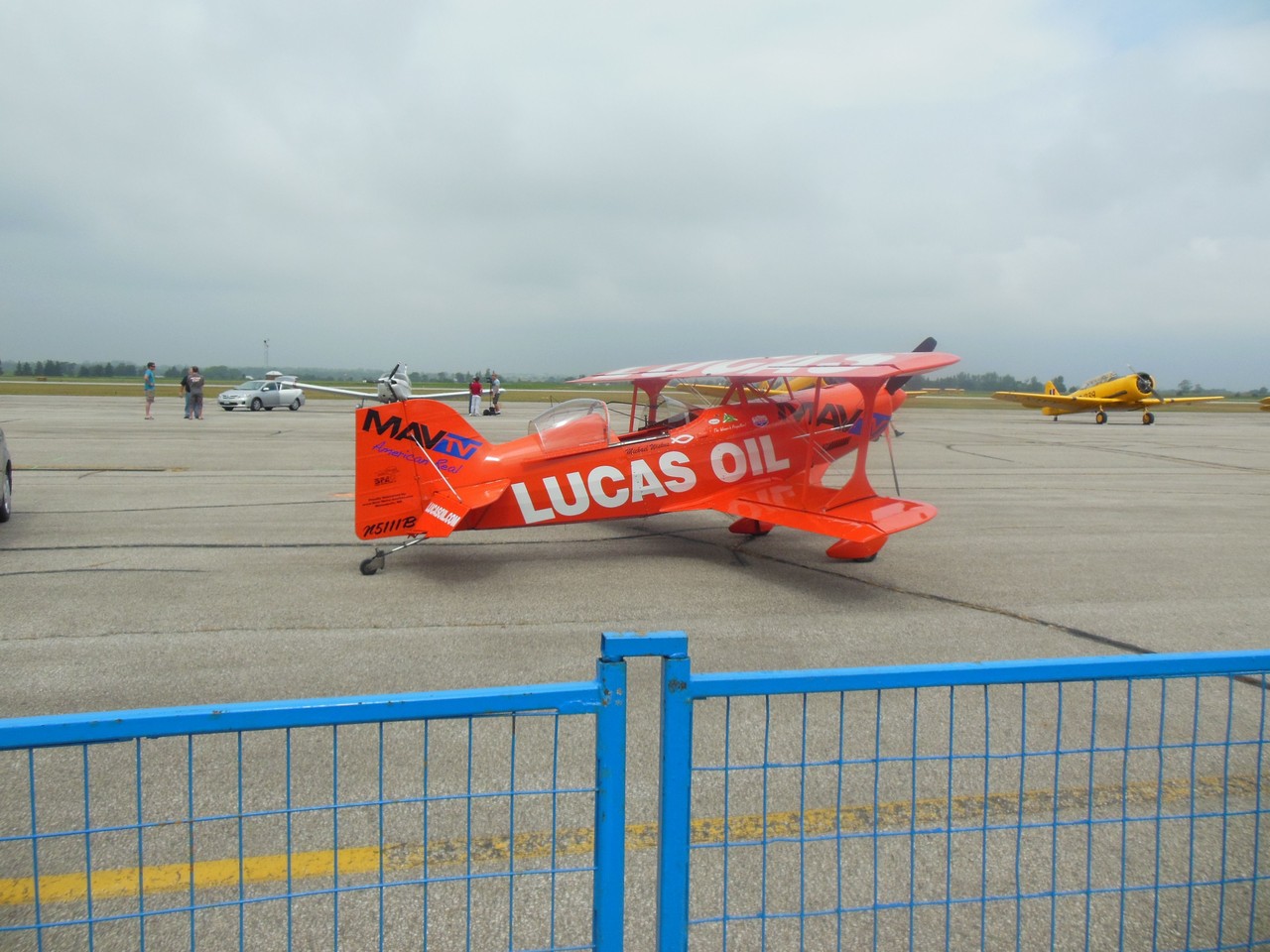
The Ultimate Aerobatic Machine
The Pitts S-1-11 Super Stinker emerged from Curtis Pitts' relentless pursuit of aerobatic perfection, representing the absolute peak of single-seat competition aircraft design. Unlike its predecessors in the S-1 series, the Super Stinker incorporated revolutionary "Super Stinker Wing Technology" that eliminated the need for aileron spades while delivering unprecedented roll rates exceeding 300 degrees per second. This extraordinary agility, combined with its ability to climb at more than 3,000 feet per minute, established new standards for aerobatic competition aircraft during the 1970s and 1980s.
Service History in Competition
The Super Stinker dominated American and international aerobatic competitions throughout its operational heyday, setting benchmarks that influenced an entire generation of aerobatic aircraft design. Pilots flying Pitts aircraft, including variants of the Super Stinker configuration, consistently placed at the top of competition rankings from the 1970s through the 1990s. The aircraft's four-aileron design and symmetrical airfoils provided unmatched control authority in both upright and inverted flight attitudes, essential capabilities for unlimited-category aerobatic sequences.
Unlike mass-produced general aviation aircraft, the S-1-11 served exclusively in the specialized world of aerobatic competition and airshow demonstration. No commercial passenger or cargo operations ever utilized the type, as its single-seat configuration and experimental certification restricted its use to sport and exhibition flying.
The Manufacturer's Evolution
Aerotek Corporation began factory production of Pitts designs at their Afton, Wyoming facility in 1973, initially focusing on the S-1S before expanding to include the more advanced S-1-11 variants. The company's ownership changed hands multiple times, reflecting the specialized nature of the aerobatic aircraft market. In 1977, Curtis Pitts sold his interests in the S-1 and S-2 designs to Doyle Child, who subsequently transferred ownership to Frank Christenson in 1981.
Christenson established Christen Industries and continued production at the original Afton plant throughout the 1980s. The final major ownership transition occurred in 1994 when homebuilt aircraft rights transferred to Steen Aero Lab while factory production rights moved to Aviat Aircraft. Aviat continued offering on-demand production of related models like the S-1T through 2008, maintaining the Pitts legacy in modern aerobatic aviation.
Engine and Technical Innovation
The S-1-11's powerplant consisted of a Lycoming AEIO-360 series engine producing more than 300 horsepower, a significant increase over earlier S-1 variants. This air-cooled, horizontally-opposed engine, manufactured by Lycoming Engines (a Textron division), provided the exceptional power-to-weight ratio necessary for the aircraft's remarkable climb performance. The engine's symmetrical lubrication system ensured reliable operation during extended inverted flight maneuvers, a critical requirement for unlimited aerobatic competition.
Curtis Pitts' design innovations extended beyond raw power to sophisticated aerodynamic refinements. The aircraft featured his patented airfoil design where the bottom wing used a thicker section than the top wing, ensuring predictable stall characteristics in both upright and inverted attitudes. The four-aileron configuration provided exceptional roll authority without the drag penalties associated with aileron spades used on earlier designs.
Pilot Perspective and Performance
Pilots consistently praised the Super Stinker's exceptional control harmony and predictable handling characteristics across the entire aerobatic flight envelope. The aircraft's compact dimensions, with a wingspan of approximately 17 feet, contributed to its remarkable agility while maintaining structural integrity under high-G aerobatic loads. The three-blade constant-speed propeller optimized performance across the wide range of airspeeds encountered in aerobatic sequences.
The cockpit accommodated only the pilot, with all controls optimized for aerobatic flying rather than cross-country comfort. Inverted fuel and oil systems allowed sustained inverted flight, while the symmetrical airfoil sections provided consistent handling characteristics regardless of flight attitude.
Production Legacy and Current Status
Unlike mass-produced general aviation aircraft, the S-1-11 was manufactured in extremely limited numbers as factory-built examples, with additional aircraft completed from plans or kits by amateur builders. Exact production totals remain undocumented, but the type's specialized nature and high cost limited sales to serious aerobatic competitors and airshow performers.
Steen Aero Lab continues to offer plans and components for homebuilders, while Aviat Aircraft maintains the capability for factory production on special order. Dozens of Pitts aircraft, including S-1-11 variants, remain active in aerobatic competition and airshow performance worldwide. The National Air and Space Museum in Washington, D.C., displays a Pitts S-1C "Little Stinker" representing the lineage that culminated in the Super Stinker's ultimate performance capabilities.
The aircraft's influence extends far beyond its limited production numbers, establishing design principles and performance standards that continue to influence modern aerobatic aircraft development. Its combination of extreme agility, structural integrity, and pilot-friendly handling characteristics represents the pinnacle of single-seat aerobatic biplane design.