
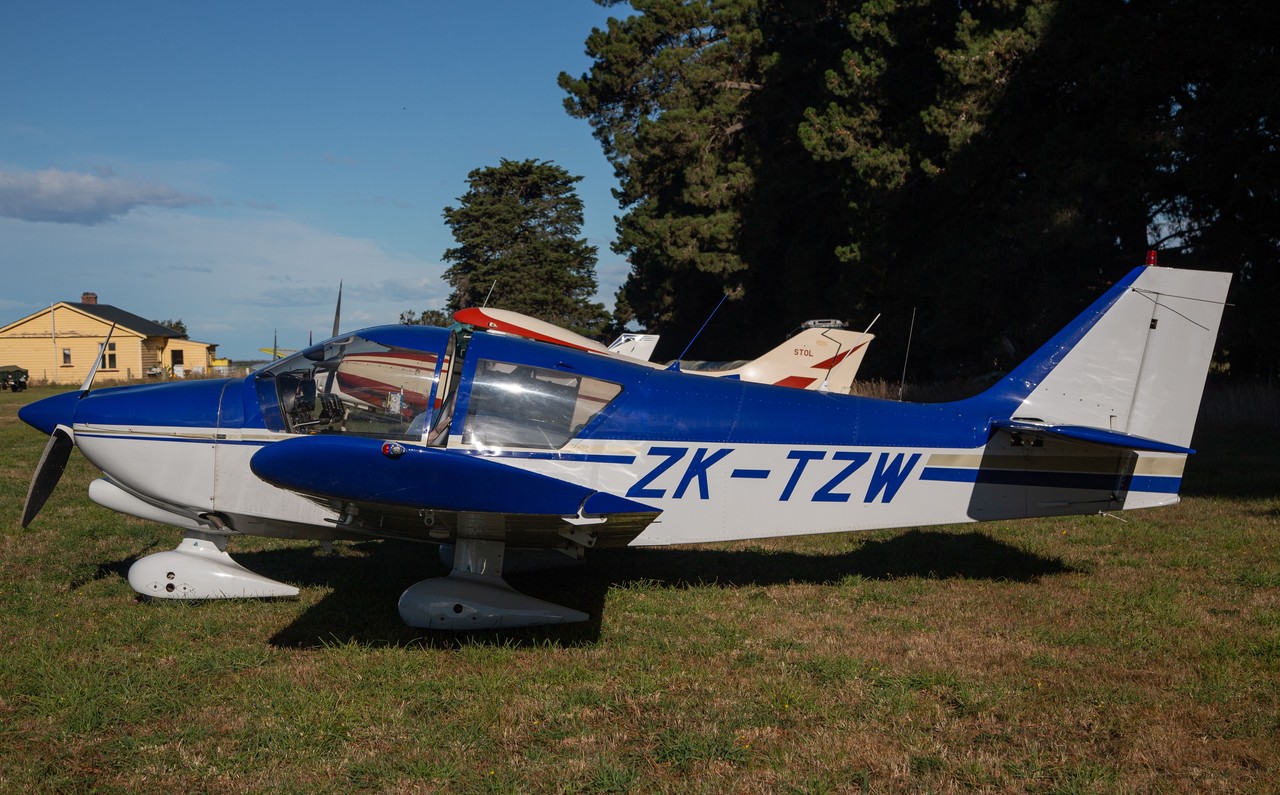
Development and Design Philosophy
The R-1180 Aiglon emerged from Avions Robin's quest to refine their successful HR.100 formula into a more efficient package. While the HR.100 had proven the basic design concept with 174 aircraft built between 1969 and 1976, Robin's engineers recognized opportunities for improvement through weight reduction and aerodynamic refinements. The Aiglon project focused on creating a lighter airframe while incorporating a completely redesigned vertical stabilizer and rudder assembly.
Chris Heintz's original HR.100 design provided the foundation, but the Aiglon represented a thorough re-engineering rather than a simple modification. The development team prioritized reducing empty weight to improve payload capacity and fuel efficiency, critical factors for the general aviation training and touring market of the late 1970s.
Certification and Production Launch
Following the prototype's maiden flight on March 25, 1977, Avions Robin conducted an intensive 18-month certification program. The French aviation authorities granted type certification on September 19, 1978, clearing the path for commercial production. This timeline reflected the aircraft's evolutionary rather than revolutionary nature, building upon the proven HR.100 certification basis.
Production commenced immediately after certification, with Robin establishing a modest manufacturing rate at their French facility. The company targeted flight training schools and private owners seeking a modern four-seat aircraft with reasonable operating costs and predictable handling characteristics.
Technical Specifications and Performance
The Aiglon's Lycoming O-360-A3AD engine delivered 180 horsepower through a fixed-pitch or constant-speed propeller, depending on customer specifications. This powerplant choice proved conservative but reliable, offering operators access to widespread maintenance expertise and parts availability. The engine installation provided a rate of climb of 850 feet per minute to 5,000 feet, adequate for typical general aviation missions.
With a maximum takeoff weight of 1,100 kilograms, the aircraft required a takeoff distance of 470 meters under standard conditions. The 165-knot cruise speed positioned it competitively within the four-seat touring aircraft market, offering reasonable travel times for cross-country flights while maintaining fuel efficiency.
The all-metal construction featured a cantilever low-wing design with fixed tricycle landing gear. This configuration provided stable ground handling characteristics particularly valued by flight training operations, while the low wing offered good fuel tank placement and ground accessibility for maintenance.
Production Variants and Improvements
Robin developed the Aiglon through three distinct variants, each addressing specific market feedback and operational requirements. The initial R.1180 Aiglon prototype served primarily for certification testing and initial market evaluation, with only one example constructed.
The R.1180T Aiglon became the first production variant, incorporating longer cabin side windows that significantly improved passenger visibility and cabin ambiance. Robin manufactured 30 examples of this variant, establishing the basic production processes and supplier relationships necessary for sustained manufacturing.
The final R.1180TD Aiglon II represented the most refined version, featuring a completely redesigned instrument panel layout, enhanced cabin furnishings, and an external baggage compartment that increased utility for touring operations. This variant accounted for 36 aircraft, the largest single production run, indicating market acceptance of the design improvements.
International Market Presence
Despite its modest production numbers, the Aiglon achieved international distribution across multiple European markets. Aircraft registrations appeared in the United Kingdom, France, Spain, and the Netherlands, demonstrating Robin's success in establishing dealer networks beyond their domestic French market.
Flight training schools represented a significant customer segment, attracted by the aircraft's docile handling characteristics and reasonable acquisition costs. Private owners valued the four-seat configuration and touring capability, though the fixed landing gear limited operations from unpaved airstrips compared to some competitors.
Operational History and Safety Record
The Aiglon's service history reflects typical general aviation operations, with aircraft accumulating thousands of flight hours in training and personal transportation roles. However, the type experienced several notable accidents between 1990 and 2022, including a fatal crash near Buxton, Derbyshire on June 15, 1996, that claimed four lives.
A write-off incident near Dover, Kent on October 26, 1996, highlighted ongoing operational risks common to single-engine aircraft operations. These accidents, while tragic, occurred within statistical norms for the general aviation fleet and did not indicate specific design deficiencies.
Legacy and Current Status
With total production ending at 67 aircraft, the Aiglon represents a smaller chapter in Robin's manufacturing history compared to the 174-unit HR.100 production run. The aircraft never achieved the market penetration of competing designs from Cessna or Piper, reflecting the challenges facing European manufacturers in the general aviation market during the late 1970s and early 1980s.
Many Aiglon aircraft remain in private hands today, serving as touring aircraft and occasionally appearing at European fly-ins and aviation gatherings. The type's limited production numbers have created a small but dedicated community of owners who maintain these aircraft as examples of French general aviation engineering from the era.