
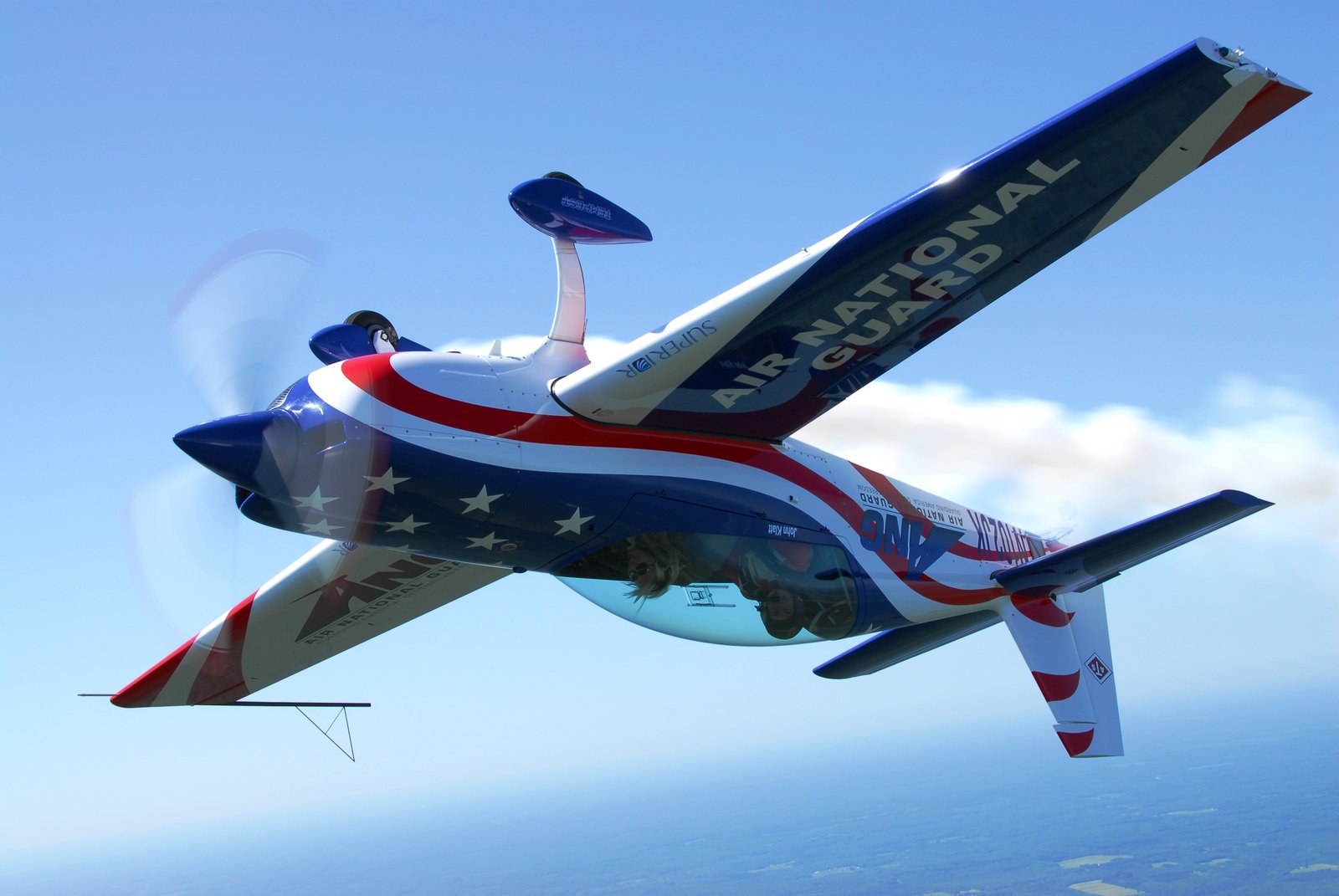
Aerobatic Competition Heritage
The S-300 emerged from Jon Staudacher's determination to challenge Soviet supremacy in unlimited aerobatic competition. During the early 1990s, Russian aircraft like the Sukhoi dominated international aerobatic contests, prompting Staudacher to develop an American alternative that could match their performance capabilities. The resulting aircraft became renowned for its exceptional roll rate of 340 degrees per second at 200 knots, upgradeable to over 380 degrees per second with aileron modifications.
Notable pilots including Bob Cipolli showcased the S-300's capabilities at major airshows, performing at the 1999 Celebration of Freedom Air Show and Westfield International Air Show at Barnes Municipal Airport. Ryan Chapman currently operates Canada's only example, a 1993-built aircraft, competing in aerobatic events during 2024-2025 seasons at venues like Jergensen Field.
The Manufacturer
Staudacher Aircraft, Inc. operated as essentially a one-man enterprise led by Jon Staudacher, who personally designed and hand-built each aircraft. The company functioned during the early 1990s, aligning with the S-300's production period. Each of the approximately 20 aircraft built featured slight modifications from the previous example, reflecting the boutique manufacturing approach typical of specialized aerobatic aircraft producers.
The company ceased operations after completing the limited production run, with no records of mergers, acquisitions, or continuation under different ownership. This small-scale operation exemplified the artisan approach common among builders of unlimited-category aerobatic aircraft, where individual craftsmanship took precedence over mass production.
Engineering Excellence
The S-300's construction utilized an innovative combination of materials rarely seen in aviation. The airframe featured carbon fiber and wood construction married to a steel tube truss fuselage, with fabric covering the tail surfaces and a plywood turtle deck. Flying wires provided tail structure tensioning, contributing to the aircraft's exceptional structural integrity.
Wing stress testing demonstrated the design's robustness when test specimens withstood plus and minus 23g loads without structural failure. The testing was limited only by damage to the hangar foundation from the test rig, not aircraft structural limitations. This extreme strength capability far exceeded the plus or minus 15g certification standard for unlimited aerobatic competition.
Powerplant Performance
A modified Lycoming IO-540 six-cylinder engine powers the S-300, producing between 330-350 horsepower depending on specific configuration. Variants included the IO-540-A1A5, IO-540K, and experimental 540 models, all manufactured by Lycoming Engines, a Textron division. These engines were specifically modified for aerobatic applications with inverted fuel and oil systems enabling sustained inverted flight.
The powerplant paired with a three-blade Whirlwind propeller, providing exceptional power-to-weight ratio given the aircraft's 1,300-1,400 pound empty weight. This combination enabled the S-300 to perform extreme maneuvers including climbs while in tail slides and tight 360-degree turns within a 250-foot circle at 180 miles per hour.
Pilot Experience
Pilots praised the S-300's exceptional handling characteristics and competition-ready performance envelope. The aircraft's fat wing design provided excellent stall characteristics while maintaining the structural strength necessary for extreme aerobatic maneuvers. Full-throttle or idle power operations proved reliable during competition sequences, with the engine supporting extreme attitudes including inverted and backwards flight orientations.
The cockpit accommodated a single pilot with 35 gallons of fuel capacity and a 5.5-gallon smoke oil system for airshow performances. Cleveland wheels and brakes paired with Grove landing gear provided reliable ground handling characteristics between competition flights.
Production Legacy
Total S-300 production reached approximately 20 aircraft, with variants including the S-300, 300S, S-300D2, and S300X models according to accident records. Known examples included 1993 and 1994 production years, with each aircraft featuring incremental improvements over previous builds.
At least four aircraft were lost in accidents: N791S on May 27, 1994; N112KG on July 7, 2000; N336JS on May 12, 2012; and an unspecified aircraft on June 2, 2016. Despite these losses, several examples remain airworthy today, including the aforementioned Canadian aircraft and a pristine 1994 model with 1,252 total flight hours that underwent restoration in 2016.
Enduring Influence
The S-300's significance extends beyond its limited production numbers, representing a pivotal moment when American designers successfully challenged international aerobatic competition dominance. Its innovative material combinations and extreme structural strength influenced subsequent sport and homebuilt aircraft designs, demonstrating that small-scale manufacturers could produce world-class competition aircraft.
Model aircraft manufacturers like Protech have produced S-300 replicas, highlighting the design's enduring appeal among aviation enthusiasts. The aircraft's legacy continues through active competition flying and airshow performances, maintaining Jon Staudacher's vision of American excellence in unlimited aerobatic aircraft design.